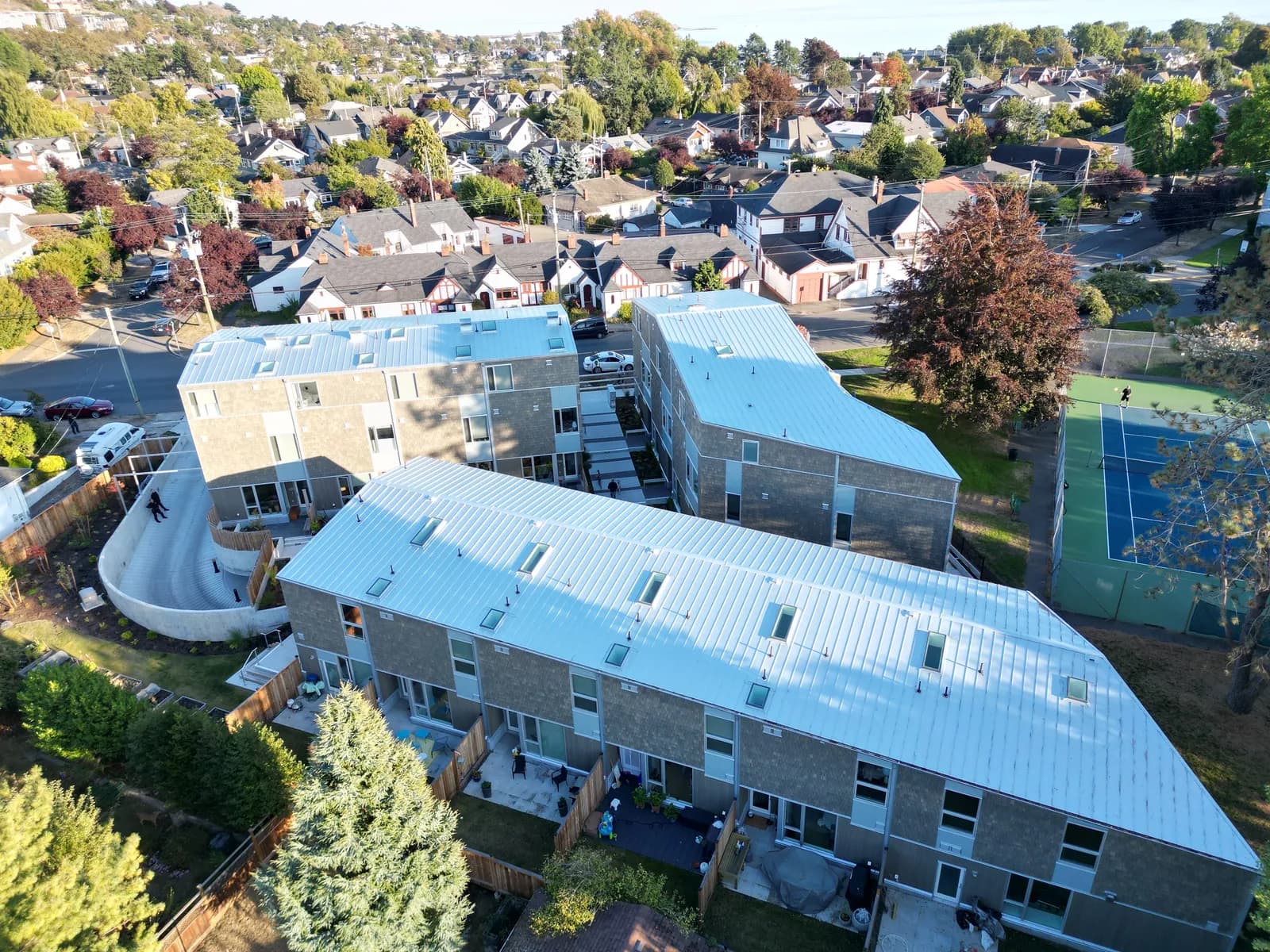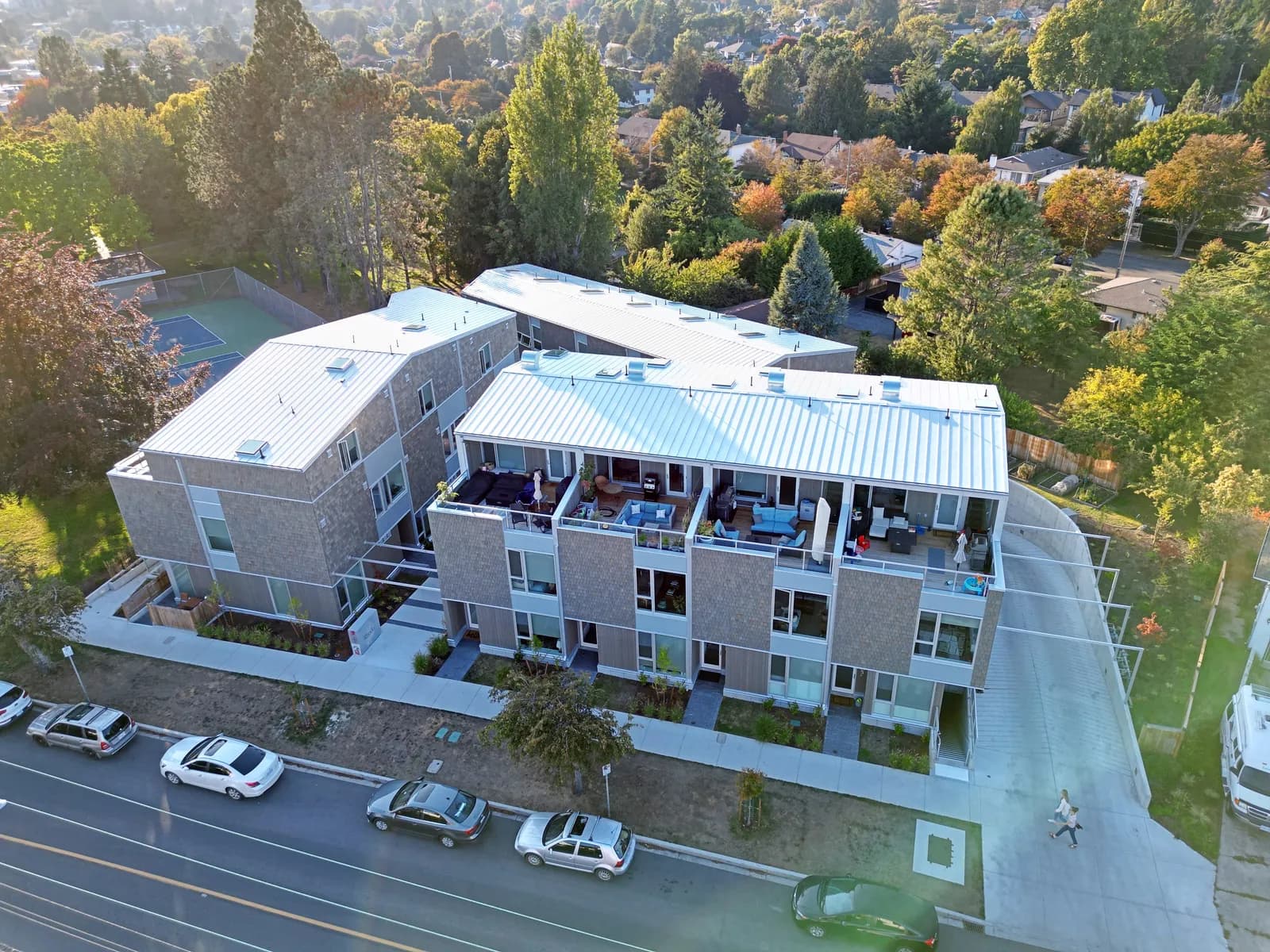
Ninety owners get a notice package in the mail. Fourteen days later, forty-one of them are sitting in a rec room, and a $1.9 million exterior renovation either happens or gets pushed another two years. The council has been working on this for eleven months. The owners have looked at it for about four minutes.
Strata approval for a renovation in BC fails on paperwork far more often than it fails on money. We have watched councils lose a well-scoped, fairly priced envelope project because the resolution covered the wrong section of the Act, or because the special levy was set at the number that felt passable rather than the number the work costs. The second one is worse, because that project does not fail at the meeting. It fails eight months later, mid-scaffold, at a second special general meeting nobody budgeted for.
What vote does a strata need to approve an exterior renovation in BC?
Most exterior renovations need a 3/4 vote at a general meeting: 75 percent of the votes cast by eligible owners present in person or by proxy. That threshold applies to a special levy under section 108 of the Strata Property Act and to any significant change in the use or appearance of common property under section 71. Spending contingency reserve funds on repairs recommended in your current depreciation report can pass by majority vote instead.
The three votes councils think are one
A full exterior project almost never runs on a single resolution. It runs on a sequence, and each step has its own threshold.
The first is funding the investigation. A building envelope condition assessment on a 60-unit wood-frame building runs $15,000 to $35,000 in Metro Vancouver, sometimes more if test openings are extensive. If that sits inside the approved operating budget or under your section 98 unapproved-expenditure limit, the council can authorize it directly. If it does not, it needs owner approval, and losing two months here delays everything downstream.
The second is the money for construction. A special levy under section 108 needs a 3/4 vote, and the resolution has to state the purpose, the total amount, each strata lot's share, and the due dates for payment. Alternatively the money comes out of the contingency reserve fund. Section 96 sets a 3/4 vote for most CRF spending, but where the repair or replacement is recommended in your most current depreciation report, a majority vote is enough. That distinction is worth real effort to get right. A resolution that needs 75 percent and one that needs 50 percent plus one are very different bets in a building where turnout is thin.
The third is the change itself. Section 71 requires a 3/4 vote for a significant change in the use or appearance of common property. Councils routinely skip this one, reasoning that a re-clad is a repair and repairs are the strata's duty under section 72, not a change. That reasoning is right until the wall assembly changes, and on a 1990s face-sealed building it always changes.
Why your "like-for-like" re-clad is not like-for-like
The BC Building Code requires a drained and vented cavity behind cladding on wood-frame walls in high-exposure locations, which is most of the coast. A building put up before the 1999 rainscreen requirements does not have one. When you re-clad it properly, the wall gets thicker by an inch or more. Window reveals deepen. Trim details change. The colour usually changes, because the original product line was discontinued fifteen years ago.
That is a visible change to common property, and an owner who did not like the colour has a section 71 argument. The fix is cheap: put the appearance change in the notice package as its own resolution with elevations and a colour board attached, and vote it at the same meeting. It costs you one extra page. Handling it after a complaint costs you a lawyer and a stop-work.
This is also where municipal permitting enters. Re-cladding a multi-family building requires a building permit in every Metro Vancouver municipality, and the permit drawings have to show the new assembly. In the City of Vancouver, and in heritage or development-permit-area properties elsewhere, the exterior appearance may need separate sign-off. Your consultant should have that mapped before the notice goes out, not after.
Quorum, proxies, and the room itself
Under the Standard Bylaws, quorum for a general meeting is one third of eligible voters present in person or by proxy. If quorum is not reached within half an hour, the meeting adjourns to the same time and place one week later, and whoever turns up then constitutes quorum. Councils sometimes treat that as a safety net. It is not one. The owners who show up to a re-scheduled meeting skew toward the people who are unhappy.
Proxies decide most of these votes. In buildings with heavy investor ownership, and there are plenty of those in Burnaby, Richmond and along the SkyTrain corridors, half the owners have never seen the building. A proxy form in the notice package, with a plain-language cover explaining what the money buys and what happens if the vote fails, is the single highest-return page in the whole exercise.
Run an information meeting two to three weeks before the SGM. No vote, no resolution, just the consultant and the contractor answering questions with the drawings on the table. Owners who have had their questions answered vote yes at roughly the rate councils hope for. Owners hearing the number for the first time in the room where they have to vote on it do not.
The mistake: sizing the levy to what will pass
Here is the pattern we see most often, and it is the most expensive mistake in strata renovation. The council gets a $2.1 million number. Someone does the division and gets $35,000 a door. The room goes quiet. So the scope gets trimmed to two elevations, the contingency gets cut from 15 percent to 5, and the resolution goes out at $1.4 million.
It passes. Then the walls open up, the sheathing on the north elevation is worse than the test openings suggested, and there is no contingency left to absorb it. Now the council is calling a second SGM for another levy, with the building wrapped in scaffolding and owners who already paid once.
Two things prevent it. First, write the contingency into the resolution amount and say so in the explanatory note. A section 108 levy can only be spent on the approved purpose, and if more than $100 per lot is left over at the end, it gets returned to owners. The downside of over-asking is a refund. The downside of under-asking is a second meeting.
Second, do not phase the work to make the number smaller unless the phases are separate buildings with separate access. Access is 15 to 25 percent of an envelope job. Scaffolding, hoarding, site setup and mobilization get paid once on a single contract and twice on two. Splitting a $2.1 million project into two $1.2 million projects is not a saving. The contrarian version: the resolution with the lowest number on it is usually the most expensive path in the room.
How long approval takes, and what it does to your pricing
From the day the consultant's report lands to the day scaffolding goes up, budget nine to fifteen months on a typical Metro Vancouver strata. Condition assessment to final report is six to ten weeks. Design and tender documents add six to twelve. Tender and bid review is four to six. Then the notice period, the meeting, permits, and the contractor's own lead time.
The part councils miss is that contractor pricing has a shelf life. A tender price is generally held for 30 to 90 days. When a bid is accepted eleven months after it was submitted, it is not a price anymore, it is an opening position, and every contractor who quoted will be re-pricing materials and labour. If your approval sequence is going to take three quarters of a year, say so at tender. Contractors can price a longer validity window if they know about it. What they cannot do is honour a stale number without eating the difference or finding it somewhere in the scope.
Special levies are normally collected in instalments tied to construction draws rather than as one payment. Section 108 requires the due dates in the resolution, so the schedule is a decision the council makes before the vote, not after. Owners who cannot fund a lump sum will vote against it. The same owners will often vote yes for four quarterly payments. Strata borrowing is also available under the Act with a 3/4 vote, though the interest cost is real and lenders want to see the levy as security.
Who you put in front of the owners
The contractor is in the room for this vote whether or not they are physically present. Owners ask three questions: is this company insured, have they done this before on a building like ours, and what happens if something goes wrong after they leave. A council that cannot answer all three crisply loses votes it should have won.
MV Construction has spent more than ten years on exterior and building envelope work across Greater Vancouver and Vancouver Island, most of it on strata and multi-family buildings. We are licensed, WCB-insured and carry warranty on our workmanship, which is the baseline any strata tender should require before a bid is even opened. We price scope at tender rather than low-balling and recovering through change orders, because a council that gets ambushed mid-project does not call us for the next building.
The housing stock here makes this a recurring conversation. The 1985 to 1999 wood-frame buildings across Burnaby, Coquitlam, New Westminster and the North Shore were built face-sealed, into 1,200 to 1,800 millimetres of annual rainfall, and are now on their second or third envelope decision. Most of the councils we work with are not deciding whether to do the work. They are deciding how many meetings it takes to get there.
If your council is drafting a resolution and wants a contractor's read on whether the number and the scope actually match before it goes into the notice package, we will look at it with you. Call (778) 375-5672 or request a fixed-scope estimate. If the project extends past the envelope into a full exterior renovation, we can price the whole assembly as one contract instead of three separate ones.