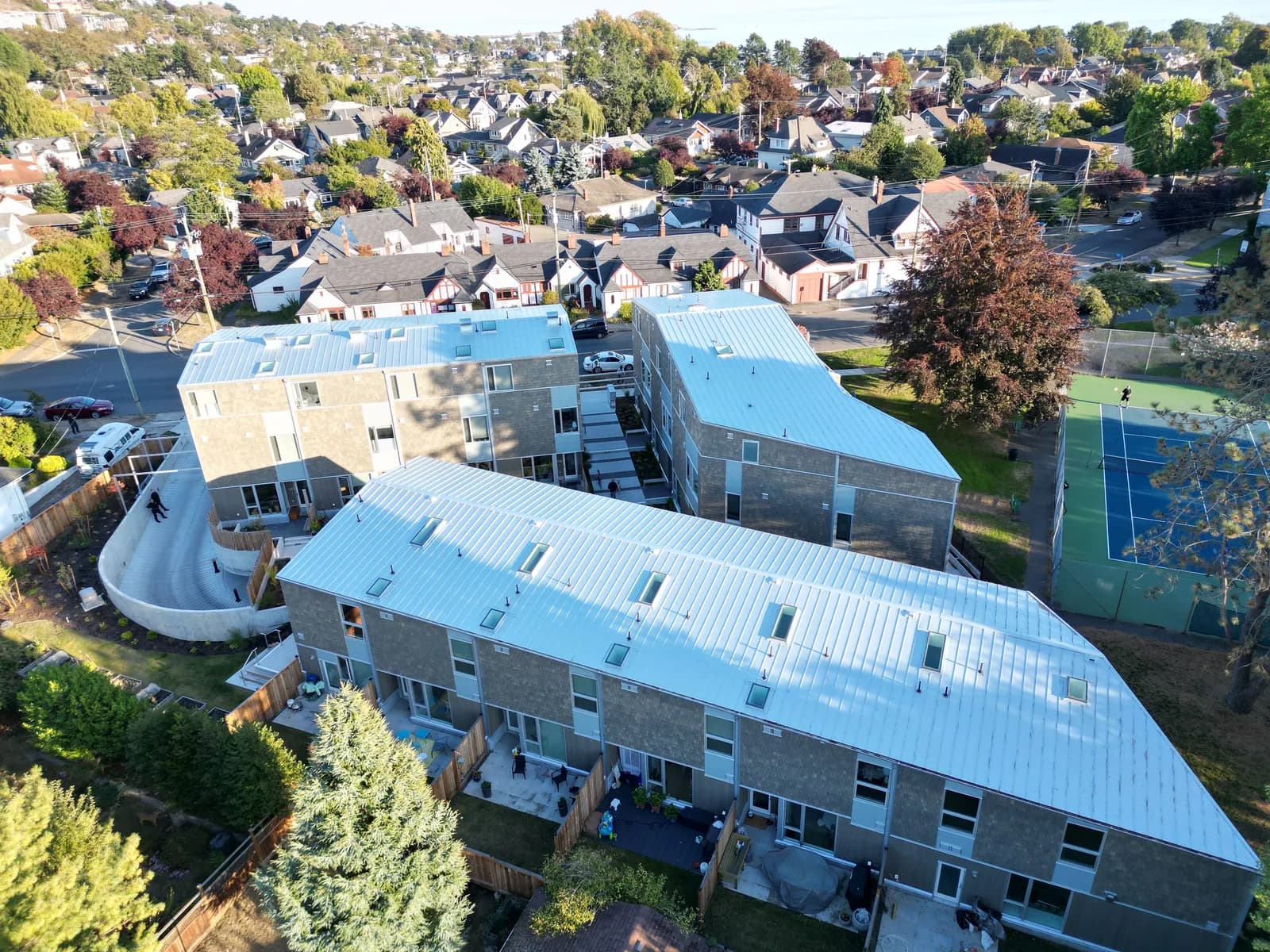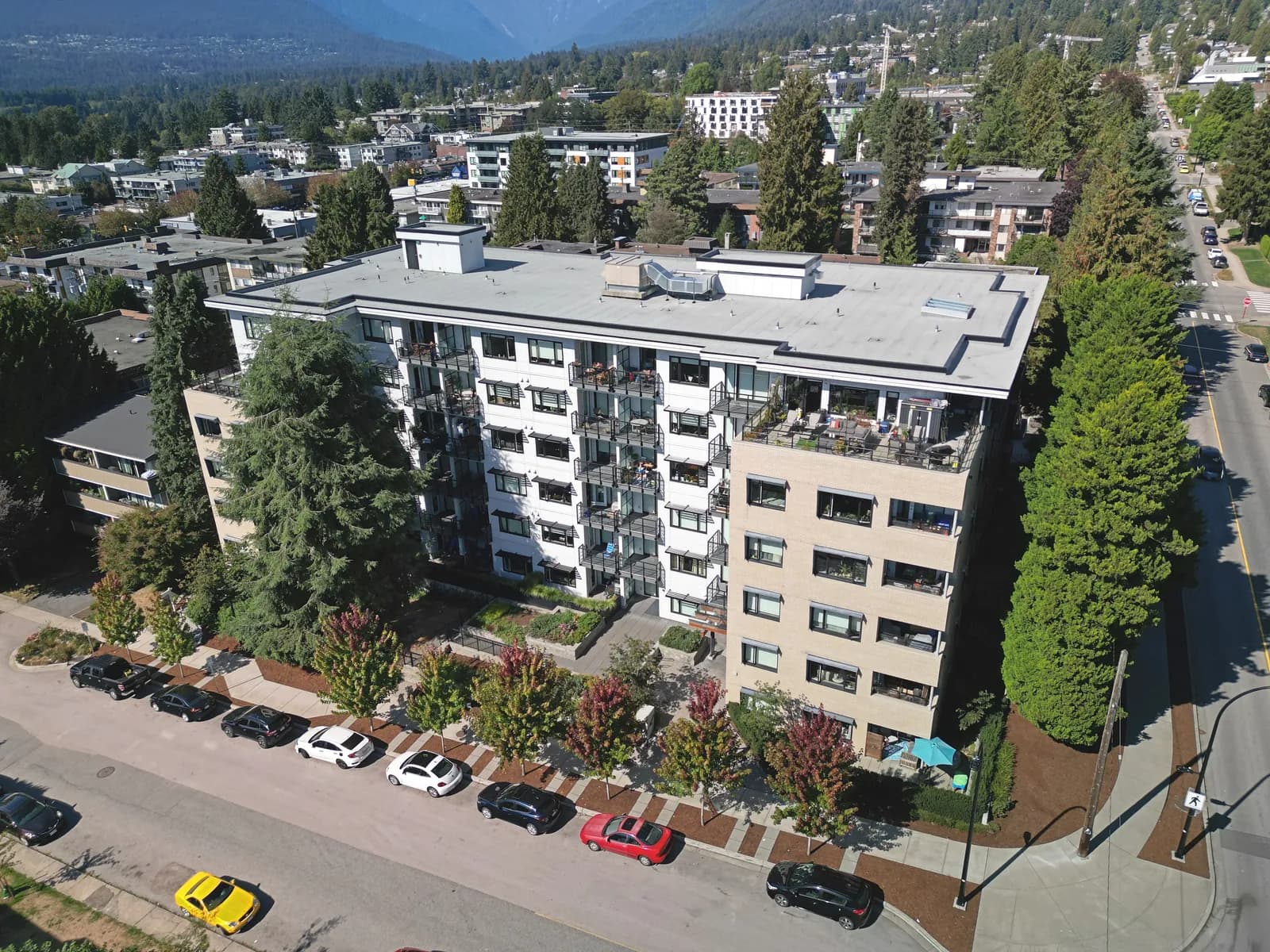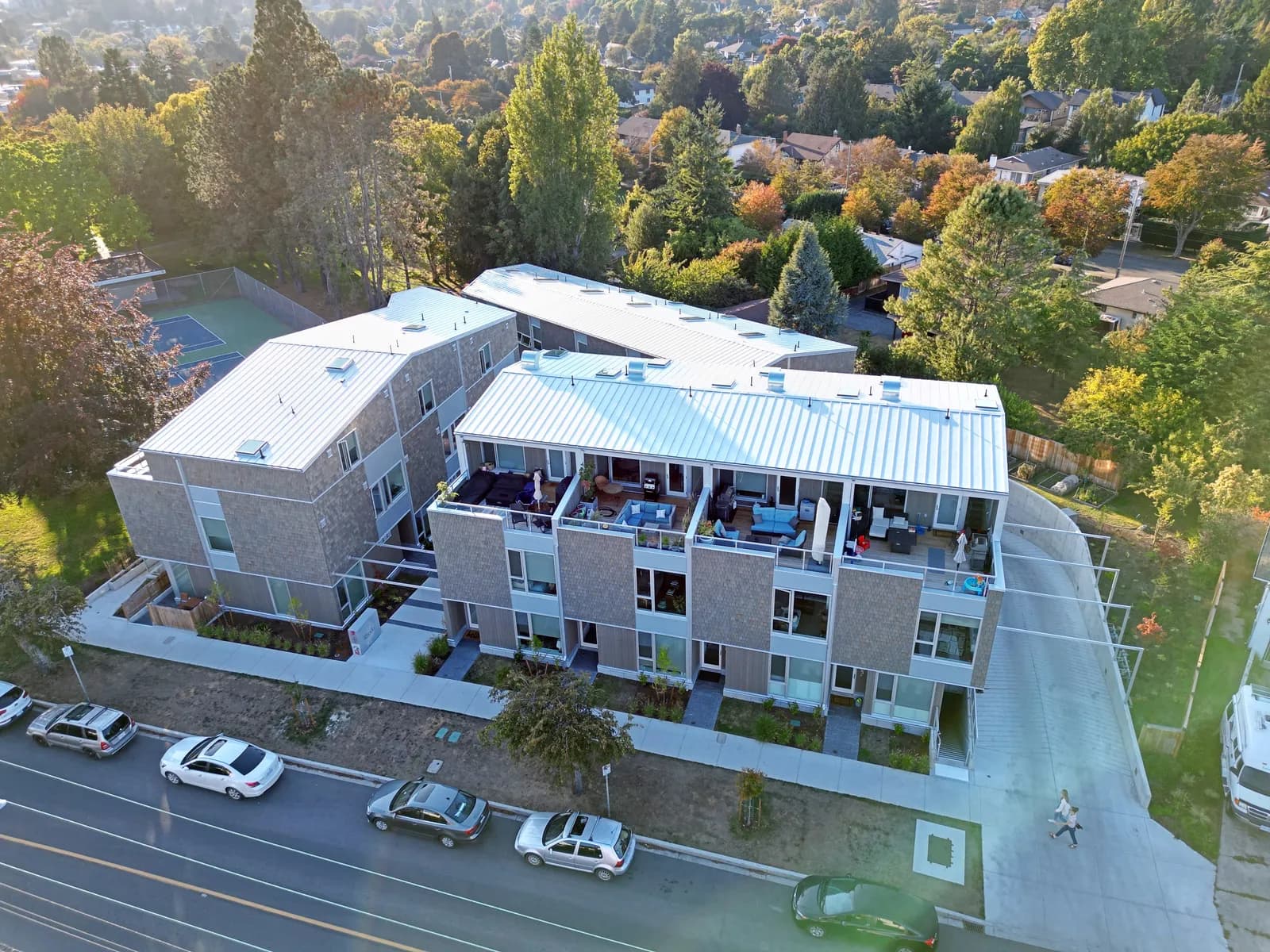
Almost nobody moves out for a strata envelope project. On a four-storey wood-frame building in Burnaby or New Westminster, the scaffold goes up in spring, the cladding comes off one elevation at a time, and the 40 or 60 households inside keep working from home, raising kids and sleeping through it for the better part of a year. Planning a strata renovation to minimize disruption is less about being polite to residents and more about sequencing: the order of work, the notice periods, where the crew stages, and who answers the phone when a resident has a problem.
Councils usually spend months choosing a contractor and very little time on how the building will live through the work. That second part is where most of the complaints, the special general meetings and the change orders come from.
How do you renovate a strata building while residents stay?
Phase the work by elevation so each household lives next to scaffold for roughly 8 to 12 weeks, not the full 6 to 10 months. Give 48 hours' written notice for any in-suite access, as the Standard Bylaws require. Publish a two-week look-ahead schedule, keep noisy work inside municipal construction hours, and name one person residents can call. Most disruption comes from surprises, not from the work itself.
Where the disruption actually comes from
Residents expect noise. What wears them down is everything else. On the occupied buildings we work on across Metro Vancouver, complaints sort into roughly five groups:
- Light and privacy. Scaffold netting cuts the daylight in a suite noticeably, and a worker standing outside a bedroom window at 8 a.m. is the complaint property managers hear first.
- Balconies. Most balcony work needs the balcony empty. Plants, barbecues, storage bins and bikes have to go somewhere, and in a 700 sq ft one-bedroom there is nowhere for them.
- Access into suites. Window replacement, sealant at interior returns and repairs to rotted framing found behind the cladding often need a crew inside the unit, usually for half a day to two days.
- Dust and odour. Cutting fibre cement, grinding stucco and applying coatings all produce dust or fumes that find their way through open windows and ventilation intakes.
- Parking and common areas. Staging, bins and material deliveries take stalls, block a lane, or close a side entrance for weeks at a time.
Noise is on that list too, but residents accept it far more readily when they know when it will start and when it will stop. Unannounced noise is what turns into formal complaints to council.
Phase the building, but not too gently
The standard approach on a multi-family envelope job is to work one elevation, or one stack of units, at a time. Scaffold goes up on the north face, the old cladding comes off, the sheathing is repaired, membrane, rainscreen and new cladding go on, and the scaffold moves. Each household then lives with the work for 8 to 12 weeks instead of the whole schedule.
Phasing has a cost. Every scaffold move, every remobilization and every extra week of site supervision shows up in general conditions. On the projects we price, tight elevation-by-elevation phasing typically adds 5 to 10 percent to that part of the budget compared with scaffolding the whole building at once.
Here is the counterintuitive part. Councils sometimes push to soften the work further: no work before 9 a.m., no Saturdays, one elevation finished completely before the next one starts. Each request sounds considerate. Together they can stretch an 8-month project to 11, which means three more months of netting over windows, a site trailer in the parking lot, and a second rainy season with walls open.
The gentlest daily schedule is rarely the least disruptive overall. If the goal is to minimize disruption across the whole project, ask your contractor to show you both versions with dates attached before the council votes on any restrictions.
Corner units deserve their own line in the plan. They sit on two elevations and get scaffold twice. A good schedule either handles both faces of a corner back to back or tells those owners up front that they will see the crew twice.
Strata renovation: minimize disruption before the scaffold goes up
Most of the goodwill on an occupied project is won or lost in the six weeks before mobilization.
Hold a residents' information session. One evening meeting of 60 to 90 minutes, with the property manager, a council member, the contractor's project manager and the site superintendent. Show the phasing plan on a site map. Residents who see the sequence once ask far fewer questions later.
Build a resident needs list. Ask, on a voluntary basis, who works nights, who works from home, who has a newborn, who has a respiratory condition or a mobility issue, and who keeps pets that react badly to strangers at the window. You cannot schedule around everyone. A crew can usually move the loudest work on one elevation to the afternoon for a night-shift nurse, though, or start balcony demolition at the far end of a stack.
Send the balcony instructions early. Tell owners and tenants exactly what has to be cleared, by what date, and what happens to items left behind. Two to three weeks' notice is reasonable. Some stratas arrange a shared storage locker or a temporary container on site, which typically rents for a few hundred dollars a month.
Reach the tenants. In many Metro Vancouver stratas, a quarter or more of the units are rented. Council notices go to owners, and owners do not always pass them on. Post every notice in the lobby and the elevator as well as sending it by email, and ask landlords to forward it.
Settle the logistics in writing. Where the site trailer goes, which parking stalls are lost and for how long, which entrance stays open, where workers use the washroom, and whether crews may use the elevator. If they will, pad it and book it the way you would book a move.
Notice periods and the rules that apply in BC
Several rules shape how a strata renovation runs while people live in the building:
- In-suite access. Under the Standard Bylaws of the Strata Property Act, residents must allow entry on 48 hours' written notice, stating the date, approximate time and reason, so the strata can inspect or repair common property and the parts of a strata lot it maintains. In an emergency, no notice is required. Many stratas have amended their bylaws, so check yours.
- Construction noise hours. Each municipality sets its own. In the City of Vancouver, construction noise is permitted from 7:30 a.m. to 8 p.m. on weekdays and 10 a.m. to 8 p.m. on Saturdays, with none on Sundays or statutory holidays. Burnaby, Surrey and the North Shore municipalities have their own limits.
- Permits. Envelope remediation that replaces cladding or changes the wall assembly typically needs a building permit. If scaffold, hoarding or a bin sits on the sidewalk or boulevard, the city will also want a street use permit.
- Public safety. WorkSafeBC requires the contractor to protect people around the work, not just the crew. On an occupied building, that usually means covered walkways at entrances and fenced work zones residents can walk around without crossing the crew's path.
Security with scaffold on an occupied building
Scaffold changes the security of a building overnight. A second-floor balcony that used to be out of reach is now a few steps up from the ground. Break-ins through scaffolded windows are a known problem on Lower Mainland jobs, and residents worry about it from the first day.
A few measures handle most of the risk:
- Remove or lock the access ladders and stair towers at the end of every shift.
- Fit scaffold alarms or motion-activated lighting on the lower lifts, especially on lane-facing elevations.
- Remind residents in writing to keep windows and balcony doors locked while the scaffold is up, and to report anyone on it outside working hours.
- Post the superintendent's name and the crew's working hours, so a person on the scaffold at 9 p.m. is obviously out of place.
A covered walkway at the main entrance usually costs a few thousand dollars and stays up for as long as there is overhead work. It is worth every dollar. Nothing ends a council's patience with a contractor sooner than debris landing near a resident.
The mistake councils make: no single point of contact
The most common mistake we see is letting complaints flow in every direction. A resident emails the property manager, stops a labourer on the scaffold, posts in the building group chat and calls a council member, all about the same water stain. Four people now hold part of the problem, and nobody owns it.
Set the channel before work starts. Residents report issues to one email address or one phone line, run by either the property manager or the contractor's site office. Every issue goes into a log with a date, a unit number and a response. A reasonable target is acknowledgement within one business day and a site visit within two for anything involving water, damage inside a suite, or safety.
The log also protects the strata. When a resident says at the next AGM that "nobody responded" about a cracked window, the council can point to the entry, the visit and the repair date.
Weekly updates and the two-week look-ahead
Residents tolerate noise and dust they were warned about. They do not tolerate surprises. A short weekly update, posted in the lobby and sent by email, should cover:
- What was finished this week, by elevation.
- What starts next week and which units are affected.
- Any in-suite access coming up, with the formal 48-hour notices to follow.
- Water or power interruptions, with dates and times.
- Days when coatings or sealants go on and windows should stay closed.
Add a two-week look-ahead schedule at the bottom. Weather on the coast will move it, especially from October to March, so say that plainly in the notice. A schedule that slips by three days with an explanation causes far less friction than a schedule nobody published.
When the walls open up: concealed damage inside suites
On older BC wood-frame buildings, especially those built from the mid-1980s to the late 1990s, removing the cladding often reveals rot in sheathing or framing that was not visible during the condition assessment. Some of that repair has to happen from inside: drywall comes off, framing is replaced, and the wall is closed back up.
For residents, this is the most disruptive part of the whole project, and the hardest to schedule, because nobody knows which suites are affected until the wall is open. Plan for it anyway. Agree in advance how much notice residents get, who restores the interior finishes, what standard of finish they can expect, and how furniture and belongings will be protected. Making good the interior typically adds two to five working days per affected suite, covering drywall, taping, priming and paint.
Councils should also hold money back for this. On envelope projects on buildings of that era, a contingency of 10 to 15 percent of the construction budget for concealed conditions is common, and it gets used more often than not.
Choosing a contractor who has done this with people at home
Running a job on an occupied building is a different skill from running new construction. When you interview contractors, ask for references from strata councils or property managers whose buildings stayed occupied during the work, and call them. Ask how the contractor handled complaints, in-suite access and schedule changes. Ask who the site superintendent will be, because that person shapes the residents' experience more than anyone in the head office. If your council is still at the approval stage, our guide to strata owner approval for exterior renovations covers the vote itself.
MV Construction has carried out building envelope remediation and full exterior renovation on multi-family buildings across Greater Vancouver and Vancouver Island for more than 10 years. We are fully licensed and WCB-insured, we coordinate directly with property managers and councils on occupied sites, and our craftsmanship is backed by a written warranty.
Put the resident plan in the bid
If your depreciation report has envelope work coming due, the resident plan belongs in the same conversation as the scope and the budget, not after the contract is signed. Ask every bidder for the phasing plan, sample notices and security measures as part of the submission, and compare them alongside price. The strata renovation that runs smoothest on site is usually the one whose disruption was planned on paper first.
To talk through a project on your building, call (778) 375-5672 or request a fixed-scope estimate. We will walk the site with your property manager and provide a written estimate, including a phasing plan, that the council can review before the vote.