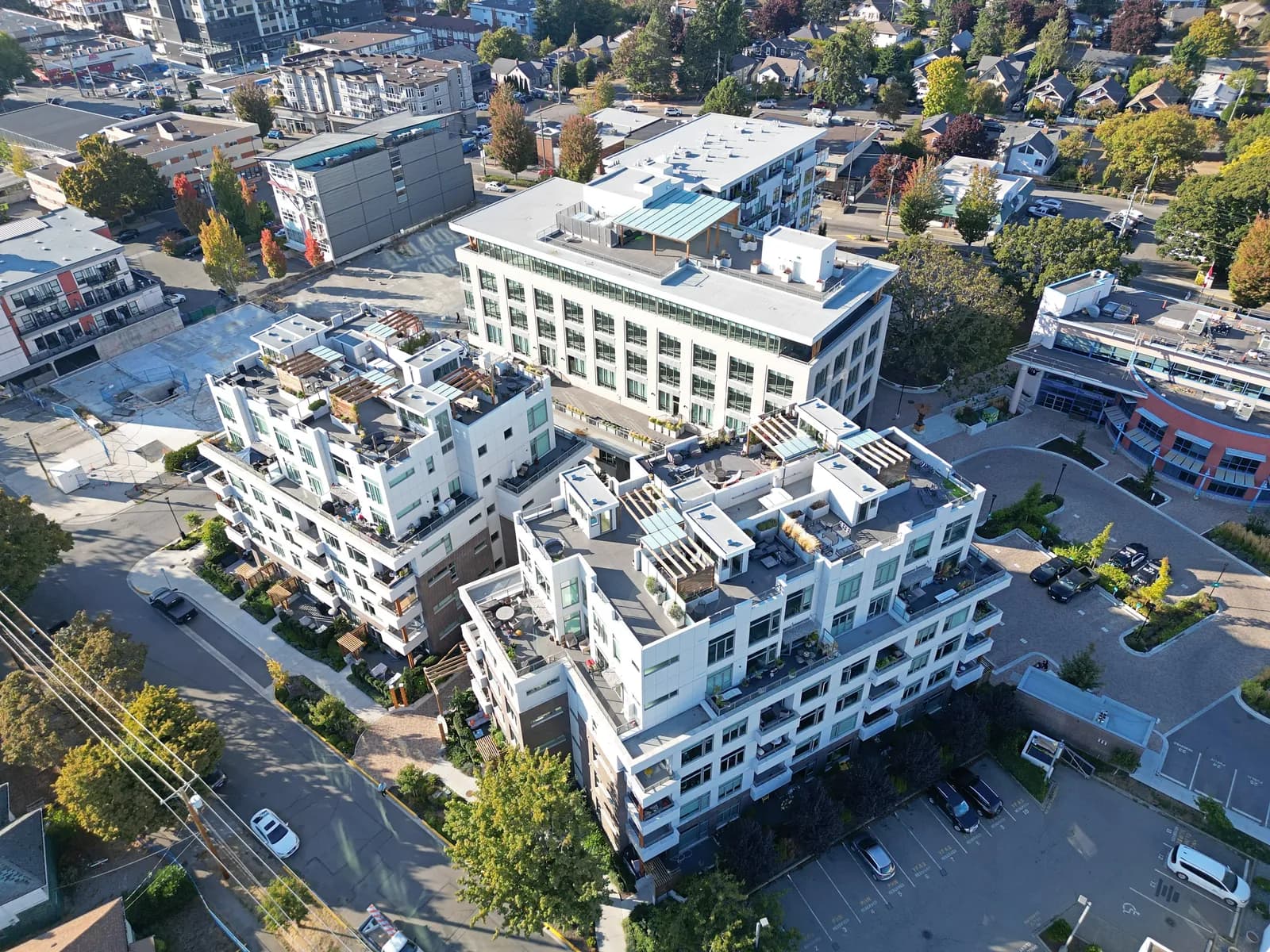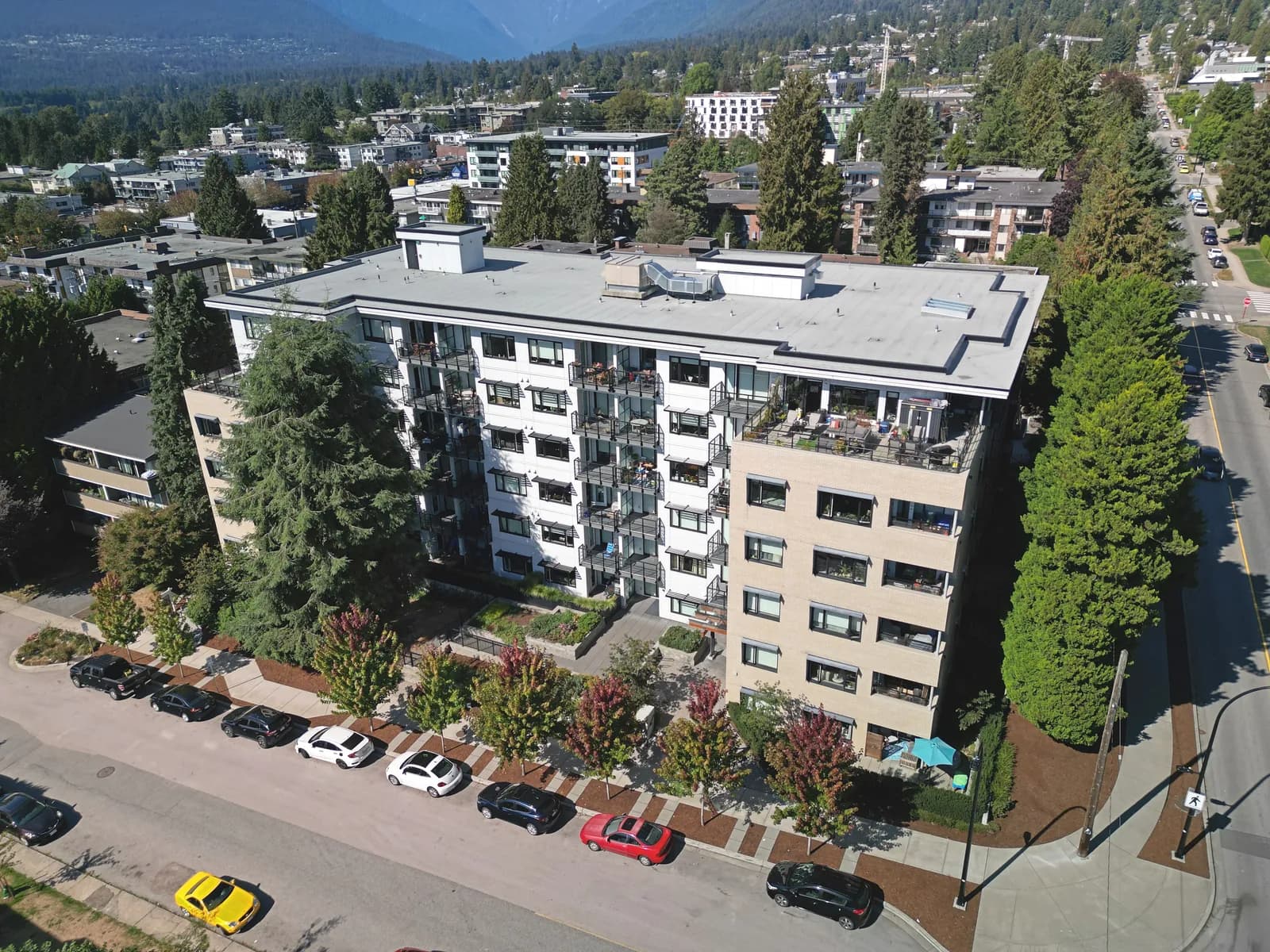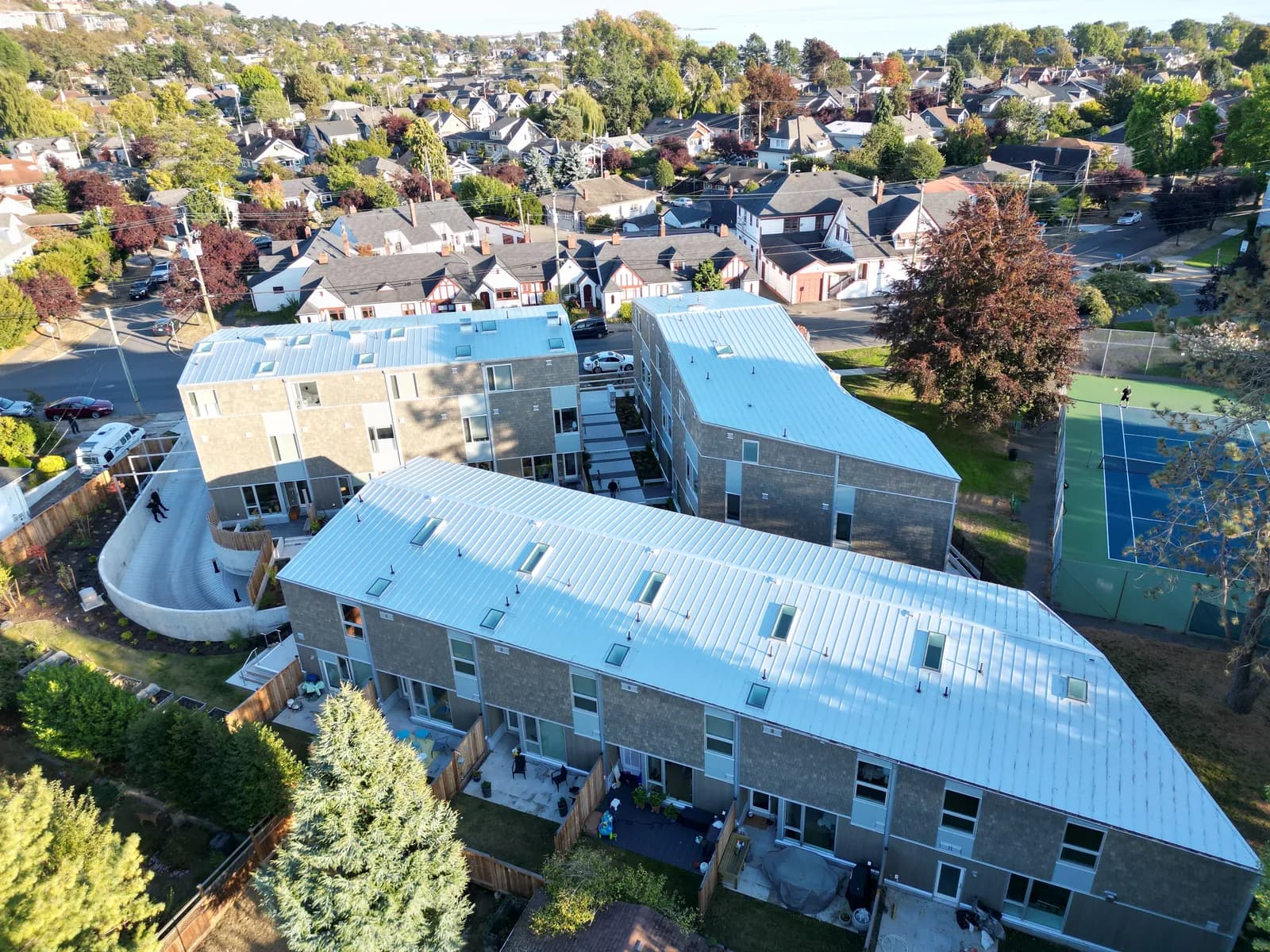
The exterior crews that start in April in the Lower Mainland were booked in November. Most owners find this out the hard way. They notice the cracked stucco or the soft spot under a deck ledger in the first dry week of March, call four contractors, and learn that the earliest site visit is three weeks out and the earliest start is July. By then half the summer window is gone and the price has crept up, because everyone else is competing for the same scaffold and the same crews. If you want to plan a spring exterior renovation in BC and have it start when the weather turns, the decisions that matter get made before December.
Several of those decisions have nothing to do with the wall. They are about money, paperwork and who writes the scope.
When should you start planning a spring exterior renovation in BC?
Start in October or November for an April or May start. A building envelope assessment takes two to four weeks to schedule and write up. A strata needs 14 days of notice for a meeting and a three-quarter vote for any special levy, and most councils need one full meeting cycle before that. A Lower Mainland building permit for cladding work runs four to ten weeks. Add contractor site visits and written estimates, and a project started in late November has roughly 20 weeks to get everything lined up before the first crew arrives.
Twenty weeks sounds generous. In our experience it is about right, with little slack.
Decision one: does any of this have to happen now?
The question we ask on every November site visit is whether the building can wait five months. Often it can. Hairline cracking in a 15-year-old acrylic finish, faded paint on fibre cement, a few failed sealant joints: these get worse slowly, and a spring start loses you nothing.
Active leaks are different. Water reaching sheathing in November keeps reaching it through 120 days of coastal rain, and the repair you price in March is bigger than the one you would have priced in October. Temporary protection costs little against that. Sealing a failed window flashing, tarping an open balcony edge or installing a temporary diverter over a leaking deck-to-wall joint runs about $800 to $2,500 on a house. Replacing rotted sheathing and framing later runs $12 to $20 per square foot, and the area keeps growing while you wait.
So the honest answer to "repair now or in spring" is usually both. Stop the water now with an interim fix. Do the permanent work when stucco, acrylic coatings and sealants can cure, which on the coast means air temperatures of 5°C and rising for several days, and in the Fraser Valley and the Interior means waiting for the freeze-thaw cycle to end. Our guide to exterior renovation in a BC winter covers which trades can keep working through the wet months and which cannot.
One point that surprises people: winter is the best time to investigate. Moisture readings taken from test openings in January show the wall at its wettest, so the scope you build from them is honest. The same openings cut in late August, after six dry weeks, can read 10 to 15 percentage points lower and send you into spring with a scope that is too small.
Decision two: who writes the scope
This is where most spring renovations go wrong, and it happens before a single contractor is called.
The mistake is collecting three estimates on three different scopes and comparing the bottom lines. One contractor prices a recoat. Another prices stripping to sheathing on the two worst elevations. A third prices a full re-clad with new windows. The numbers come back at $38,000, $95,000 and $210,000, the owner picks the middle one because it feels reasonable, and nobody has checked whether the middle scope matches what is inside the wall.
Fix the scope first. On a house, that means a contractor walk-through plus three to six invasive test openings at window sills, deck connections and the base of wall, at roughly $700 to $1,400 per opening in the Lower Mainland including patching. On a strata or commercial building, it means a condition assessment from a building envelope professional, which for a three-storey wood-frame building typically costs $4,000 to $12,000 and takes four to six weeks from engagement to report. We explain what should be in that document in our article on reading a building envelope consultant report.
With a written scope in hand, every estimate prices the same work. The spread between contractors drops from 400 percent to something like 15 to 25 percent, and the differences you see are real differences in approach, warranty and crew.
A building envelope contractor who has worked from consultant specifications before will also tell you where the spec is over-built or under-built for the building in front of them. That conversation is worth having in December, when there is time to adjust it.
Decision three: the money and the meeting that approves it
For a homeowner, the financial decision is mostly about lead time. A home equity line of credit takes two to six weeks to approve and set up. A construction draw on an existing mortgage takes longer. Deciding in January that you will finance the work in April is cutting it close.
For a strata, the money decision has a calendar of its own, and it is less forgiving. Under the Strata Property Act, a special levy needs a three-quarter vote at an annual or special general meeting, and the notice for that meeting, with the resolution and the amount, must go out at least 14 days ahead. Most councils want the consultant's report, at least one contractor's estimate and a contingency figure in front of owners before they vote. Working backward from an April start, that puts the vote in February, the estimates in January and the assessment in November.
Our piece on budgeting exterior repairs through the strata AGM cycle walks through that calendar in detail. The short version is that a council that first discusses the project in January rarely starts work before late summer.
Whichever path you are on, the number to carry is the all-in figure, with contingency. In 2026, a house re-clad over a new membrane and rainscreen cavity in Metro Vancouver runs $40 to $75 per square foot of wall before windows. A stucco recoat or acrylic finish renewal over sound substrate runs $8 to $15 per square foot. On a multi-family building, $80 to $160 per square foot of wall is a fair planning range once consultant fees, access, permit and new windows are in. Add 10 to 15 percent for hidden damage on anything built before 2000, and more on face-sealed stucco from the late 1980s and 1990s.
Owners who skip the contingency do not save it. They find it in July, as a change order, with the scaffold up and the wall open.
Decision four: permit or no permit
Whether the work needs a building permit depends on how deep it goes. Like-for-like repair and recoating of existing cladding generally does not. Stripping cladding to the sheathing, replacing sheathing or framing, changing the wall assembly or replacing windows generally does, under the BC Building Code outside Vancouver and under the Vancouver Building By-law inside it.
The permit is not a formality on the schedule. Burnaby, Surrey, Coquitlam and the North Shore municipalities are quoting four to ten weeks for building permits on exterior work this year, and the City of Vancouver can run longer on multi-family files. Multi-family and commercial projects usually need a registered professional to sign letters of assurance and carry out field reviews, which means the envelope consultant stays on through construction and bills accordingly. Our article on renovation permit cost and timing in BC has the municipality-by-municipality detail.
The timing trap is simple to describe and easy to fall into. The permit application needs drawings. The drawings need the scope. The scope needs the assessment. A project that books its assessment in late January is applying for its permit in March and receiving it in May, which is when the crew was supposed to start.
Apply in February or earlier. If the design is still being finalised, apply with what you have and amend; most building departments in the Lower Mainland allow revisions to an open file.
Decision five: what to lock in with the contractor
By December, the owner who is on schedule has a written scope, a rough cost, a path to the money and a permit plan. What remains is the contractor, and three things need to be settled before the holidays.
First, the start window. Not a date, because weather and the permit will move it, but a window, in writing, with the conditions that trigger it. Good crews in Metro Vancouver have their April and May filled by mid-December. Signing in January still gets you a spring start with some contractors. Signing in March usually gets you a July start.
Second, how hidden damage is priced. The fixed-scope estimate should carry unit rates for the things nobody can see yet: sheathing replacement per square foot, framing repair per linear foot, additional flashing per opening. When those rates are agreed in advance, a July change order is arithmetic. When they are not, it is a negotiation with the scaffold meter running.
Third, long-lead materials. Replacement windows run 8 to 14 weeks from order in BC right now. Custom flashings, longboard and some fibre cement panel profiles run two to five weeks. Colour and profile selections that slip into March push the start into June, even if everything else is ready.
On the contractor itself, the checks are the same ones we recommend for any exterior renovation in Greater Vancouver: a current WorkSafeBC clearance letter, proof of liability insurance with your property named on the certificate, a business licence in the municipality where the work happens, and a written warranty on both workmanship and materials. MV Construction has carried all four on every project for 17+ years, across detached homes, strata buildings and commercial properties from Langley to the North Shore and across to Vancouver Island, and we put the warranty terms in the estimate rather than in a separate document nobody reads.
The calendar from here
If you are reading this in mid-November, the working schedule for an April or May start looks like this.
| When | What is settled |
|---|---|
| Late November | Assessment or test openings booked. Interim leak protection installed where needed. |
| December | Scope written. First contractor site visits. Strata council reviews consultant report. |
| January | Written estimates on the fixed scope. Financing applied for. Strata notice drafted with levy amount. |
| February | Contract signed with start window. Permit application filed. Strata vote held. |
| March | Windows and long-lead materials ordered. Scaffold and access scheduled. |
| April to May | Permit issued. Site mobilised. Work starts as finish-curing temperatures arrive. |
Vancouver Island runs a few weeks behind this. The Cowichan Valley and the west coast of the Island stay wet into May most years, so a June start is a safer plan there for stucco and coating work, while masonry and siding can begin earlier.
The Fraser Valley has the opposite problem. Abbotsford and Chilliwack get real freeze-thaw in February and early March, so a site that is open and wrapped in early April there is in good shape, but a site that is still waiting on its permit in mid-May is heading into the summer rush with everyone else.
Each line in that table depends on the one above it. A council that slips the December review to January does not lose one month; it usually loses the spring, because the vote misses February, the permit misses March, and the contractor's April window goes to the next building in line.
If you would like a site visit and a fixed-scope written estimate while there is still time to hold a spring start, call (778) 375-5672 or request an exterior renovation estimate. We are scheduling November and December assessments across Metro Vancouver and the Island now.