Take a 1974 Vancouver Special in East Vancouver: brick on the ground floor, stucco above, aluminum windows that drip condensation every January. The owners want the stucco stripped, a rainscreen and new cladding installed, and a crew on site by March. Two weeks before the start date, the lab report arrives. The stucco base coat contains 2 percent chrysotile asbestos, and the paint on the fascia boards tests positive for lead.
Nothing about that wall looked different from stucco put up in 1995. Asbestos stucco on an old house in BC is hard to plan around for exactly that reason. You cannot see it or smell it, and only a lab result settles the question. The project still goes ahead, but it starts four to six weeks late and carries a hazardous materials line the owners never budgeted for. Testing before contractors priced the job would have avoided both.
Does stucco on an old BC house contain asbestos?
It can, and on a house built before 1990 you should assume it might until a lab says otherwise. Some cement stucco and textured finish coats applied in BC from the 1950s through the 1980s contain chrysotile asbestos, usually a few percent by weight. WorkSafeBC treats any material with 0.5 percent or more as asbestos-containing. A hazardous materials survey for a typical house costs roughly $600 to $1,500, and lab results take 3 to 5 business days.
Where asbestos and lead hide on an older exterior
Stucco gets the attention, but it is one material on a long list. On an older BC house or low-rise strata building, these are the exterior materials a surveyor will sample:
- cement stucco base and finish coats
- cement-asbestos siding shingles and soffit panels, common on 1950s and 1960s houses
- window glazing putty and the old caulking around window and door frames
- tar, mastic and roofing felt at roof-to-wall junctions and under old flashings
- paint on wood siding, fascia, trim and window sashes (lead)
- red or grey primer on old steel railings and lintels (lead)
Patches deserve their own sentence. A wall that tested clean in one spot can still hide asbestos in a repair from 1983, mixed from a different bag in a different decade. A careful surveyor samples each visibly different area of stucco, which on a house that has been patched four or five times can mean 10 to 15 samples from the walls alone.
Lead follows the age of the paint layers. Health Canada's rule of thumb is that a house built before 1960 almost certainly has lead paint somewhere, and one built between 1960 and 1990 may have some. On an exterior that has been repainted six or seven times, the lead usually sits in the bottom layers under newer acrylic. It stays where it is until someone sands, scrapes or heat-strips it.
What WorkSafeBC requires before demolition or renovation
WorkSafeBC has said for years that asbestos exposure is the leading cause of work-related deaths in BC. That history is why the rules in its Occupational Health and Safety Regulation are strict. Before a crew demolishes or renovates part of a building that may contain asbestos, lead or other hazardous materials, a qualified person has to inspect it, take samples and record what is there and where. A crew that rips the asbestos stucco off a 1970s house without that inventory is breaking the regulation, and so is the contractor who sent them.
Since January 1, 2024, BC has also required asbestos abatement contractors to hold a WorkSafeBC licence, and abatement workers need certified training. WorkSafeBC keeps a public list of licensed contractors on its website. Ask any abatement firm for its licence number before you sign.
Lead is handled differently. There is no separate licence for lead paint work, but WorkSafeBC expects an exposure control plan wherever workers disturb it: containment, HEPA vacuums, respirators and wet methods in place of dry sanding. A painter who quotes "scrape, sand and repaint" on 1950s trim without mentioning any of that has either not checked the age of the house or does not plan to follow the rules.
Your municipality has its own checkpoint. The City of Vancouver asks for a hazardous materials report with a demolition permit application, and many neighbouring municipalities do the same. Call your city's permit desk before you apply so the report is ready when the application goes in.
The order of work before demolition starts
On an older house, the front end of an exterior renovation runs in this order. Times are typical for the Lower Mainland in 2026.
- Survey. The surveyor spends half a day to a day on site and cuts small samples from stucco, caulking, putty, paint and roofing at the wall. The holes get a temporary patch.
- Lab results and report. Three to five business days at standard turnaround. Rush results in 24 to 48 hours cost extra.
- Abatement pricing. A licensed abatement contractor prices the removal from the report. Allow about a week.
- Notice to WorkSafeBC. The abatement contractor files a Notice of Project before work starts.
- Abatement. Asbestos stucco on a two-storey house typically takes one to two weeks inside sealed polyethylene containment, with the stucco kept wet and air sampling throughout.
- Clearance. An independent consultant inspects and samples the work area, then issues a clearance letter.
- Demolition and the renovation itself.
Added up, hazardous materials put three to six weeks at the front of the schedule. Build that time in at the first meeting. If it surfaces after the scaffold is up, you pay scaffold rent on a building nobody is allowed to touch.
What it costs at 2026 Lower Mainland prices
Access, quantity and how the material is attached all move the price. These ranges are typical for Metro Vancouver this year:
| Item | Typical 2026 range |
|---|---|
| Hazardous materials survey, single-family house | $600 to $1,500 |
| Hazardous materials survey, low-rise strata building | $4,000 to $12,000 |
| Asbestos stucco removal | $12 to $25 per sq ft of wall |
| Asbestos stucco removal, typical two-storey house | $25,000 to $50,000 |
| Lead-safe prep on painted siding and trim | 20 to 40 percent on top of standard prep and painting |
Cement-asbestos siding usually costs less to remove than stucco, because the shingles come off whole instead of being broken out of a wall. Window putty and caulking are normally handled when the old windows come out, by the abatement crew, before the frames go in the bin.
The survey is the cheapest line in that table and the one that controls every other number.
The mistake: testing after the bids are in
Most owners treat the survey as the contractor's problem, something that happens after they have picked a firm and signed. That order costs money. Three contractors pricing an older exterior without test results will each make a different assumption. One leaves hazardous materials out and plans a change order. Another adds a vague allowance, and the third prices worst-case abatement on every wall. The lowest bid looks lowest because it priced the least work.
Commission the survey yourself, before you ask for estimates, and give the same report to every bidder. A $1,000 report turns three guesses into three prices you can compare line by line. It also puts the hazardous materials scope in writing before anyone signs, which is the best protection you have against a mid-project extra. Our guide to comparing exterior renovation bids covers the rest of that comparison, including how the unknowns in a bid turn into extras later.
A positive result does not always mean removal
Owners sometimes hear "asbestos" and assume the whole wall has to come off. Sound asbestos stucco that nobody cuts, drills or grinds is stable. If the plan is a low-pressure wash and repaint of an intact wall, it can often stay in place, and the report goes in your house file for the next owner.
The calculation changes once the scope disturbs the wall. A new rainscreen and cladding means hundreds of fasteners driven through the old stucco, plus cuts at every window and penetration, and each one is asbestos work done under controls. At that point we usually recommend removing it. You pay for abatement once, the new wall goes onto clean sheathing we can inspect for rot, and the problem does not pass to whoever owns the house next. Our article on stucco repair versus replacement goes through the wall-condition side of that decision.
Older strata buildings: the same rules, more people
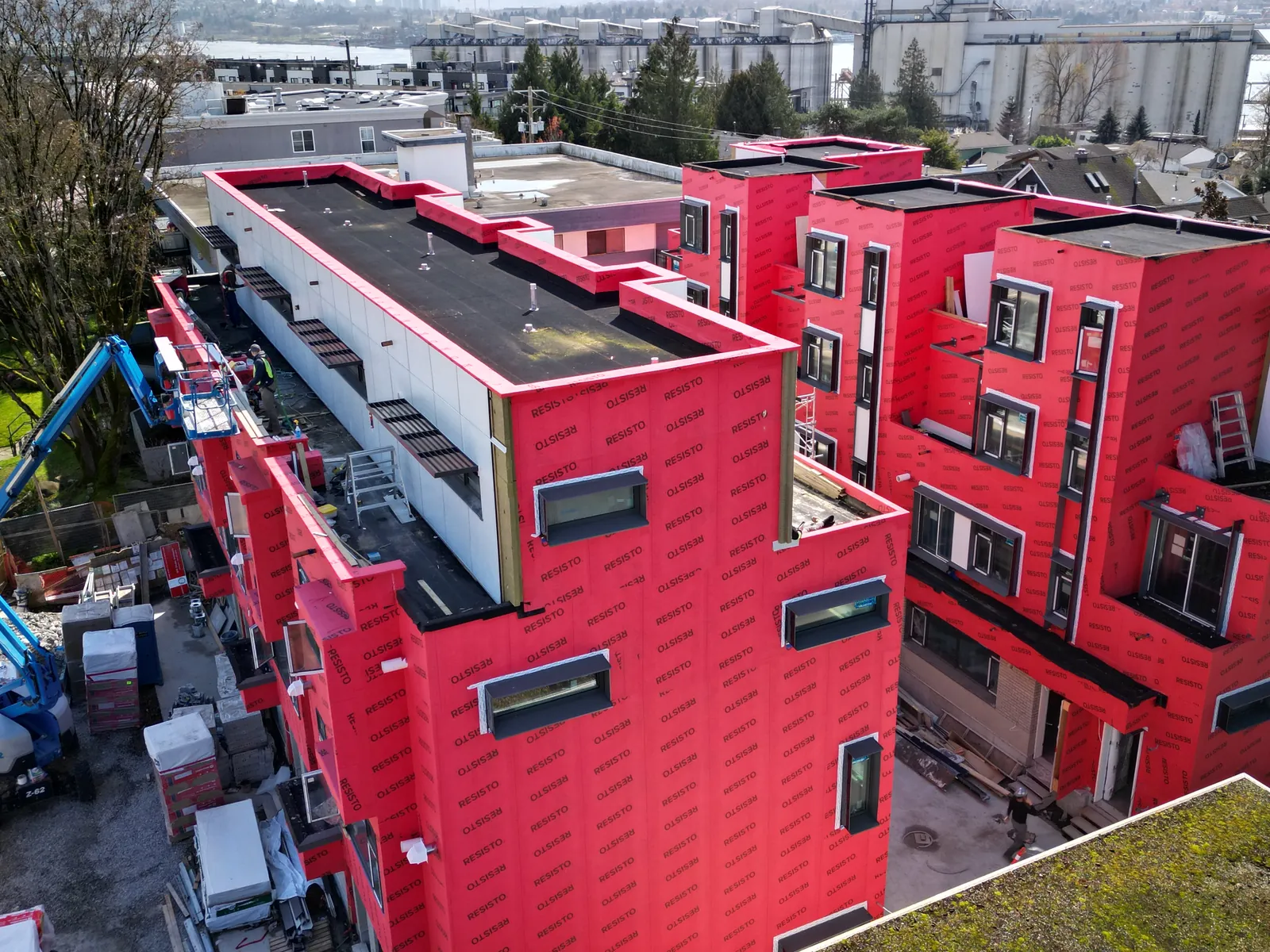
A 1970s or 1980s townhouse complex has the same materials as a house, multiplied by 40 units and occupied while the work happens. The survey has to cover every building and every visibly different repair, and council needs the results before it sets a special levy or a contingency reserve vote. Abatement on an older strata envelope project commonly adds 5 to 15 percent to the budget, which is too much to discover after the owners have voted.
Residents need written notice of where containment goes, how long it stays and when windows have to remain shut. Sequencing abatement one building or one stack at a time keeps any single unit sealed for days instead of weeks.
How we plan it on MV Construction projects
On any house or strata building put up before 1990, the hazardous materials survey is the first line of our schedule. If you already have a report, we price from it. If you do not, we recommend commissioning one before the written estimate is final, so abatement appears as its own fixed line. A WorkSafeBC-licensed abatement contractor removes the material, an independent consultant clears the area, and demolition starts after the clearance letter is in hand.
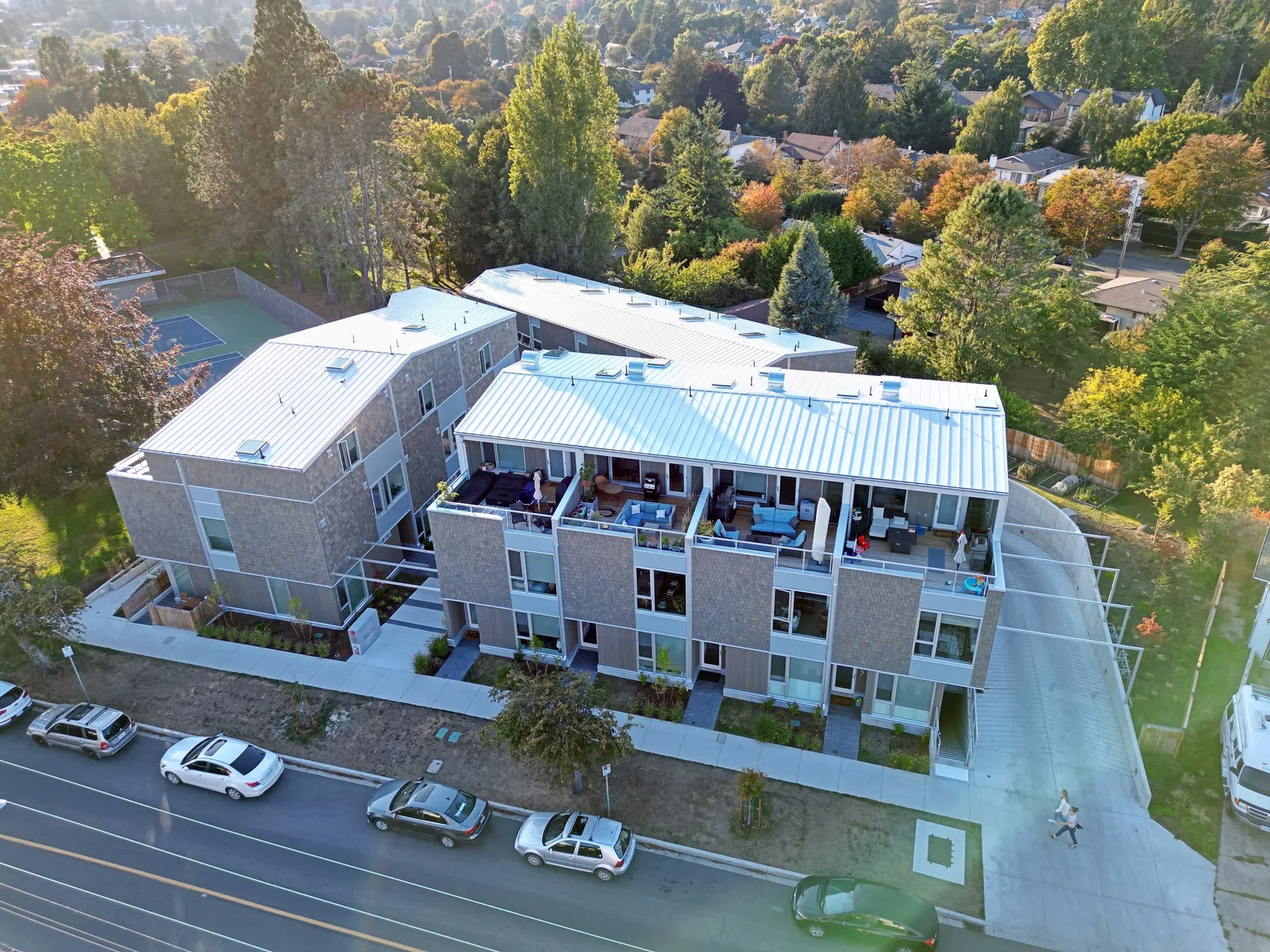
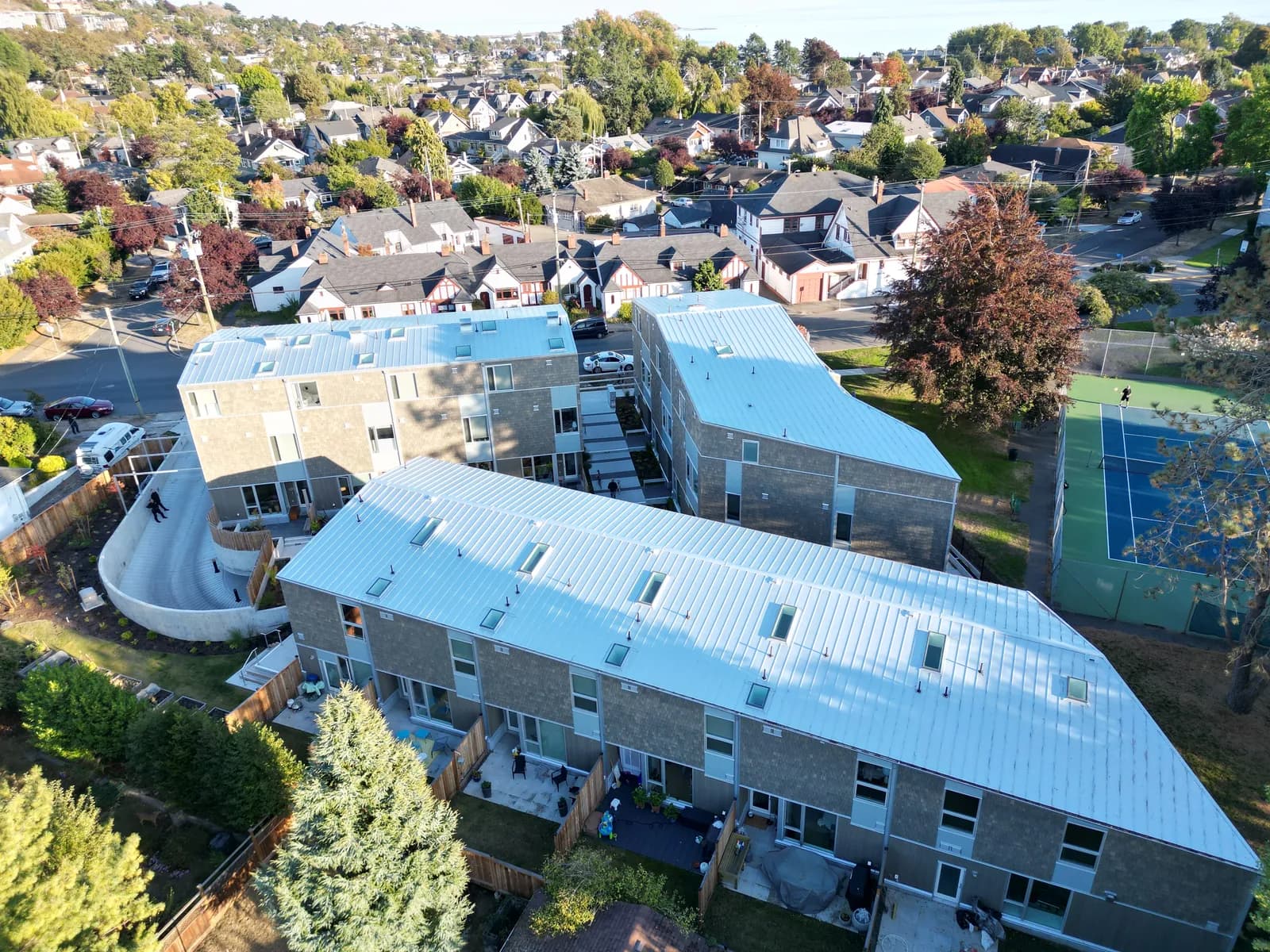
MV Construction has worked on BC exteriors for 17+ years. We are fully licensed and WCB-insured, and our workmanship is backed by a written warranty. Every pre-1990 building we see, from Vancouver Specials in East Vancouver to 1970s townhouse complexes in Burnaby and Victoria, starts with a hazmat survey before the first wall comes apart. When stucco is the main cladding, our stucco and EIFS contractor crews plan the tear-off and the new wall assembly together with the building envelope scope, so abatement sits in the schedule from day one.
If you are planning exterior work on an older house or strata building, call us at (778) 375-5672 or request a fixed-scope estimate. Send the hazardous materials report with your request if you have one. If you do not, we will tell you what to test before anyone prices the job.