The storm passes overnight. By morning the stain on the bedroom ceiling has stopped spreading, the carpet under the window feels only damp, and the sensible move seems to be waiting for a dry day to see how bad it is. In a BC October, that dry day may not come for two weeks, and the next system off the Pacific is often three days out.
That gap is where most of the cost comes from. Water damage after a storm in BC is usually a drying job in the first few days and a rebuilding job by the second week. The materials that change between those two outcomes sit inside the wall, where nobody looks: sheathing, framing, insulation. What you do in the first week decides which bill you get.
What should you do in the first week after storm water damage in BC?
Stop more water getting in within 24 hours, even if that means a tarp or poly sheeting. Photograph everything and take moisture readings before anything is removed. Call your insurer the same day. By day three, remove soaked drywall, carpet pad and insulation and run commercial dehumidifiers. By day seven, every wet wall should have readings showing the framing is drying toward 19% moisture content, or a plan to open it further.
Why a fall storm is harder to dry out than a summer leak
Drying needs dry air, and coastal BC has very little of it between October and March. Outdoor relative humidity in Metro Vancouver sits close to saturation for days at a time in late fall. Opening the windows to air the house out pulls moisture in.
November is usually the wettest month of the year in Vancouver, and the rain tends to arrive in multi-day bursts. In late November 2021, southern BC took a series of atmospheric rivers in under three weeks. That pattern is normal for the season, and it means any temporary repair made after the first storm has to survive the next one. A blue tarp held down with a few bricks will not last a BC November.
Then there is the wall itself. A newer BC house built with a rainscreen has a drainage gap behind the cladding that lets an exterior wall dry toward the outside. Many older homes, and a lot of stucco buildings from the 1980s and 1990s, have no gap at all. Once water gets behind that cladding, it can stay in the sheathing for months.
Days 1 and 2: stop the water and document it
The first job is keeping more water out. That might mean tarping a section of roof, boarding a window broken by a branch, covering a torn-off piece of siding or soffit with poly and battens, or pumping out a flooded basement stairwell. Most home insurance policies in Canada expect you to take reasonable steps to prevent further damage, and the cost of those steps is normally part of the claim. Keep every receipt.
Before anything wet goes in a bin, photograph it. Wide shots of each room, then close shots of the stains, the ceiling and the waterline on the drywall. If you have a moisture meter, or the restoration crew brings one, write the readings on a rough sketch of each room with the date. Adjusters in the Lower Mainland get buried after a regional storm, and the first site visit can slip past a week. Your photos and readings are what they will work from.
Find out where the water came in. Rain that entered through an opening the storm created, such as a lifted roof section or a smashed window, is a very different file from water that seeped through an aging wall over several weeks. The entry point shapes both the repair and the claim.
The source matters for health as well. Rain through a breach starts out relatively clean, though it degrades the longer it sits in carpet and insulation. Overland water from a flooded yard or street, and sewer backup, carry contamination. Drywall, insulation and carpet those waters have touched are removed and replaced.
Days 3 to 5: open what needs opening
This is where most owners hesitate, and hesitation costs the most here. Wet drywall hides what is behind it. The paper face on gypsum board and the surface of framing lumber can start growing mould within 24 to 48 hours of staying damp, and fiberglass batts hold water against the studs like a sponge.
The usual approach is a flood cut. The crew removes drywall in a straight line roughly 30 to 60 cm above the highest wet reading, pulls the wet insulation, and leaves the cavity open to the drying equipment. On an exterior wall, someone should also check the sheathing from the outside if water came through the cladding. OSB that has soaked for a few days swells at the edges and loses strength. Plywood holds up better, but it still needs to be measured.
Then the drying starts in earnest. Commercial dehumidifiers and air movers run around the clock, the building stays closed and heated, and readings are taken daily. Household fans and a portable dehumidifier from the hardware store will not pull enough water out of a soaked stud wall in a BC fall. If mould has already appeared, our article on mould remediation in BC explains what changes in the process.
Days 6 and 7: decide what dries and what gets replaced
By the end of the first week, the moisture readings should show which materials are coming back and which are not. A room with open walls and proper equipment usually reaches its drying target in three to five days. Saturated framing in an exterior wall can take two weeks or more, and some of it will need replacing.
The BC Building Code caps framing lumber at 19% moisture content when it is installed, and most drying specifications use the same number before a wall is closed up. Close a wall above that and you have built next spring's mould problem into it.
The expensive cases of water damage after a storm are rarely the dramatic ones with a tree through the roof. Those get attention on day one. The costly ones are quiet: a stain under a window that looked dry by Tuesday, a damp patch on a basement wall nobody opened. Six months later the same wall needs new sheathing and framing, the insurer treats it as long-term seepage, and the owner pays for most of it.
What insurance usually covers after a storm
Policies differ, so read yours. A few patterns hold across most Canadian home and strata policies.
Sudden damage from wind is commonly covered, and so is rain that enters through an opening the wind created. Water that seeps through a wall or roof over time is usually treated as a maintenance issue and excluded. Overland flooding and sewer backup are often optional endorsements, which means a basement flooded by surface water may or may not be covered depending on what was added to the policy.
Report the loss promptly. Keep damaged materials, or clear photos of them, until the adjuster has seen them, and hold off on permanent repairs until the insurer approves a scope. Emergency mitigation is the exception and should start right away. Our guide to water damage restoration and the insurance conversation covers what to say on that first call, and the insurance restoration timeline shows where the weeks go after it.
How long full restoration takes after week one
When storm water damage stays inside, the drying is done and nothing structural is involved, the rebuild typically takes three to six weeks once the scope is approved.
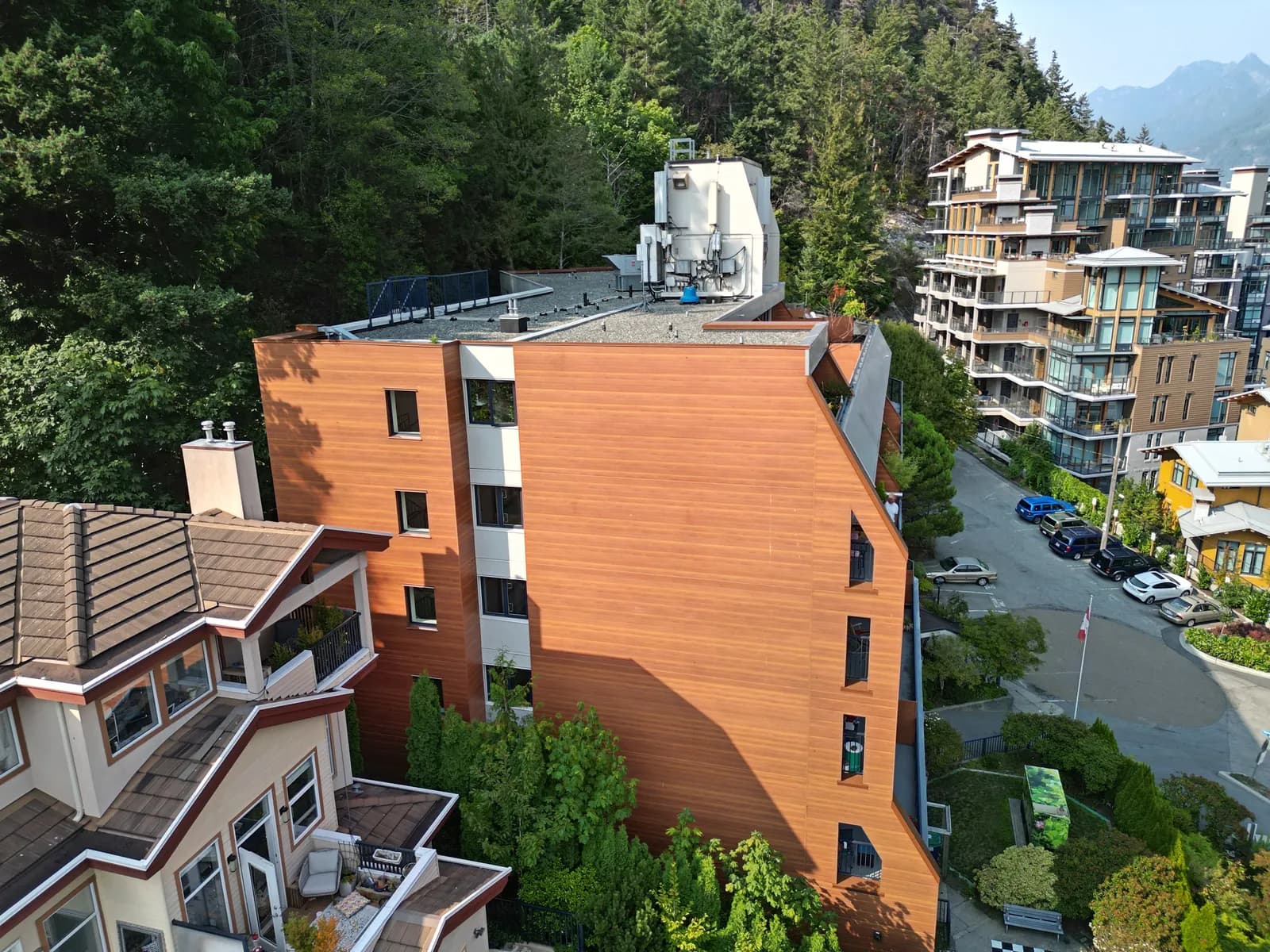
If the water came through the exterior and wet the sheathing and framing, the job becomes building envelope repair. That means opening the cladding, replacing damaged sheathing and membrane, correcting the flashing or detail that let the water in, and re-cladding. Plan for six weeks to four months on a house. A strata building takes longer, because council approval and the master policy add their own steps.
Weather decides part of that schedule too. Stucco and many sealants need temperatures above about 5°C to cure properly, so exterior work in a BC winter either runs under a heated scaffold enclosure or waits for a suitable stretch. A good contractor shows you how they will handle that in the written scope, before work begins.
Who you call matters as much as when
On many storm claims, one company dries the building and a different one rebuilds it, and the handoff between them costs two or three weeks. We prefer to run both. MV Construction has handled fire and flood restoration and exterior work across Greater Vancouver and Vancouver Island for more than 10 years. Our crews are fully licensed, WCB-insured and bonded, our workmanship comes with a written warranty, and we take emergency calls 24/7 within Greater Vancouver. We work with adjusters directly, so the moisture logs, photos and scope reach the insurer in the form they expect.
If a fall storm has left water in your walls, ceiling or basement this week, call us at (778) 375-5672 or request a written restoration scope. We will tell you what can be dried and what has to come out, and help you put together what your insurer needs to see first.