Most fiber cement siding that reaches us for repair is not worn out. It has been hit by a ladder, a lawnmower or a falling branch, or it is swelling along the bottom edge because it was run tight to a deck with no clearance. Fiber cement repair in BC is usually a question of how far the damage goes behind the board, not how bad the board looks. A cracked plank on a dry wall is an afternoon of work. The same cracked plank over wet sheathing is the first visible sign of a much larger scope.
Patching, board replacement and a full reclad sit an order of magnitude apart on price, and two checks decide between them.
Can damaged fiber cement siding be repaired, or does it need replacing?
Most damaged fiber cement siding can be repaired locally. Chips and hairline cracks away from board edges take a cementitious patch and paint. Cracked, swollen or delaminated boards get cut out and replaced individually, typically $1,500 to $5,000 on a single-family elevation reachable from the ground. A full reclad, at $17 to $24 per square foot, only makes sense when the sheathing behind is wet across the wall or the assembly has no drainage cavity.
What fiber cement damage actually looks like
Fiber cement (often sold as Hardie board) is hard, stable and fire-resistant. It is also brittle, and it absorbs water through any edge that is cut and left unsealed. Almost every repair call we see falls into one of five patterns.
Impact cracks and broken corners. Ladders, hockey pucks, storm debris, a car door in a tight driveway. Impact damage is almost always local, and it is the easiest case to fix well.
Swelling and flaking at the bottom edge. The board has been wicking water through its cut end. Manufacturers call for roughly 150 mm (6 inches) of clearance above finished grade and 25 to 50 mm above roofs, decks and walkways. Boards that sit tight to a deck surface or a roof line soak every time it rains, and the face starts to delaminate. The install details that prevent this matter here, because replacing the board without restoring the clearance just resets the clock.
Cracks running out from fasteners. Overdriven nails, or nails set too close to the end of a board. If you find it on one board, check the next ten, because it is an installer habit, not bad luck.
Open or stained butt joints. Where two lap boards meet end to end, there should be a flashing strip behind the joint. When it is missing, water runs down the joint to the building paper in every storm. A dark streak below a butt joint deserves a closer look.
Paint failure. Peeling and chalking are maintenance, not damage, and a weather-facing wall wants a recoat every 8 to 12 years. Left bare for several winters, though, paint failure turns into edge damage.
The check that decides the scope
Before anyone prices a fiber cement repair, two questions need answers. Is the wall behind the damaged board wet? And is there a drainage cavity?
Here is the counterintuitive part. The board you can see is usually the least expensive part of the repair, and the decision is made by the wall you cannot see. A damaged board is coming off anyway, so it doubles as a free inspection window. Once it is out, look at the building paper or housewrap for tears, staining or saturation, then take pin-meter readings in the sheathing. Wood at 15 percent moisture content or below is dry. Above about 19 percent, decay organisms become active and the repair grows.
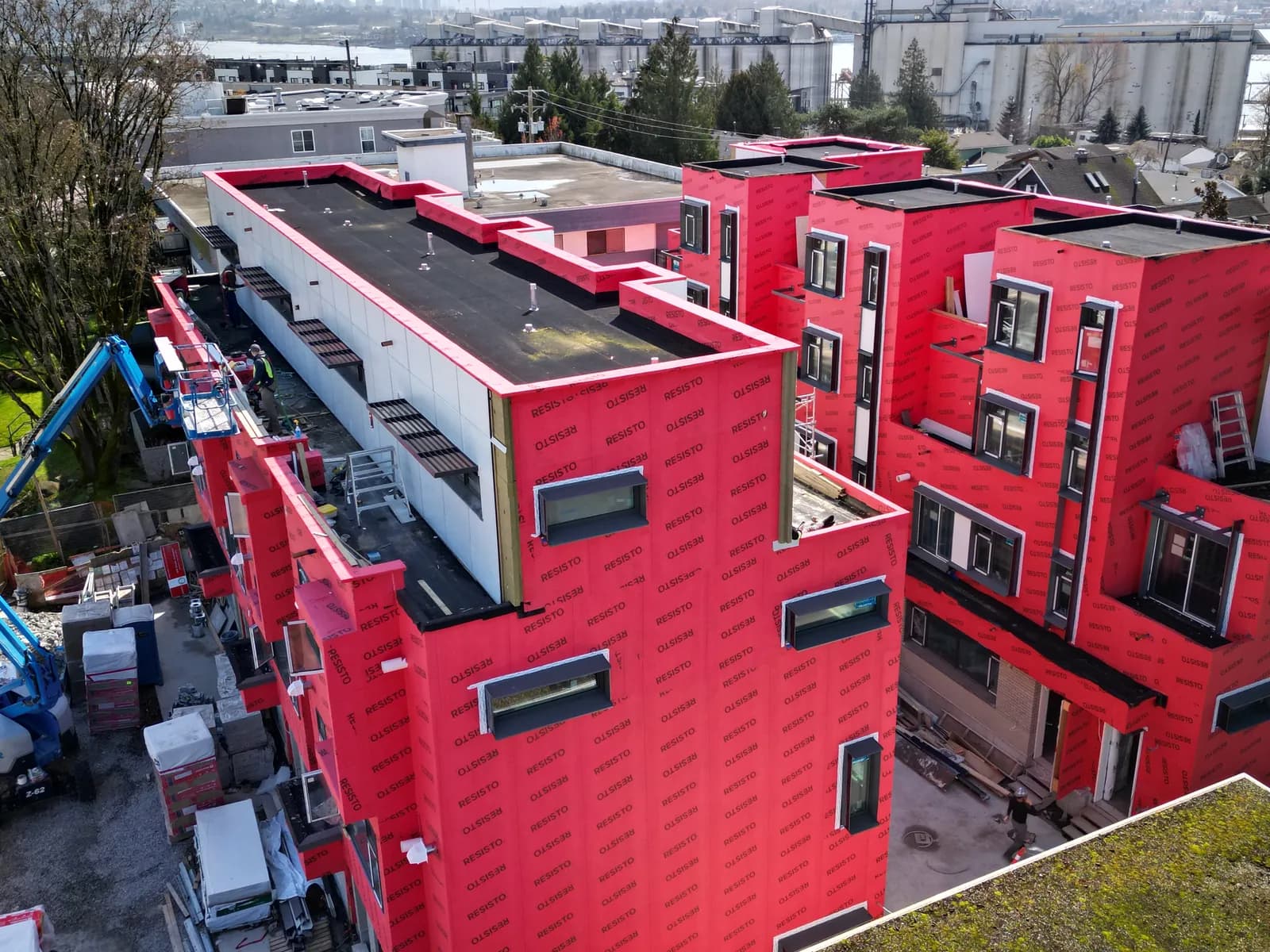
Then look for strapping. Vertical wood strips, usually 19 mm thick, between the siding and the paper mean the wall has a rainscreen cavity that lets water drain and the assembly dry. Boards nailed straight through paper into sheathing mean a face-sealed wall. Newer walls in Metro Vancouver generally have the cavity, because the BC Building Code requires a capillary break behind cladding in our wet coastal climate. Plenty of older installs do not, and on a North Shore elevation facing wind-driven rain, that difference shows up in the sheathing.
A common mistake is skipping this step because the damage "looks cosmetic." We have pulled a single cracked board in Surrey and found dry paper and sound plywood. We have pulled a single swollen board on a Langley townhome and found black sheathing two bays wide. The board looked about the same in both cases.
Option 1: Patching
Patching suits chips, nail holes and hairline cracks that do not reach an edge. The spot gets cleaned, filled with a cementitious patching compound or a paintable sealant rated for fiber cement, primed and painted.
It has one hard limit. A patch does not restore the water resistance of a cracked edge, and a patched board at the bottom course will fail again. Caulking over a crack at a butt joint or board end does harm: it hides the entry point while water keeps going in.
Patching usually gets folded into a maintenance or repaint visit, at a few hundred dollars to about $1,000 for a handful of locations.
Option 2: Board or panel replacement
Most fiber cement repair ends here: boards cracked through, broken at a corner, swollen or delaminated, and almost anything at the bottom course, provided the wall behind is dry or only locally wet.
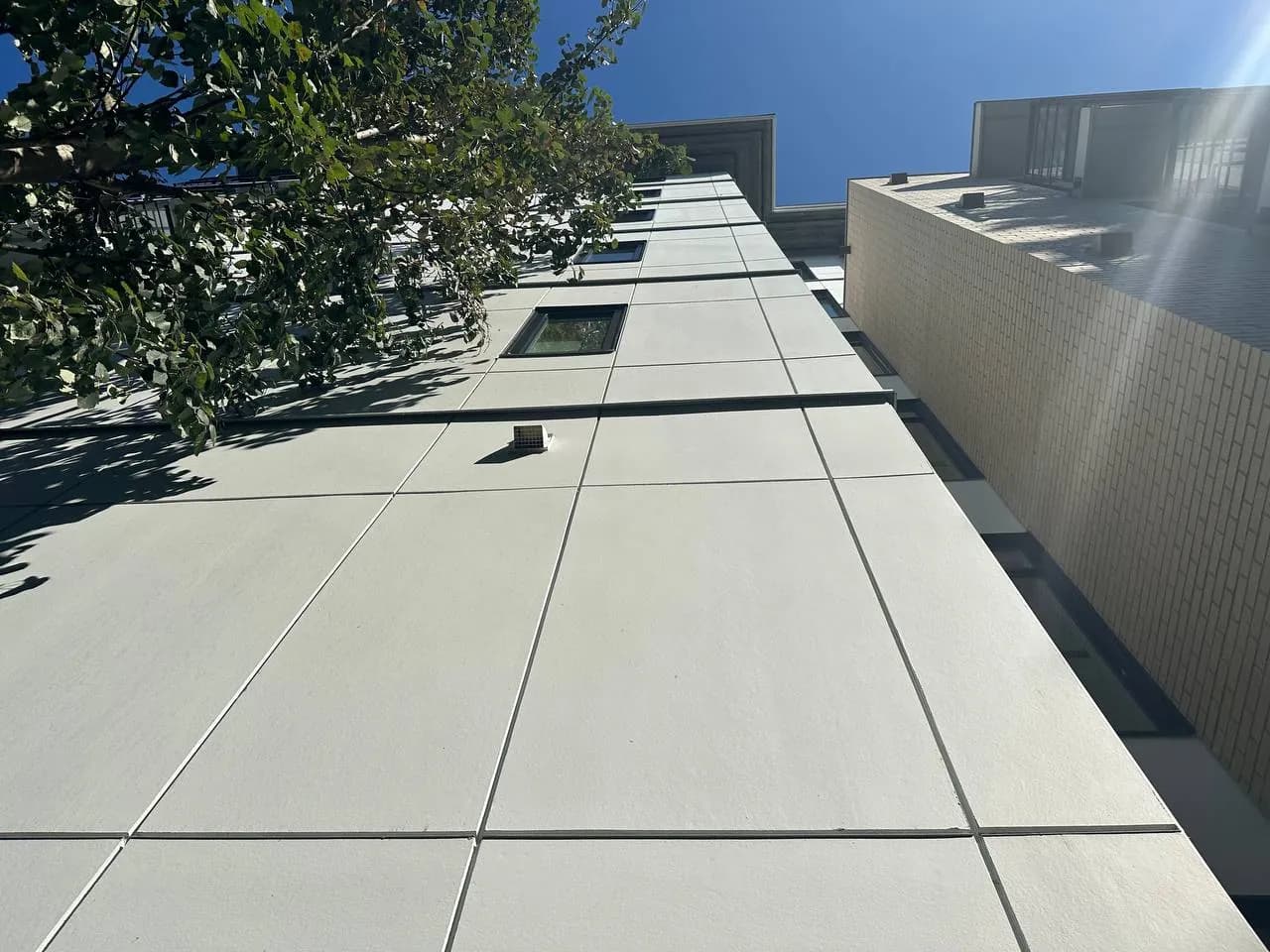
On lap siding, the damaged plank is cut out, the fasteners in the course above are cut or pulled, and a new plank slides into place, fastened per the manufacturer's replacement detail. Butt joints get flashed, cut ends get primed and sealed, and clearances get corrected while the wall is open. Panel systems come off between trims or reveals. Concealed-clip panel systems on strata and commercial buildings can mean working in from the nearest edge to reach one panel.
Colour match comes up on almost every job. Factory finishes fade, so a new board next to a ten-year-old one will stand out. Plan on painting at least the wall between two corners. Profile is the other problem. Some textures and widths from the 1990s and early 2000s are no longer made. When a board cannot be matched, we take one from a less visible elevation, use it on the front, and fit the nearest current profile at the back.
Cutting fiber cement also releases respirable crystalline silica, and WorkSafeBC requires an exposure control plan with shears or dust-extracted saws. A crew dry-cutting boards with an abrasive blade on your driveway is telling you something about how the rest of the job will go.
On a single-family home in the Lower Mainland, a localised board replacement reachable from the ground typically runs $1,500 to $5,000, including trim, flashing and paint on the affected wall. Second and third storeys add scaffold or lift time, which on small repairs can cost more than the repair itself. If the open wall shows wet sheathing, replacing a sheet runs about $180 to $350.
Option 3: A full reclad
A reclad is needed in fewer cases than people fear, but the signs are clear:
- Wet or decayed sheathing across several stud bays or more than one elevation
- A face-sealed wall with a history of repeat leaks
- Install defects repeated across the building, such as missing butt joint flashings, corroding fasteners near the coast or no clearances anywhere
- Damage on more than roughly a quarter to a third of an elevation, where piecework approaches reclad cost and still leaves the rest of the wall untouched
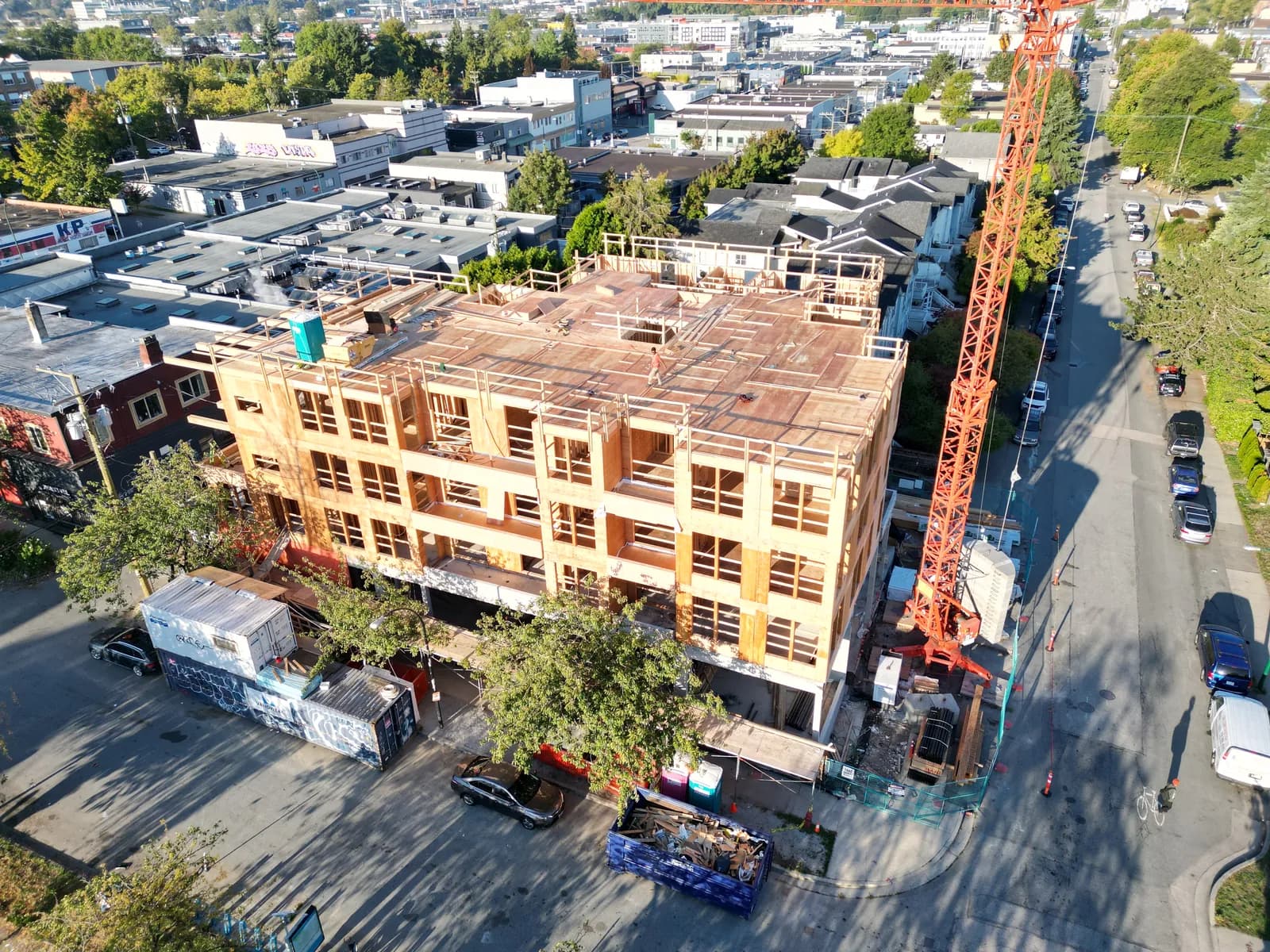
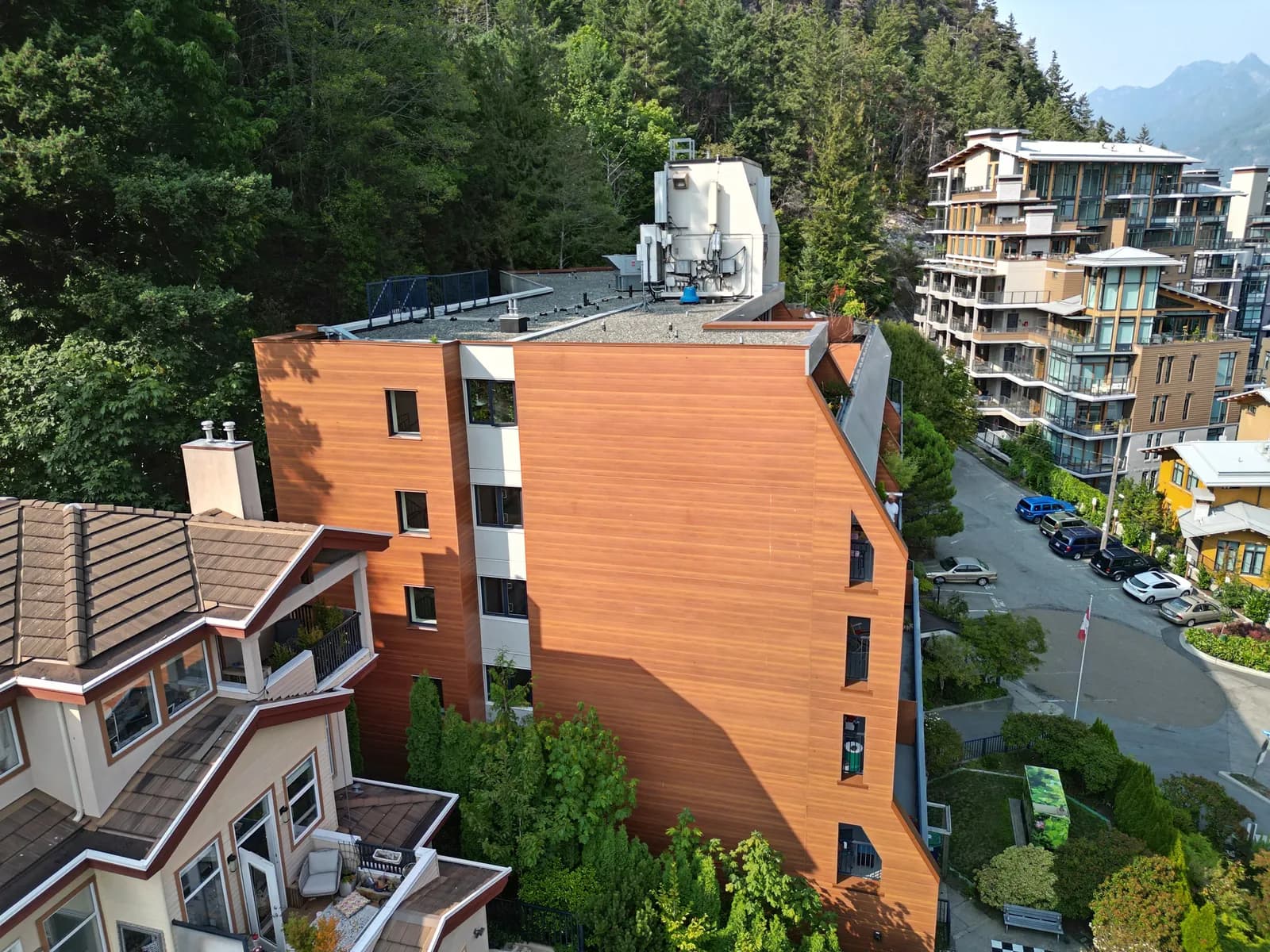
A full tear-off with new fiber cement lands between $17 and $24 per square foot of wall area on a house in Greater Vancouver, with sheathing and framing repair priced separately once the walls are open. Strata re-clads run about $18 to $30 per square foot, depending on scaffold, height and the depreciation report scope. A reclad usually needs a building permit, and on multi-family buildings an envelope consultant writes the specification. It is building envelope work as much as siding work: new cladding is only as good as the cavity, paper and flashings behind it.
Asbestos-cement siding was common on BC homes built before 1990 and looks a lot like modern fiber cement from the street. WorkSafeBC requires a hazardous materials survey before renovation or demolition on buildings of that age, so the siding gets tested before anyone cuts it.
Who pays for fiber cement repair
Sudden events such as windstorm debris, a fallen limb or a vehicle are generally covered, subject to your deductible. Report them promptly with photos. Bottom-edge swelling, missing flashings and fastener cracking are gradual deterioration or installation defects, and most BC policies exclude them.
Newer homes may have another route. Under BC's 2-5-10 home warranty, building envelope coverage, including water penetration, runs five years from occupancy. In a strata, exterior cladding is usually common property, so the strata corporation manages the repair and the property manager should get the findings in writing.
What the first week looks like
First 24 hours. If a storm or impact caused the damage, photograph it and whatever caused it. Cover any exposed paper or sheathing with poly and tape so rain cannot get behind it. Call the insurer if an event is involved. Leave the boards on the wall.
First week. A site visit, one damaged board pulled for inspection, moisture readings, and a written scope with photographs that separates the board replacement from any contingent sheathing repair.
The repair. Board replacement takes one to three days on site plus paint. An elevation-scale repair takes one to three weeks. A full reclad takes four to eight weeks on a house and several months on a strata building.
Timing matters more than usual right now. Paint and sealants want dry surfaces and mild temperatures, and a Lower Mainland October offers fewer of those each week. A board with an open edge going into atmospheric river season takes on water with every storm.
Getting the repair scoped properly
MV Construction has repaired and replaced cladding across Greater Vancouver and Vancouver Island for over 10 years. We are fully licensed and WCB-insured, and our workmanship is warranty-backed. As a fiber cement siding contractor, we pull a board before we estimate any fiber cement repair, so the scope reflects the wall, not the surface, and any sheathing allowance is its own line rather than a hidden cost later.
If you are looking at cracked, swollen or stained fiber cement, call (778) 375-5672 or request a fixed-scope estimate. If the board is the only thing wrong, we will say so.