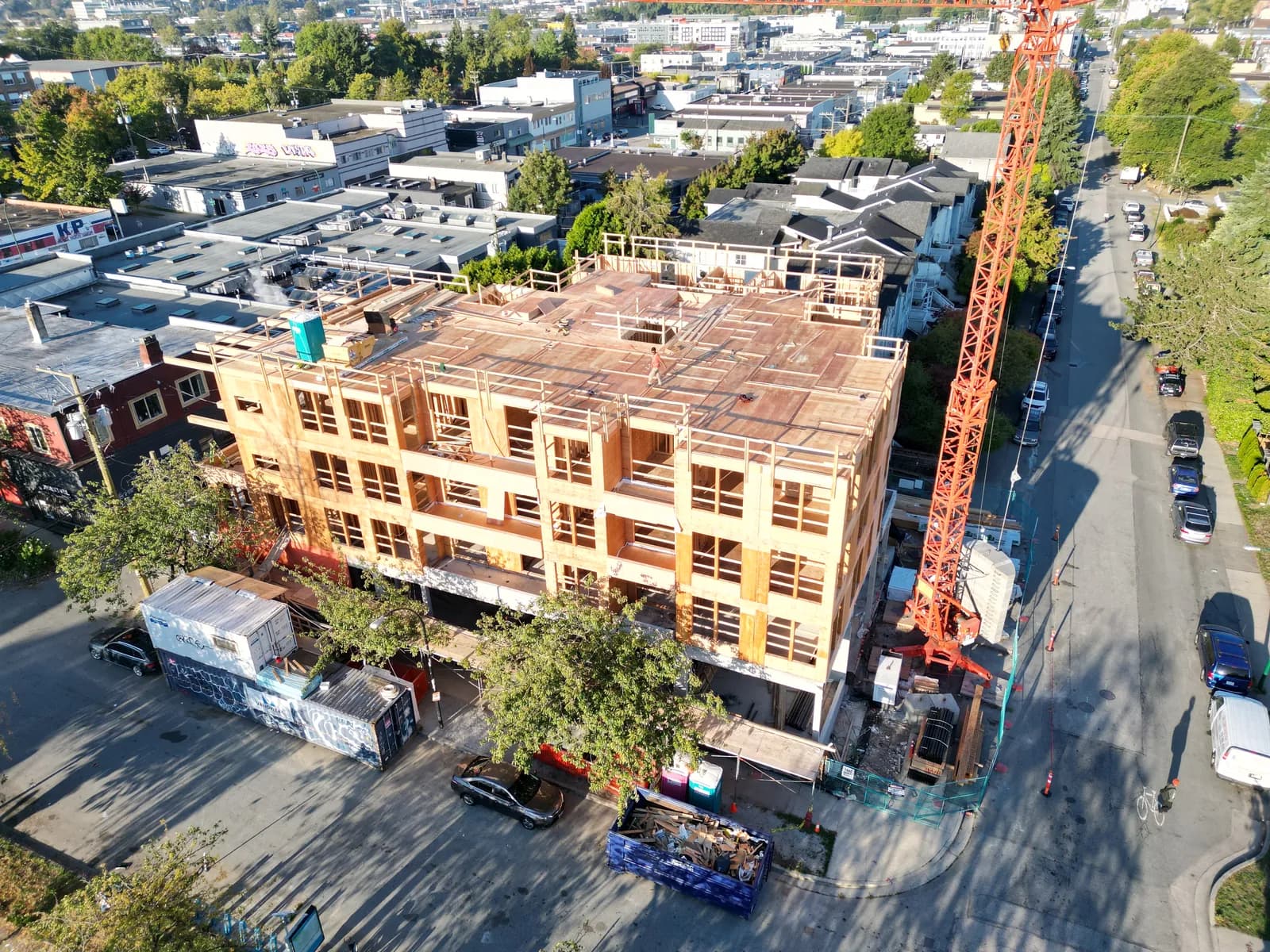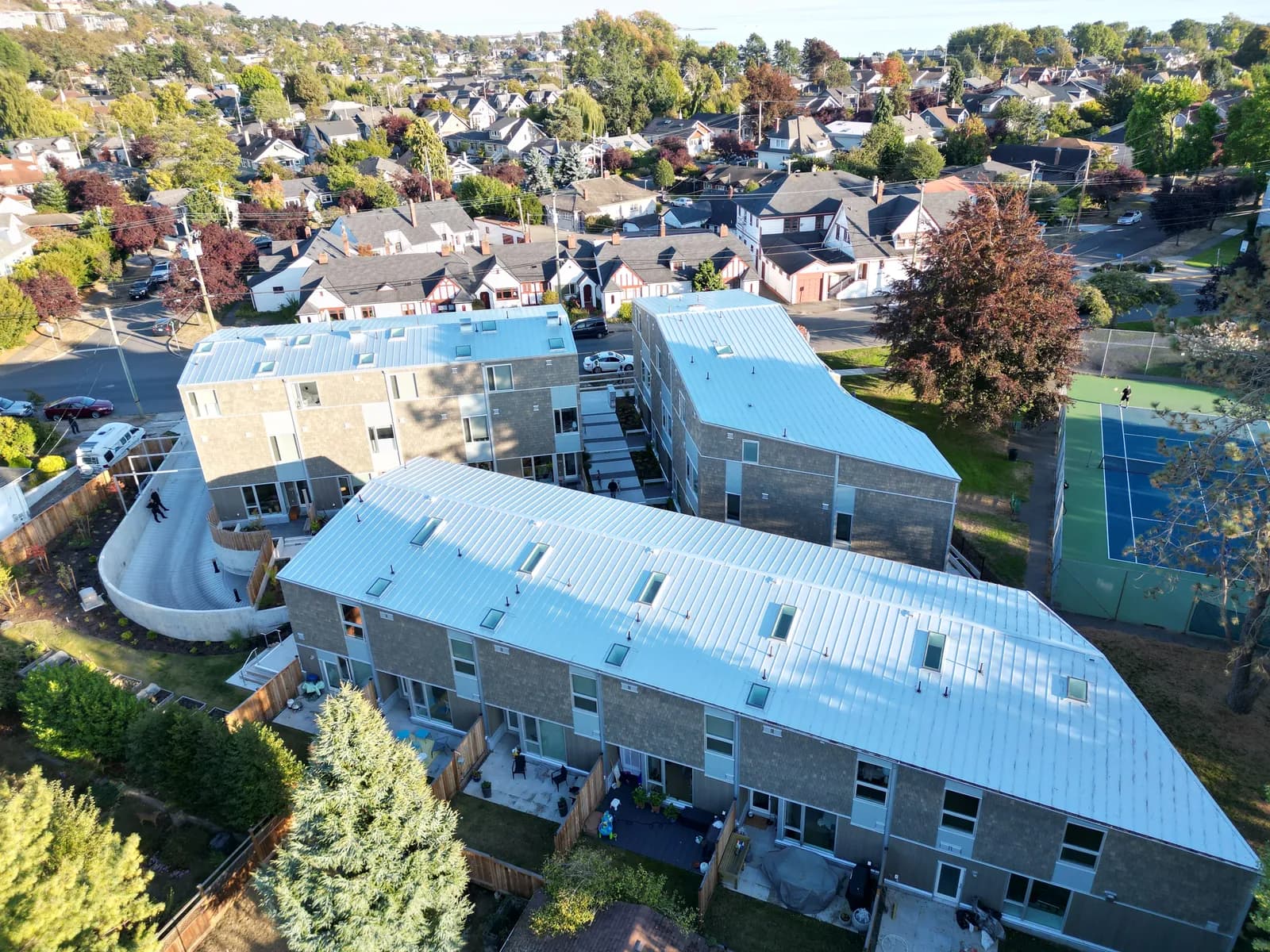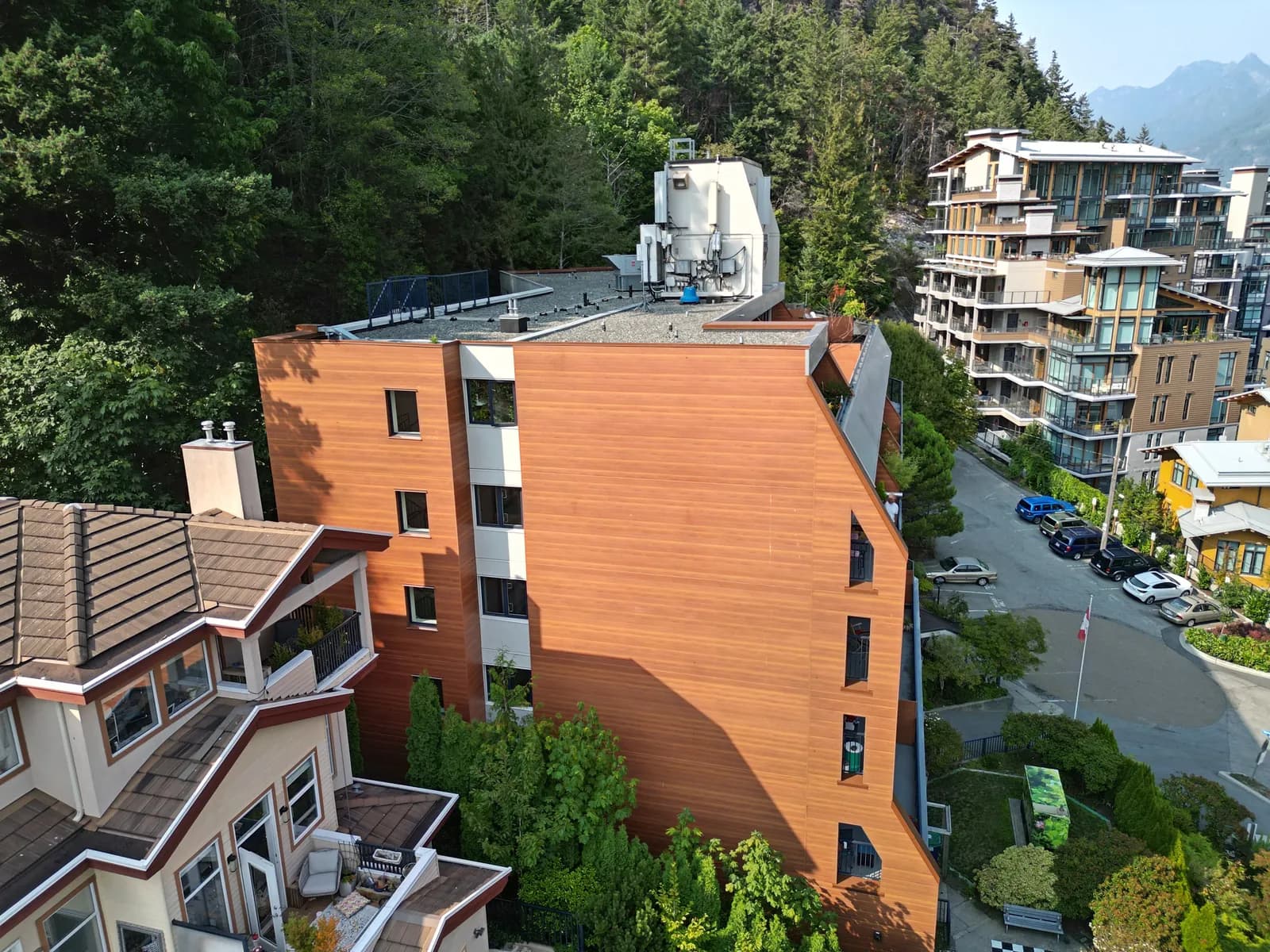
The morning after a Pineapple Express front rolls through the Lower Mainland, the phones start. A homeowner in West Vancouver watched a cedar shingle fly across the yard. A strata manager in Burnaby found a soffit panel hanging by one nail. A property owner in Richmond noticed water tracking down the inside of a window that was fine the week before. Storm damage repair in Vancouver almost never looks like a movie scene of a roof torn off. It looks like small missing pieces, bent flashing, and water finding a path it did not have on Sunday.
BC's coastal storm pattern is repetitive and predictable in the wrong way. Atmospheric rivers arrive from October through March, deliver 60 to 100 mm of rain over 24 hours, and pair with 70 to 110 km/h gusts through the Fraser Valley and Georgia Strait. Anything already loose on a building envelope, a soffit, a flashing detail, or a piece of siding, comes off or opens up. The interior damage that follows is usually written in insurance dollars, not construction dollars.
What should I do in the first 48 hours after storm damage to a BC building?
Document everything with photos before you touch it, then contain the ingress. Cover missing siding and torn flashing with tarps and battens, block interior water paths, and note the storm date and Environment Canada wind speeds. Call the insurance broker inside 48 hours to open a claim number. Only then request a scoped estimate from a licensed, WCB-covered restoration contractor. That order protects both the claim and the repair budget.
Where wind actually hits a BC exterior
Wind does not damage a wall evenly. It concentrates uplift and pressure at edges, corners, roof-to-wall transitions, and any place where two materials meet. On a typical Lower Mainland building, four zones take the beating.
Siding at gables and upper corners. Cedar shingle, longboard, fiber cement, and vinyl each fail differently. Cedar and vinyl tear off in pieces; fiber cement cracks along the nail line where a face-nailed board is loaded upward; longboard and metal panels pop at end clips. If a single course is missing, the water path is exposed for the next storm.
Soffits and fascia. Vented aluminum soffit panels are held by a J-channel and a nailing flange. High-suction eave corners lift the panel out of the channel, and one missing panel lets wind-driven rain travel up into the roof cavity from underneath. Fascia damage often reveals rotted sub-fascia behind, which the owner cannot see from the ground.
Flashing at penetrations and transitions. Head flashings over windows and doors, step flashing at roof-to-wall, kick-out flashings at eaves, and counter-flashing at chimneys all bend and back out under wind. A flashing that is 60% still in place still functions as a water funnel, aimed at the wrong place.
Roof-adjacent envelope. Missing ridge caps, lifted starter courses at eaves, and torn membrane at low-slope decks are not siding damage, but they cause siding-level problems: water enters at the roof and shows up two floors below as a stain that looks like a leaking window.
Insurance is the first conversation, not the last
For homeowners, most standard BC home policies cover sudden and accidental wind damage to the exterior envelope, and the interior water damage that follows within a reasonable window. What is usually not covered: gradual deterioration, pre-existing wear, and damage from ingress that continued after the owner knew about it. That last exclusion is why the 48-hour containment step matters more than most people realize.
For strata buildings, the picture is layered. The strata insurance policy covers the building envelope, common property, and the fixtures listed in the strata's insurance schedule. Individual unit owners carry their own contents and betterments policy for anything inside their walls. The strata council opens the master claim; the property manager coordinates the adjuster site visit; and any interior water damage in a specific unit runs on a parallel track with the unit owner's insurer.
Two practical points. First, an adjuster will ask for a written scope from a licensed contractor before approving anything above the emergency-containment cap (usually $5,000 to $10,000). A verbal estimate is not a scope. Second, most insurers accept a contractor's scope faster when the contractor is WCB-insured, carries $5M liability, and has documented experience with envelope work rather than only new construction.
What the timeline actually looks like
Storm restoration runs on three clocks: containment, scoped repair, and full restoration. They rarely overlap the way people expect.
First 24 to 72 hours: containment. Tarps, temporary flashing, plywood over openings, dehumidification if interior finishes are wet. This is not the repair. It is a bridge to stop further ingress while the claim opens and the real scope gets written. A good restoration contractor treats this as a same-week response.
First 2 to 4 weeks: scope, adjuster, approval. The contractor drafts a written scope with unit-rate line items, meets the adjuster on site, and answers questions about hidden damage. For strata buildings, add a council meeting or e-vote for anything above the strata's spending threshold. Most repairs stall here, not at the construction stage.
Weeks 3 to 12: exterior repair. Once the scope is approved, siding, soffit, flashing, and envelope work runs on weather windows. Cedar and painted work needs dry conditions and temperatures above about 7°C. Winter storm repairs in the Lower Mainland often break into two visits: a weathertight temporary repair in December, and a permanent finish in March or April when paint and stucco can cure.
Weeks 4 to 16: interior finish restoration. Drywall, insulation, paint, and flooring on the inside can only start once the exterior is watertight and the wall assembly is dry. Rushing this step traps moisture and grows mould.
For an urban single-family home with modest wind damage, total elapsed time is usually 6 to 10 weeks from storm to closed file. For a strata with damage across 30+ balconies or a full soffit run, plan on 4 to 8 months, mostly because of scope approvals and weather.
Choosing the contractor before you sign anything
The pattern that gets BC owners into trouble is signing with the first contractor who shows up in a truck the day after a storm. Storm-chasing outfits move on when the work gets complicated, and their warranty follows them out of the province.
Three baseline requirements before anyone quotes a storm repair on a building you own or manage:
- WCB clearance letter, current. No coverage means the property owner picks up worker injury liability. Strata councils cannot legally approve a contractor without this.
- Licensed and insured with liability appropriate to the scope. For multi-family or commercial work, $5M is a starting point.
- A written scope with unit rates, not a lump-sum verbal. A scope you can compare line by line is the only way to make a real bid comparison, and it is what insurers want.
Ten years of work across Vancouver, Burnaby, Coquitlam, Surrey, North Vancouver, Richmond, and Vancouver Island gives MV Construction a settled view of what the coast does to exteriors and what the insurance side expects to see. The team is fully licensed, WCB-covered, Passive House Certified, and carries envelope experience on both single-family and strata scope. Every restoration project comes with a written warranty on workmanship and a fixed scope you and your adjuster can hold us to.
The local angle
BC's storm pattern is not the same across the region. The Sea-to-Sky corridor and the North Shore see uplift-driven damage to siding and roofing. The Fraser Valley and Tri-Cities take pressure-driven ingress at flashings during long atmospheric river events. Delta, Tsawwassen, and coastal Richmond deal with salt-air corrosion that accelerates fastener failure on aluminum and steel flashings. Vancouver Island's central and west coast get all three, plus longer sustained wind loads.
If you manage a building that took damage in the last storm and you are still in the containment phase, the fastest path forward is a scoped site visit before the next front lands. We can walk the exterior with you, document the damage, write a scope your insurer will accept, and get containment tightened the same week.
Call 778-375-5672 or request a fixed-scope estimate and we will schedule a site visit within a few business days. For strata and multi-family work that touches the full envelope, our building envelope restoration service covers siding, flashing, soffits, and membrane work as one coordinated scope. For homeowners rebuilding a wall assembly after storm damage, the siding contractor page covers the material and detail decisions that decide whether the next storm is a repeat call or a non-event.