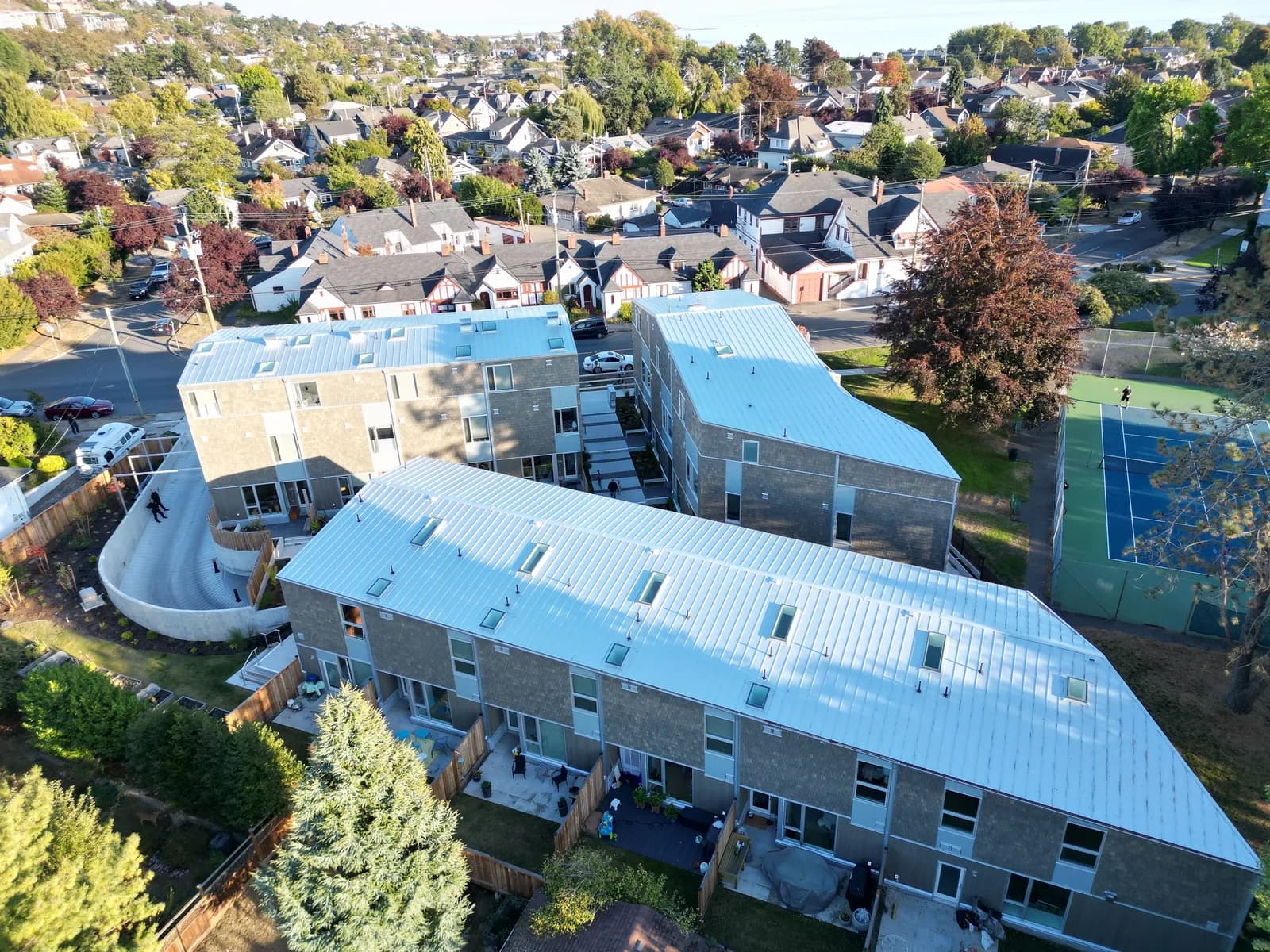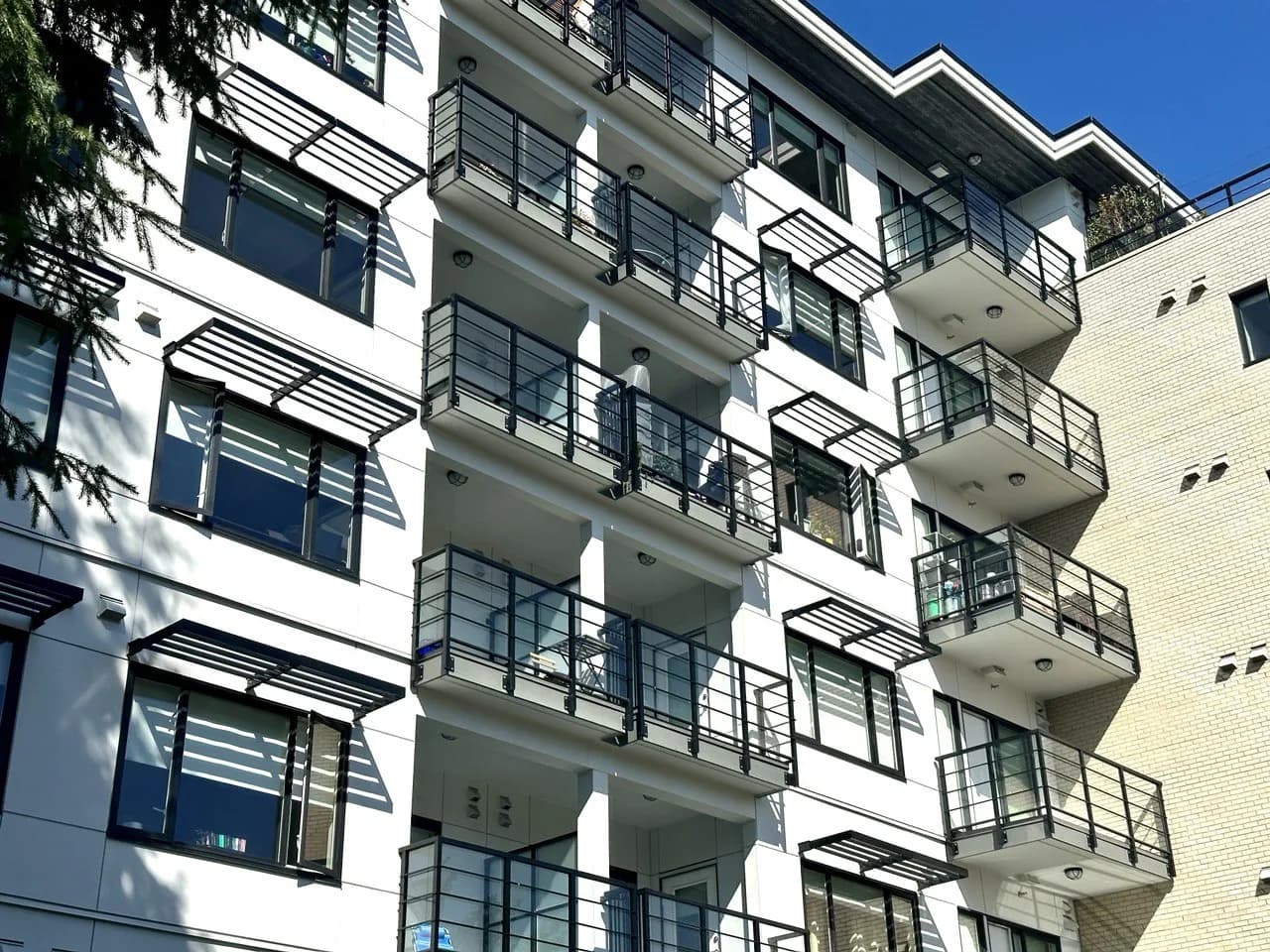
The stucco on the west wall of a 1990s house in Surrey looks fine from the driveway. There is a faint brown streak under one bedroom window, easy to blame on runoff. A handheld meter pressed against the wall in August shows nothing worth worrying about. In February, a probe pushed through a small hole under the same window corner reads 31% in the sheathing behind it.
Both readings were honest. They measured different things at different times of year, and that gap is what stucco moisture testing in BC comes down to. Stucco hides water well. The sheathing behind it shows the leak plainly, provided the probe goes in the right spot at the right time of year.
What does stucco moisture testing in BC measure?
Stucco moisture testing in BC measures the moisture content of the wood sheathing and framing behind the finish. A technician drills a hole about 6 mm wide, pushes insulated pins through to the sheathing and reads moisture as a percentage of the wood's dry weight. Under 15% is dry. Above 19%, mould can grow. Readings near 28% or higher mean liquid water and a real rot risk.
Why a surface scan is only the first pass
Most moisture surveys start with a pinless meter, the flat handheld scanner pressed against the finish. It is fast and leaves no marks, and it is useful for finding which parts of an elevation deserve a closer look.
On stucco it has two limits. Most pinless meters read up to about 20 to 25 mm into a surface, which is about the full thickness of a three-coat cement stucco wall. So the scanner is mostly reading the stucco and only barely reaching the paper behind it. And the wire lath embedded in the stucco reads as moisture, so a perfectly dry wall can light up along every lath seam.
A scan tells you where readings differ across a wall. It cannot tell you whether the sheathing is wet. For that you need a probe.
How a probe survey is done
The tester drills small holes through the stucco at the places water is most likely to get in, pushes two insulated pins through the hole until they bite into the sheathing, and records the reading. Insulated shanks matter: they stop the wet outer stucco from skewing the number, so the meter reads only at the pin tips. Each hole is sealed with sealant or a colour-matched patch the same day, and a good survey photographs and numbers every point on an elevation drawing.
Where the holes go decides what the survey finds. The usual targets on a BC house or low-rise strata building:
- Below both lower corners of each window, where sill leaks show up first
- Under deck and balcony ledgers, and at the ends of balcony guard walls
- At roof-to-wall intersections, especially where a roof edge dies into a wall without a kickout flashing
- Just above the weep screed at the base of the wall, and anywhere stucco runs into soil, concrete or a deck surface
- Around penetrations such as dryer vents, hose bibs, light fixtures and gas lines
- Below saddles, parapets and the tops of chimney chases
Two probes per window adds up quickly. A house with 12 windows and a deck can easily end up with 30 to 40 points. A good tester also takes a few control readings in the most sheltered spot on the building, usually high on a wall under a deep overhang. That baseline is what every other reading gets compared against.
Reading the numbers
These are the bands we use when reading probe results from coastal BC walls:
- Under 15%: dry and stable.
- 15% to 19%: above normal. Worth watching, especially if one spot sits well above the control readings.
- Above 19%: mould can grow on the sheathing, and steel fasteners and staples start to corrode.
- Sustained above about 25%: decay fungi become active. Rot is a matter of time.
- 28% to 30% and up: the wood is at or past fibre saturation. There is liquid water in it, and you will usually see it once the wall is opened.
A single number matters less than the pattern across the wall. One reading of 27% under the left corner of a window, with 13% everywhere else, points to a sill or jamb leak at that corner. A band of high readings along the bottom metre of a wall usually means the base of the stucco is buried or has no way to drain. High readings across an entire elevation, worst on the south and west faces, are the signature of a face-sealed wall that takes on more rain than it can dry. That third pattern usually ends in a full re-clad with a drained cavity behind the new finish.
Watch the readings that rise from top to bottom below a junction. If a probe under a roof-wall intersection reads 22% and the one a metre below it reads 30%, water is entering at the junction and running down the inside of the wall.
Readings that mislead
Pin meters are calibrated for one wood species at room temperature. In a BC winter, with the wall at 5°C, an uncorrected reading can understate the true moisture content by a couple of points. OSB sheathing reads differently from plywood as well, so the report should say which one the probe hit.
A low reading is not always good news. Wood that rotted years ago and has since dried can read 12%, and a probe that lands in a gap between sheathing boards reads nothing useful at all. When the readings and the visible signs disagree, such as a stain with a dry reading or a soft spot under a screwdriver, the next step is a small exploratory opening.
When to test stucco for moisture
Test in the wet season. Lower Mainland walls are at their wettest from December to March, and a wall that reads 28% in February can read 12% after a dry summer. An August survey on a leaking wall can come back clean. If you need testing in summer for a sale, rely more on physical evidence in the exploratory openings than on the meter.
Four moments justify the cost of a survey:
Before buying a stucco house built between the mid-1980s and the mid-2000s. Much of that stock is face-sealed, with stucco applied tight to the building paper and no drained gap behind it. BC began requiring a capillary break behind cladding on new homes in most of the coastal climate in the mid-2000s, and stucco moisture testing on older homes is how buyers find out what the earlier walls are hiding.
Before the five-year envelope coverage on a newer home or strata building runs out. BC's Homeowner Protection Act warranty covers the building envelope for five years. A probe survey in year four turns a suspected leak into a documented claim while the warranty still applies.
Before recoating or painting. An elastomeric coating over a wet wall slows drying even further. Test first, fix the leak, then recoat.
When a strata depreciation report or envelope assessment flags stucco. Councils need numbers before they can put a repair or a special levy to a vote.
What the readings change about the repair
On a single-family house, a probe survey with a written report typically costs $800 to $2,500, depending on the number of elevations, the access equipment needed and how many points get probed. On a strata building, a full envelope assessment by a qualified consultant runs $5,000 to $20,000, and probe testing is usually part of it.
Localized wet readings lead to a targeted repair: open the stucco around the window or ledger, replace the wet sheathing, re-flash the opening and patch. That work is the core of our stucco and EIFS repair scope. Widespread readings across an elevation lead to a different conversation, and our guide on stucco repair vs full replacement covers where that line usually falls. Where the readings point to failed flashings, membranes or drainage across the building, the job becomes building envelope repair rather than stucco patching.
Timelines follow the same split. A house survey takes a day on site, and the report usually follows within a week or two. A window-and-sheathing repair on one elevation runs a few weeks once it is scoped. Stucco needs temperatures above about 5°C to cure, so repairs between December and March often need tenting and heat, which adds days and cost.
Insurance and documentation
If the readings show water damage, call your insurer or broker before anyone starts cutting. Most BC home policies exclude damage from continuous or repeated seepage, so the adjuster's first question is usually whether the water came in suddenly or over months. A dated probe map, photographs of every point and the readings themselves are what that answer gets built from. Keep the report, even if the claim is declined. It sets the baseline for every future survey of the same wall.
On a strata building, the property manager should be involved from the first probe. The strata corporation usually owns the envelope as common property, so the council decides on the survey, the repair and any insurance claim. Owners report what they see to the property manager.
Getting a stucco wall tested and scoped
Stucco moisture testing is only worth paying for if the person reading the numbers knows how the wall was built and where water gets into it. We work from the probe map, whether it comes from your envelope consultant or from readings our crew takes during the site visit, and we open the wall where the numbers say to before we price the repair.
MV Construction has repaired stucco and building envelopes across Greater Vancouver and Vancouver Island for 17+ years. Our crews are fully licensed and WCB-insured, and our workmanship carries a written warranty.
If a probe survey has turned up high readings, or you suspect a wall that has never been tested, call (778) 375-5672 or request a free written estimate. We will set out the scope, price and timeline in writing before any work begins.