Every year, Vancouver homeowners look at their brick walls and worry about the wrong thing. The brick itself sits there for 100 years without complaint. Then a bead of white powder appears at a joint, or a chunk of mortar drops onto the flowerbed after a February freeze, and the panic starts. The wall is fine. The mortar is not. That difference, the one most contractors gloss over on a walk-through, is why brick repointing in Vancouver runs 8 to 15 times cheaper than tearing down and rebuilding.
Mortar has a lifespan. Brick effectively does not. On a coastal BC wall, the mortar joints are the sacrificial layer that takes the freeze-thaw hits, the wind-driven rain, and the moss growth before any of it can reach the brick face. When those joints degrade, water starts moving deeper into the assembly, and the real damage begins: cracked bricks, spalled faces, wet interior finishes. Fixed early, repointing costs a fraction of full masonry replacement. Fixed late, the whole exterior has to come off.
This piece walks through how mortar fails in BC, how to tell repointing apart from full masonry repair, what current 2026 pricing actually looks like in Vancouver, and when it makes sense to call a masonry crew instead of trying to patch it yourself.
When does Vancouver brick need repointing?
Most Vancouver brick walls need repointing every 40 to 80 years. The tell is joint condition, not brick condition: raked-out mortar deeper than 1/4 inch, hairline cracks along joints, or a screwdriver pushing 1/2 inch into a joint without resistance are all signs the pointing has failed. Repointing costs $15 to $40 per square foot in BC and buys 40+ more years if the mortar mix matches the wall.
That is the answer. The rest of this piece is the why and the how.
How mortar fails on the BC coast
Portland cement mortar (the stuff most walls built after 1930 use) is a chemistry set that slowly loses its cohesion under three specific loads.
Freeze-thaw. Vancouver averages 30 to 50 freeze-thaw cycles a year at ground level, and more at parapets and copings where wind exposure matters. Water gets pulled into microcracks in the mortar, freezes, expands about 9%, and levers the crack open a fraction wider each cycle. Repeat that for four decades and the joints lose their bond.
Wind-driven rain. BC's Pacific systems arrive with sustained 40 to 60 km/h winds and rain angled 30° or more from vertical. The drainage plane behind the brick is designed for water running down, not for water blown sideways into weep holes and cavity vents. Joints on the windward face (usually south and west in Vancouver) degrade 2 to 3 times faster than the leeward.
Moss and biological growth. North-facing walls and shaded sections grow moss in the joints. Moss holds water. Water refreezes. Moss root systems also secrete weak acids that eat the calcium in the mortar directly.
Newer walls with proper flashing and drainage take longer to fail. But the failure mode is always the joint, and the joint always fails before the brick.
Repointing vs full masonry repair: which do you actually need?
Walk your wall with a screwdriver and this rubric:
Repointing job. Mortar joints look raked-out, crumbling, or missing chunks, but the bricks themselves ring solid when tapped and show no cracking, spalling, or face loss. This covers the vast majority of BC masonry work.
Brick repair as well. Individual bricks show face spalling (the outer 1/4 inch chipping off), through-cracking, or that hollow "thock" when tapped. These need to be cut out and replaced individually before repointing.
Structural repair. Whole sections of wall are bowed, cracked in step-patterns diagonal to the joints, or shifted at door and window openings. This is a structural engineer conversation, not a mason.
Full re-clad. The wall was built with high-Portland modern mortar on soft heritage brick, and the brick faces are shedding by the sheet. At this point repointing accelerates the damage rather than fixing it. Rebuild.
The screwdriver test misses one thing: what is happening behind the brick. Water that has been slipping past failing joints for 10 years may have rotted the sheathing, the wall framing, or the ties that hold brick veneer to the structure. On any repointing job over about 200 square feet, our crew opens a small inspection area on the wall before pricing. You do not want to discover $40,000 of rotten framing after the contract is signed.
The Vancouver mortar-matching problem
This is where most bad repointing jobs go wrong.
Mortar is graded by strength. Modern mortars come in Type M (strongest, around 2500 psi), Type S (1800 psi), Type N (750 psi), and Type O (350 psi). Older buildings, including pre-1930 Vancouver brick, heritage homes in Strathcona and Kitsilano, and most Gastown facades, were built with lime-heavy mortars weaker than any modern grade, usually testing at 100 to 300 psi.
Here is why that matters. Mortar is supposed to be softer than the brick around it. When the wall moves (thermal expansion, wind load, seasonal foundation shift), the mortar deforms and absorbs the movement. If you repoint an old wall with modern Type S mortar, the joints are now harder than the brick. Next expansion cycle, the brick has to give somewhere. It gives at the face, and the face pops off.
A good BC mason tests the existing mortar (colour, texture, aggregate size, hardness) and matches it. On heritage jobs, that often means custom-mixing lime putty and sand from local suppliers. On 1970s-and-newer brick veneer, standard Type N is usually right. The difference between matched and mismatched mortar is the difference between a 50-year repair and a wall that starts spalling five winters after the invoice is paid.
The repointing process, step by step
Real repointing takes longer than most homeowners expect. Here is what a proper Vancouver job looks like on a 500 sq ft residential wall.
Day 1: protection and prep. Ground protection, plastic on windows, plants tied back. Any planted areas within 8 feet of the wall get covered. This is the day your patio and driveway are unusable.
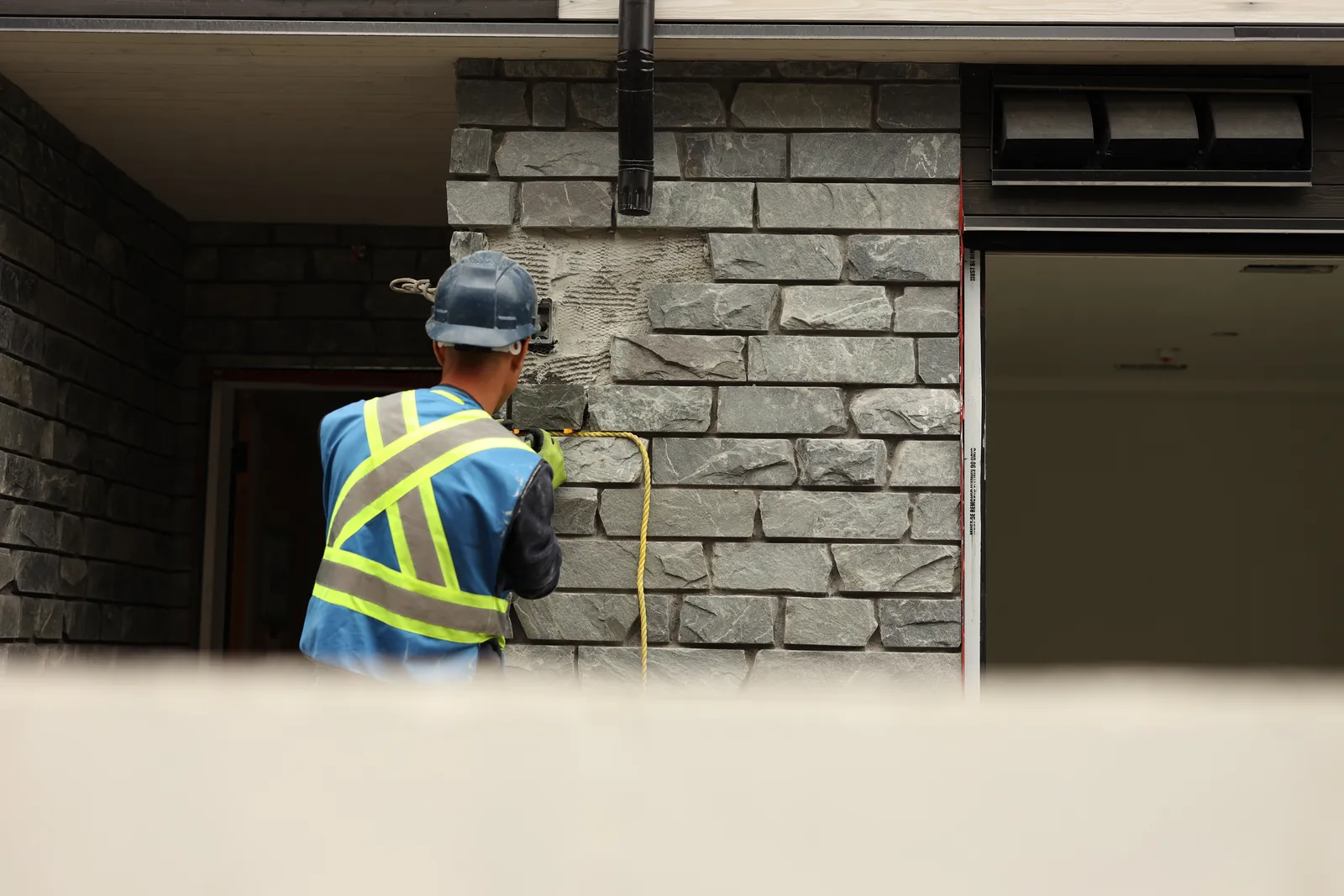
Days 2 to 4: cutting out old mortar. Joints are cut to a depth of at least twice the joint width, typically 3/4 to 1 inch on modern brick and deeper on heritage. This is done with hand chisels on soft brick and with grinders fitted with narrow diamond blades on hard brick. Grinders are faster. They also destroy brick faces when used carelessly, which is why grinder work on heritage walls is a red flag.
Day 5: cleaning. Joints are brushed and vacuumed. On weathered walls, a light pressure wash follows, done at low PSI so mortar dust does not get driven deeper into the wall.
Days 6 to 9: new mortar. Mortar is mixed in small batches (large batches set before they are placed), packed into the joint in two or three lifts, and finished with a tooling profile that matches the original wall. Concave, weathered, flush, raked, V-groove. The profile is not cosmetic. It changes how water sheds off the joint.
Day 10: curing. New mortar has to cure slowly to reach full strength. Vancouver's climate helps here, since the natural humidity sits close to ideal. In summer heat waves, the wall gets misted every few hours for the first two days. Curing that is rushed will crack within a year.
A 500 sq ft residential repointing job runs 8 to 12 working days for a crew of two. Full-building strata repointing runs 6 to 14 weeks depending on scope, staging, and weather. Anyone quoting a 3-day repointing job on a full house is either using the wrong tools or skipping steps that matter.
What repointing costs in Vancouver in 2026
Real numbers from active BC jobs, per square foot of wall face:
| Wall type | 2026 price range | Notes |
|---|---|---|
| Modern brick veneer, standard joints | $15 to $22 | Straightforward access, standard mortar |
| Heritage brick, matched lime mortar | $25 to $40 | Custom mix, hand tools, slower work |
| Multi-storey requiring scaffolding | +$5 to $10 | Scaffold rental is 30 to 50% of that adder |
| Parapets and chimneys | $35 to $55 | Awkward access, weather exposure |
| Strata building envelope | $18 to $30 | Volume pricing on 2000+ sq ft |
A typical Vancouver home with 400 to 600 sq ft of brick chimney and accent walls comes in between $8,000 and $18,000 for a full repointing job. Full-facade heritage repointing on a 2200 sq ft Kitsilano home lands between $55,000 and $90,000. Strata building envelope repointing on a 30-unit low-rise runs $80,000 to $220,000.
What drives the range: access (scaffold, lift, or ladder), the state of the existing mortar (uniformly bad is faster than patchy), the number of bricks that need replacement alongside the pointing, and how tight the mortar match has to be. Insurance and warranty terms add another 5 to 10% to any bid: WCB coverage, general liability, and a written 5-year mortar warranty from a bonded contractor.
Homeowners get quotes ranging 30 to 60% below these numbers all the time. The difference is almost always the same list: no site prep, no mortar analysis, grinder work on heritage brick, unmatched mortar mix, day rates paid to unlicensed crews. The invoice looks small and the wall starts shedding within 3 years.
The four repointing mistakes that void the whole job
1. Skipping the mortar match. Covered above. This is the single biggest failure mode.
2. Cutting joints too shallow. New mortar bonded at only 1/4 inch depth peels out inside a decade. Depth needs to be 2x the joint width, minimum. On any bid, ask how deep the joints will be cut.
3. Wrong tooling profile. Concave joints shed water. Flush joints trap it. Getting the profile wrong is cosmetic on a south wall and catastrophic on a north parapet.
4. Repointing over wet or frozen substrate. Mortar needs 5° to 25° C and dry brick to bond. Repointing during a Vancouver November, when substrate temps sit at 2° to 6° and everything is soaked, is malpractice. Real repointing seasons in BC are April through October.
Any Vancouver mason who ignores these four is not saving money. They are transferring cost from the invoice to the wall's next 20 years.
Repointing vs re-clad: when the math flips
Full brick re-cladding costs $80 to $150 per square foot in Vancouver, depending on brick choice, insulation upgrades, and structural work. Compare that to $15 to $40 for repointing and repointing wins by 4 to 10 times every time. Until it does not.
The math flips when:
- Brick faces are already shedding across more than 15% of the wall (spalled faces do not recover, and repointing does not fix them)
- Original ties holding brick veneer to the structure are corroded (invisible from outside; discovered on cavity inspection)
- The building envelope needs upgrading anyway (rainscreen retrofit, exterior insulation, window replacement, since the wall is coming apart regardless)
- The mortar is so hard and cementitious that removing it will destroy the brick (some 1960s and 1970s walls)
For strata councils looking at their depreciation report, the calculation is almost always: repoint now if the wall is still functionally sound, budget for re-clad in 15 to 25 years, and revisit annually. A $150K repointing job that buys 20 more years is the right move over a $900K re-clad if the wall is not demanding it.
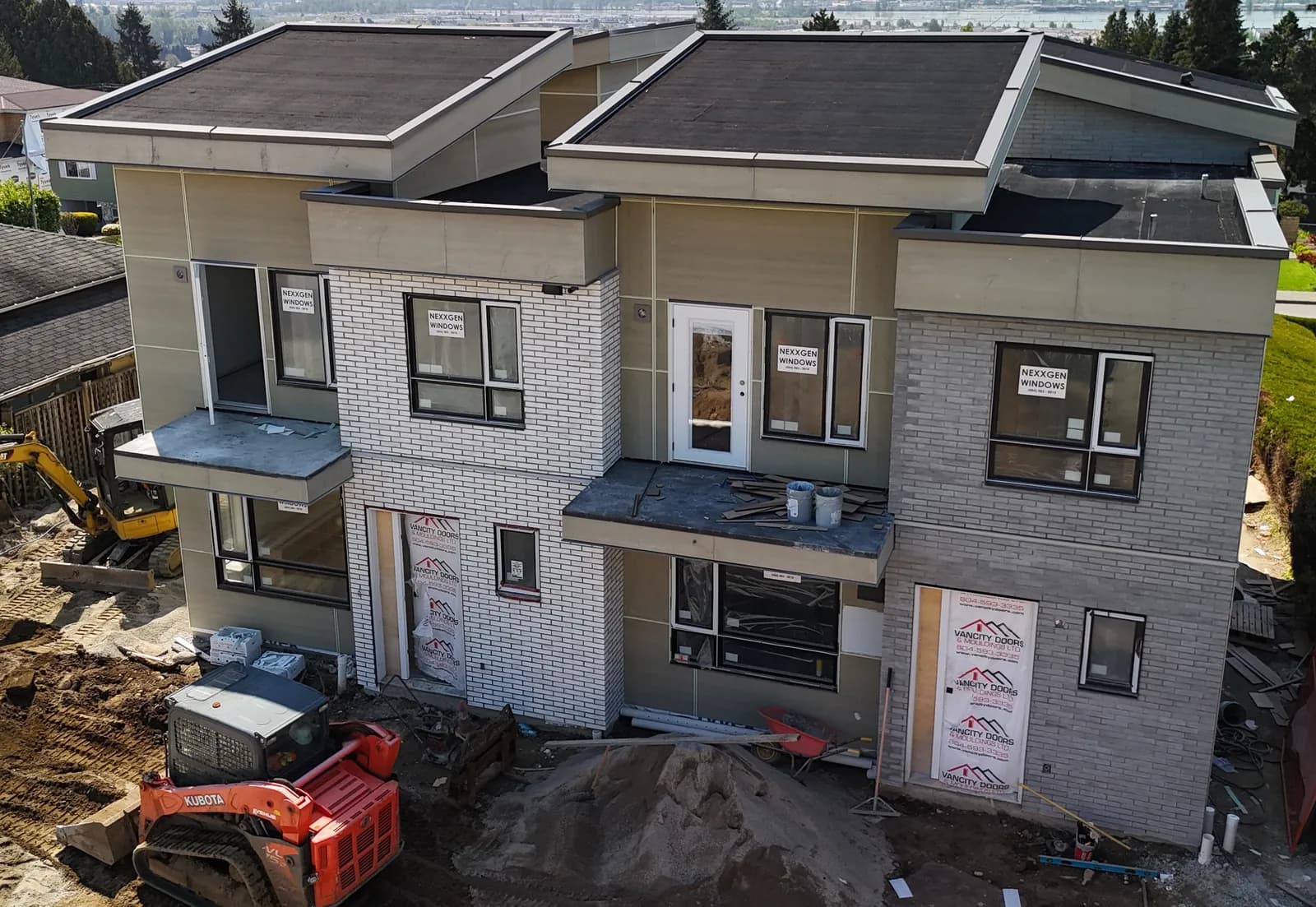
For a full-scope building envelope contractor working on strata renewal, repointing is often the lightest touch in a stack of exterior work: new membranes, flashings, and windows around a repointed brick face.
Repointing on Vancouver heritage buildings
Vancouver's heritage register covers about 2,200 properties, and the Vancouver Heritage Register Statement of Significance often specifies mortar treatment for character-defining brick walls. On a Class A property in Strathcona, Mount Pleasant, or Chinatown, repointing without a Heritage Alteration Permit can trigger enforcement action.
The permitting process for heritage repointing takes 4 to 12 weeks in Vancouver and requires:
- A mortar analysis (usually lab-tested for lime-to-Portland ratio and aggregate matching)
- A sample panel of proposed mortar approved before full-wall work starts
- Documentation of joint profile matching the original construction
- A licensed contractor with heritage experience
The upside: matched heritage repointing on a well-documented Class A property can qualify for the City of Vancouver's Heritage Building Rehabilitation Program grant of up to $50,000 per property. That grant often covers 30 to 60% of the repointing invoice on qualifying homes.
Most heritage repointing failures in Vancouver come from crews that treat a 1908 Kitsilano home the same way they would treat a 1985 brick veneer. The building code is different, the permit path is different, and the mortar chemistry is different. This is not a job to hand to a general contractor with a pressure washer.
FAQ
How often does Vancouver brick need repointing? Most walls need it every 40 to 80 years. Older heritage brick with lime mortar tends toward the shorter end; modern post-1970 brick veneer with proper flashing tends longer. Coastal exposure, wind direction, and moss growth accelerate the timeline. Repointing done wrong, with mismatched mortar or the wrong depth, drops the interval to 10 to 15 years.
Can I repoint my own brick wall? For a small section of accent brick with modern Type N mortar, physically yes, if you have the tools and patience. For anything over about 30 sq ft, or any heritage wall, or any wall over one storey, the DIY math stops working. Mortar analysis and matching, joint tooling, and proper cutting depth are learned skills. A DIY repointing job on the wrong mortar can accelerate wall failure. It is one of the few masonry tasks where a bad job is worse than no job.
Does insurance cover repointing? Standard homeowner insurance in BC treats mortar deterioration as wear and tear and does not cover routine repointing. If the failing joints have caused secondary damage (water intrusion, interior finish damage, rot in wall framing), that damage may be covered, but the underlying repointing is on the homeowner. Strata insurance follows similar lines: building envelope maintenance falls under the corporation's operating or contingency reserve, not the insurance policy.
How long does mortar take to cure? Working strength in 24 to 48 hours; full strength in about 28 days. During curing, the wall should not be pressure washed, hit with de-icing salt, or exposed to freezing temperatures. That is why proper BC repointing is scheduled April through October.
What is the difference between tuckpointing and repointing? Repointing is replacing failed mortar. Tuckpointing is a specific decorative technique from 18th and 19th century Europe: the mortar is coloured to match the brick, and a thin white line of putty is troweled down the centre of each joint to imitate finer brickwork. Almost no residential Vancouver brick is actually tuckpointed. The term gets used colloquially for both.
Working with a Vancouver masonry contractor
Getting a repointing job right requires a mason who does the boring work up front: identifying the existing mortar, walking the wall in detail, documenting spalled bricks and unstable sections, and pricing from evidence rather than a square-foot number pulled off a spreadsheet. That inspection is where the contract is earned. The wall is not the invoice, and a 200-word estimate on a heritage brick wall is a warning sign.
MV Construction has completed masonry repair and repointing across the Lower Mainland for over 10 years, from single-family heritage restoration in Kitsilano and Mount Pleasant to full-building strata envelope work in Burnaby and North Vancouver. Every project is fully licensed, WCB-insured, and warranty-backed. We work directly with property managers, heritage consultants, and structural engineers on complex jobs, and we walk every wall before we quote. The estimate we send is the estimate you pay.
If your Vancouver brick is showing raked joints, moss growth, spalled corners, or damp patches on the interior of the wall, call 778-375-5672 or request a fixed-scope estimate. We will walk your wall, identify what actually needs to happen, and quote it in writing before any work begins. For a wider scope of work covering masonry and stone repair or full exterior renovation, the linked pages cover what a full-scope project looks like.