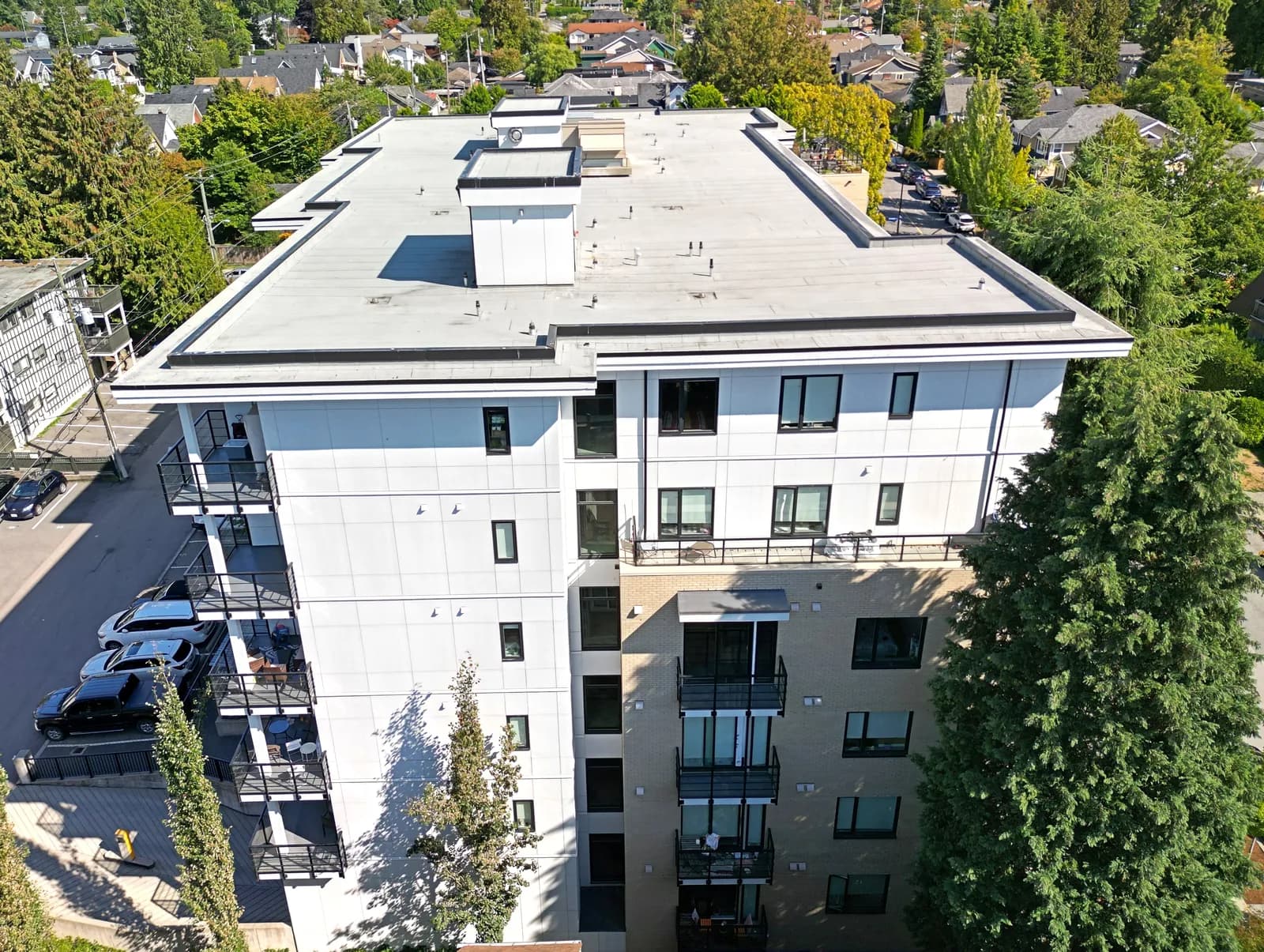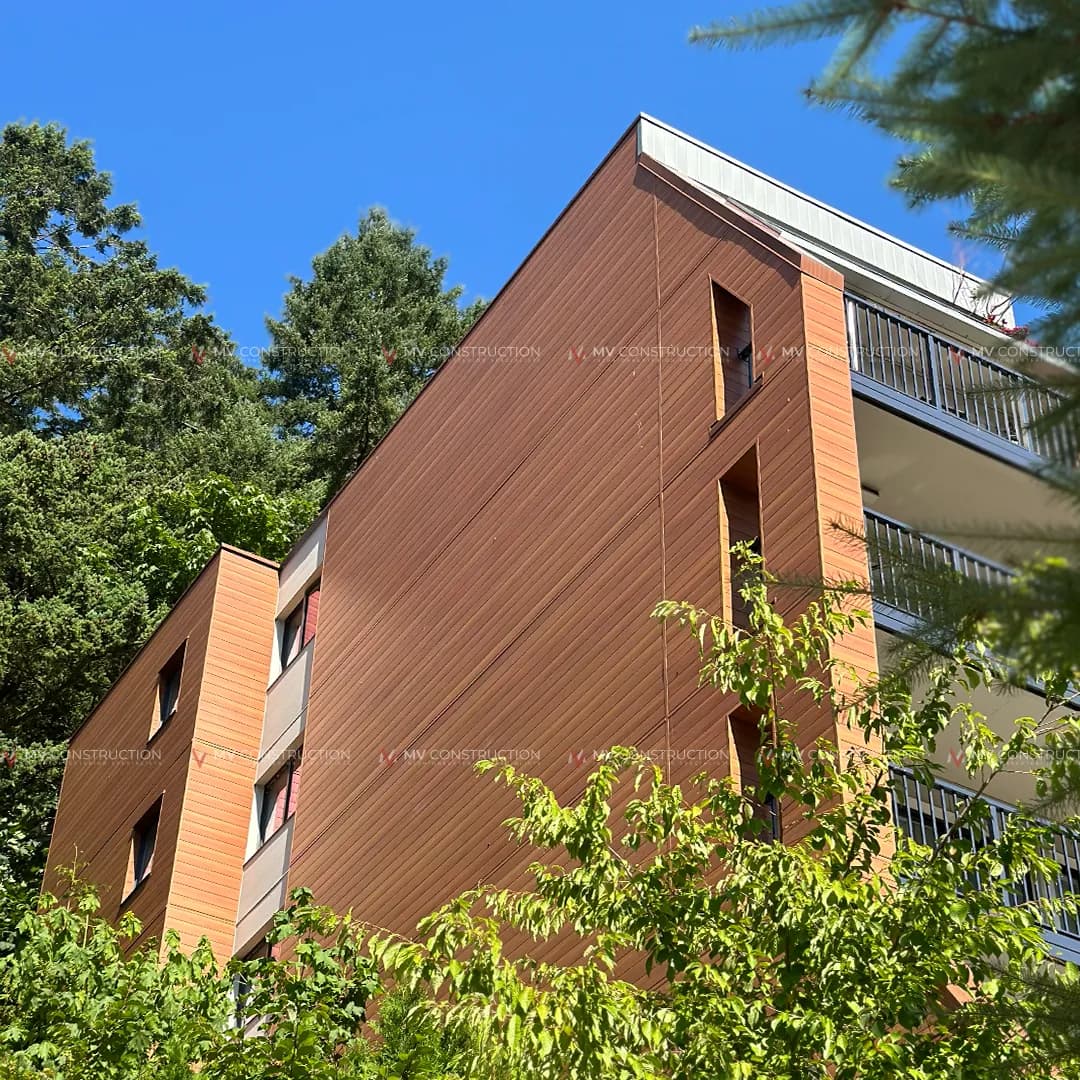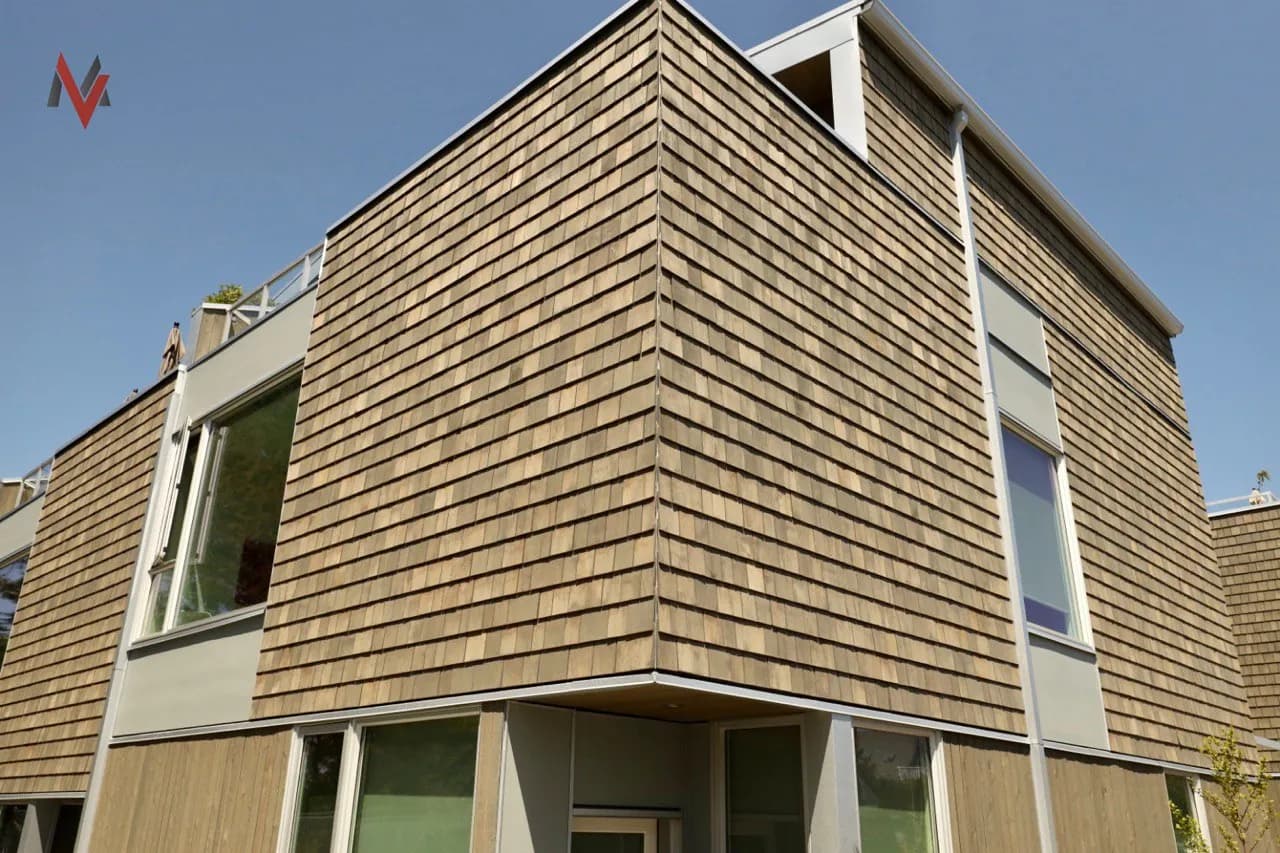
The Cowichan Valley sells itself as the warm land, and in July it earns the name. The part the brochures leave out is November. Duncan takes a little over a metre of rain in a normal year, and roughly 70 percent of it falls between October and March, driven onto the south and southeast walls by wind coming up Satellite Channel and across Cowichan Bay. We work on exterior renovation in Duncan, BC and the surrounding valley from our base in Delta, and the pattern we see on site visits is consistent: the walls that face the water and the weather have aged ten years faster than the walls that face the hill.
That matters for how you plan the job, because the fix for a wall that is tired and the fix for a wall that is wet are different projects with different prices.
What does the Cowichan Valley climate do to a house exterior?
Six months of wind-driven rain followed by a dry summer. Cedar and T1-11 siding on south and southeast walls checks, cups and lets water behind it at the joints. First-generation stucco from the 1980s and 1990s absorbs water through hairline cracks and holds it against the sheathing. Then July arrives, the wall dries from the outside in, and the damage behind the cladding sits unseen until the next wet season adds to it. A wall that reads 12 percent moisture in August can read 28 percent in February.
The dry summer is the part people underestimate. It hides the problem for five months of the year, which is why so many Duncan homeowners first learn about rot during a sale inspection in June.
The housing stock, street by street
Duncan itself is one of the smallest cities in Canada by area, about two square kilometres around the old E&N station and the downtown grid. The older homes here date from the 1910s through the 1940s: wood frame, bevel cedar siding, no building paper worth the name, and in some cases a layer of asbestos-cement shingle added in the 1950s. These walls were designed to dry by leaking and breathing. They often still do, as long as nobody has sealed them with a modern coating.
Most of what people call Duncan is the Municipality of North Cowichan wrapped around it. The subdivisions off Lakes Road, along Maple Bay Road and up toward Mount Prevost are 1970s and 1980s split-levels and ranchers, and here the dominant cladding is T1-11 plywood siding, often original, often 40 years old. T1-11 was never meant to last that long in this climate. The grooves hold water, the bottom edge wicks it off the foundation, and the panel edges delaminate first at the corners where two walls of weather meet.
Head out to the acreages in Glenora, Sahtlam and Cowichan Station and the stock changes again: owner-built homes from the 1970s through the 2000s, cedar board-and-batten and channel siding, and a lot of it hung directly on the sheathing with no cavity behind it. Down at Cowichan Bay and over at Maple Bay, the waterfront homes and the 1990s townhome stratas add salt to the mix, which is a corrosion problem for fasteners and flashings as much as a moisture problem for the wall.
Then there is the stucco. The valley got its share of face-sealed stucco through the late 1980s and 1990s, mostly on multi-family buildings near the hospital and the Cowichan Commons area and on a run of custom homes in Maple Bay. Same construction as the Lower Mainland leaky-condo stock, same failure mode, a decade behind on the repair cycle because the valley's lower rainfall bought it time.
Repair, overclad or re-clad: the decision on a Duncan wall
We walk every Cowichan Valley site visit with the same three questions. Is the cladding worn or is the wall wet? Does the house have a drainage cavity behind the siding? And which walls face the weather?
On a cedar or T1-11 house where the sheathing is dry, a localized siding repair plus new flashings and a proper paint system buys 8 to 12 years, and the cost stays in the $9,000 to $22,000 range for a typical North Cowichan rancher. That is the right call more often than contractors admit.
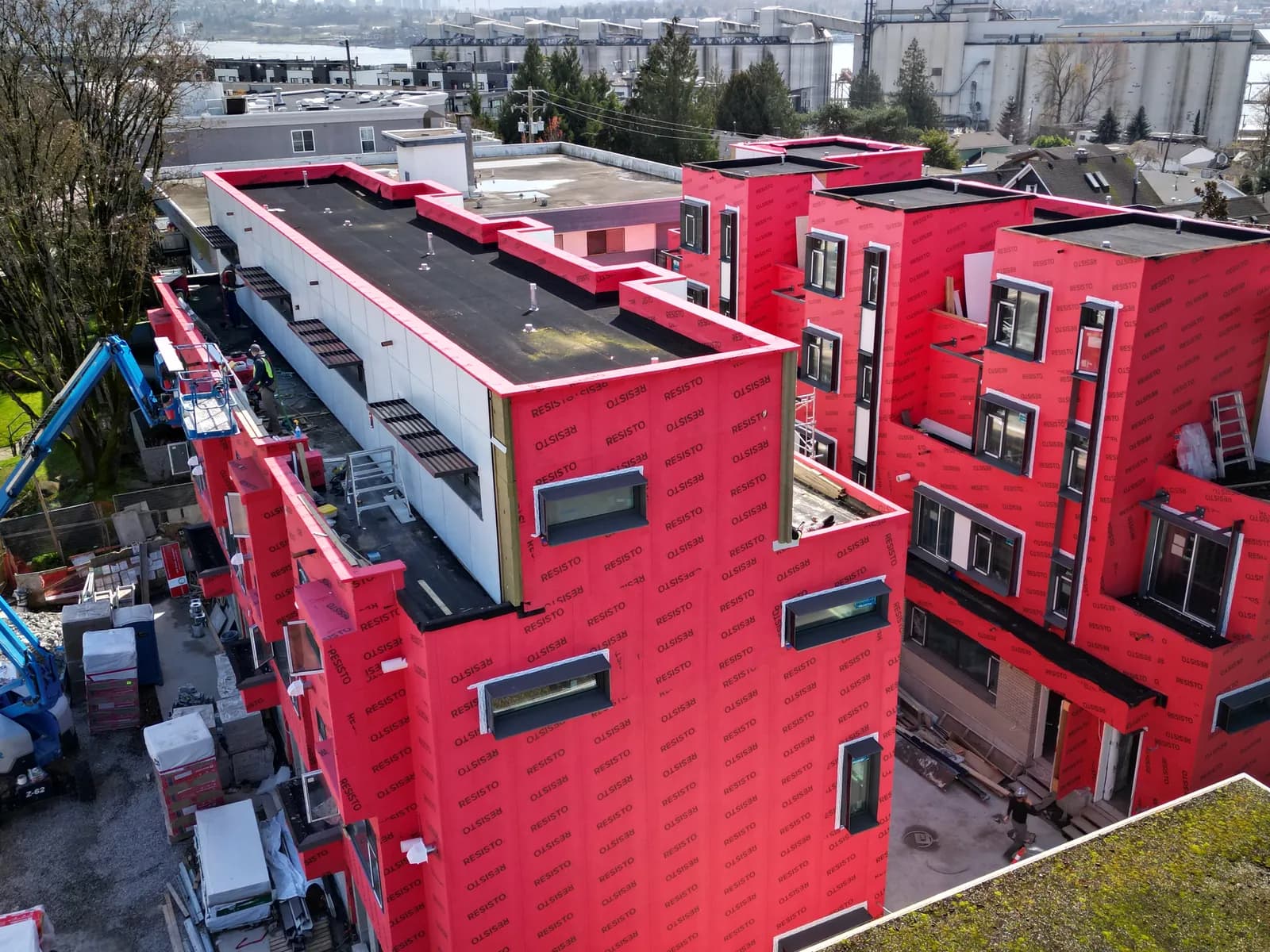
Where the sheathing is wet but sound, and the house has no cavity, the better path is usually a full strip of the weather walls, new membrane and rainscreen strapping, and new cladding, with the sheltered walls left in place and matched. In 2026 that runs about $38 to $62 per square foot of wall for fibre cement over a new rainscreen cavity on the Island, including mobilization, and the two-wall approach saves 25 to 35 percent against a full re-clad. We explain the trade-offs in our guide to siding replacement by teardown or overclad.
Where the sheathing has gone soft, there is no shortcut. Rotted plywood and framing come out at $12 to $20 per square foot on top of the cladding cost, and on a 1980s split-level with 15 years of unseen leakage at a deck ledger that can add $8,000 to $25,000 to the scope. This is the figure nobody wants in a written estimate, and the one that most often arrives as a change order instead. Cut two or three test openings before anyone prices the job and it shows up in the estimate, where it belongs.
The counterintuitive point for the valley: an older home with original cedar and no modern coating is often in better shape behind the siding than a 1990s home with acrylic stucco. The old wall leaked and dried. The newer one leaked and held it. Age is not the risk. Trapped water is. Our article on rainscreen retrofits in BC covers why the cavity is the part of the assembly worth paying for.
A Maple Bay Road split-level
A representative project from the North Cowichan side, with the owner's details left out.
The house: a 1979 split-level on Maple Bay Road, original T1-11 on all four walls, two coats of paint over the decades, a south-facing deck with a ledger bolted through the siding and no flashing above it. The owners called about peeling paint and a soft patch beside the sliding door. Moisture probe readings on the south and east walls ran 24 to 31 percent in January; the north and west walls read 11 to 14 percent.
The scope we wrote: strip the south and east walls to sheathing, replace roughly a third of the plywood and the rim joist section behind the deck ledger, install self-adhered membrane at all openings, new housewrap and 19 mm rainscreen strapping, and re-clad in fibre cement lap siding with a new metal flashing over a rebuilt, properly spaced ledger. The north and west walls got repair, flashing and the same paint colour so the house reads as one.
Timeline: nine weeks on site including a one-week delay for the permit inspection sequence, one mobilization from the mainland. Final cost landed 4 percent over the written estimate, all of it in the rim joist, which we had flagged as a probable extra in the contingency line.
The estimate the owners had from a local painter for a full repaint was $14,500. It would have looked good for two summers.
Permits: three desks for one valley
Where your house sits decides who issues the permit, and the answer in the Cowichan Valley is one of three offices.
Inside city limits, the City of Duncan handles building permits. In the surrounding municipality, which covers Maple Bay, Crofton, Chemainus and the subdivisions most people think of as Duncan, the permit comes from the Municipality of North Cowichan. Everywhere else in the valley, including Cowichan Bay, Cobble Hill, Shawnigan Lake, Mill Bay and the acreage areas, the Cowichan Valley Regional District runs building inspection for its electoral areas. All three apply the BC Building Code, and all three treat like-for-like siding repair as exempt while requiring a permit once sheathing or framing is replaced or the wall assembly changes.
Two local notes. Waterfront and riparian properties at Cowichan Bay and along the Cowichan River carry setback and environmental review requirements that can add weeks, so a deck rebuild or a foundation-level repair near the water should be checked against the development permit area map before scheduling. And the BC Energy Step Code applies to substantial alterations in all three jurisdictions, which is one reason to add exterior insulation when the wall is open rather than later.
Permit timing in the valley runs two to five weeks on a straightforward envelope application, which is faster than most of Metro Vancouver. Inspection scheduling is the slower part, since one inspector may cover a wide area, and a crew waiting two days for a sheathing inspection is a cost someone pays.
What the work does to the value of a valley home
The Cowichan Valley has absorbed a steady flow of buyers from Victoria and the Lower Mainland since 2020, and the realtors we talk to in Duncan say the same thing: the homes that sell cleanly are the ones with a recent envelope job and the paperwork to prove it. A 1980s split-level with original T1-11 gets a subject-to-inspection clause and a price negotiation. The same house with new rainscreen cladding, a permit record and a transferable warranty goes through without the conversation.
Nobody should re-clad purely to sell. But the gap between the two outcomes is usually larger than the cost of the sheltered-wall repairs that were going to be needed anyway, and a buyer's inspector will find the deck ledger whether or not you do.
Who should do the work
Any contractor you hire in the valley, mainland or local, should show you four things before you sign: a current WorkSafeBC clearance letter, liability insurance with your property named on the certificate, a business licence valid in the jurisdiction where the house sits, and a written warranty covering both workmanship and materials. MV Construction has carried all four on every project for 17+ years. We are licensed, WCB-insured and warranty-backed, and we put the warranty terms inside the written estimate.
Our crews cover the Cowichan Valley as part of our Vancouver Island service area, coming in on the Duke Point sailing and staying for the duration of the job. That changes the economics in a specific way. Mobilization costs money, so a two-day siding patch does not justify the ferry. A two-wall strip and re-clad, a full siding replacement with a new rainscreen, a building envelope repair on a Maple Bay strata or a stucco remediation does, and the single continuous crew means the wall is not left open while a team gets pulled to another job across town.
Timing for the valley: stucco, acrylic coatings and sealants want five degrees and rising for several days, which in Duncan usually means late April at the earliest and May to be safe. Siding and flashing work can run through the winter under tarped scaffold. If you are reading this in November, the realistic path is an assessment and test openings now, a written scope and permit over the winter, and a spring start. Our note on planning a spring exterior renovation in BC lays out the calendar.
To start, send photos of each wall, the location of any interior water staining, and the year the house was built. We can usually say from photos whether the scope suits an Island mobilization, then book the site visit. Call (778) 375-5672 or request a fixed-scope written estimate for an exterior renovation in Duncan, BC. We are scheduling Cowichan Valley assessments through December.