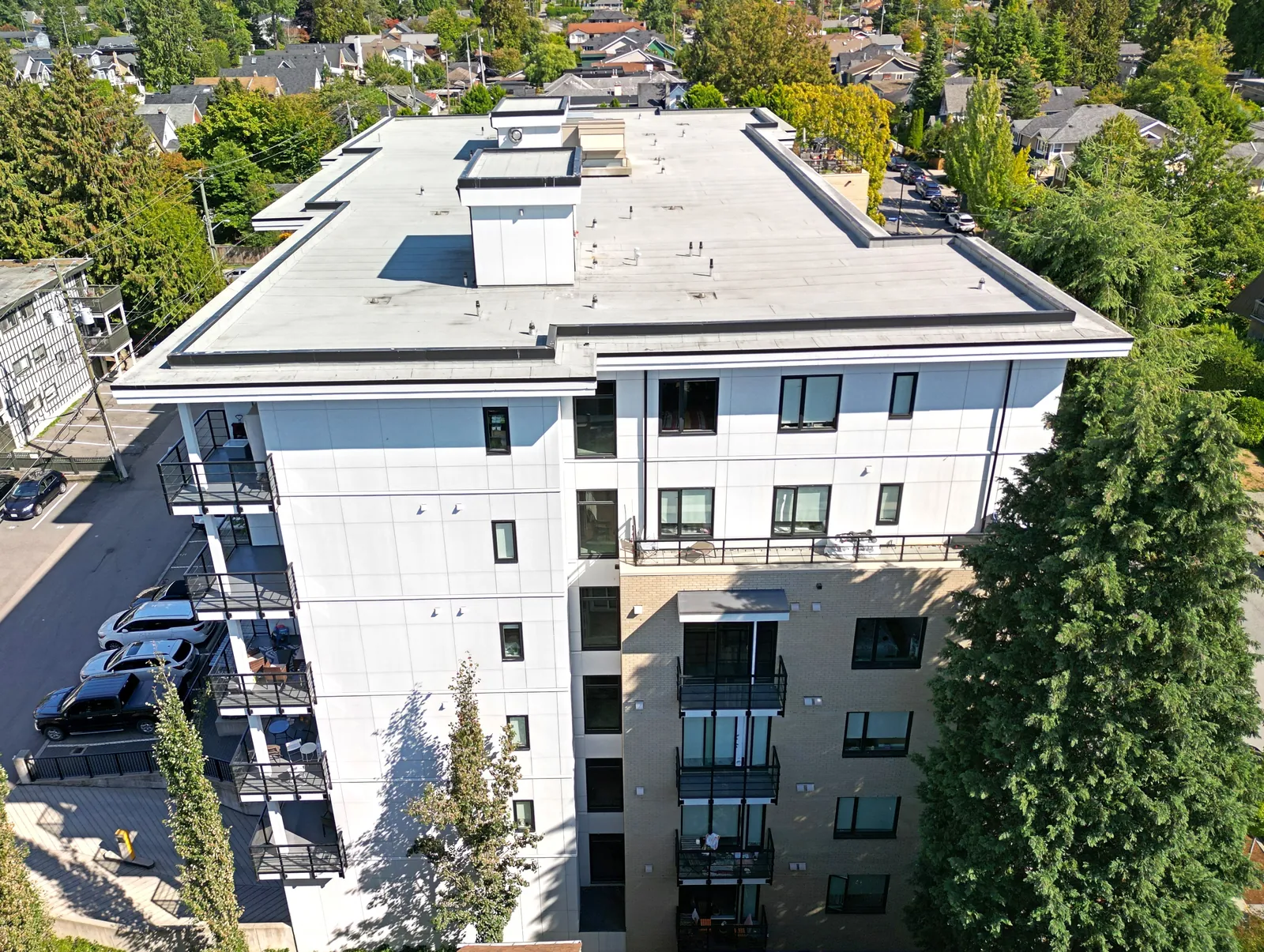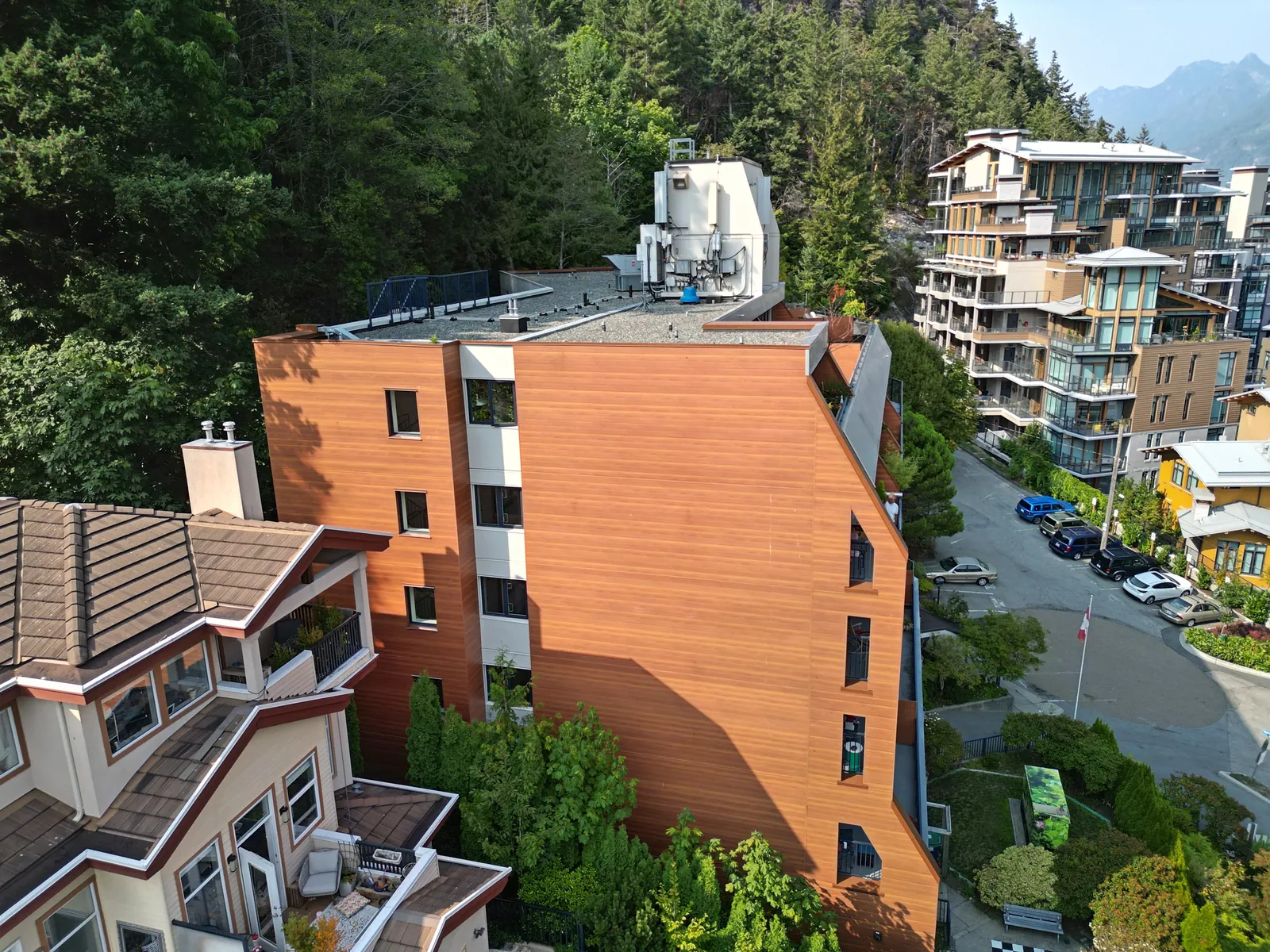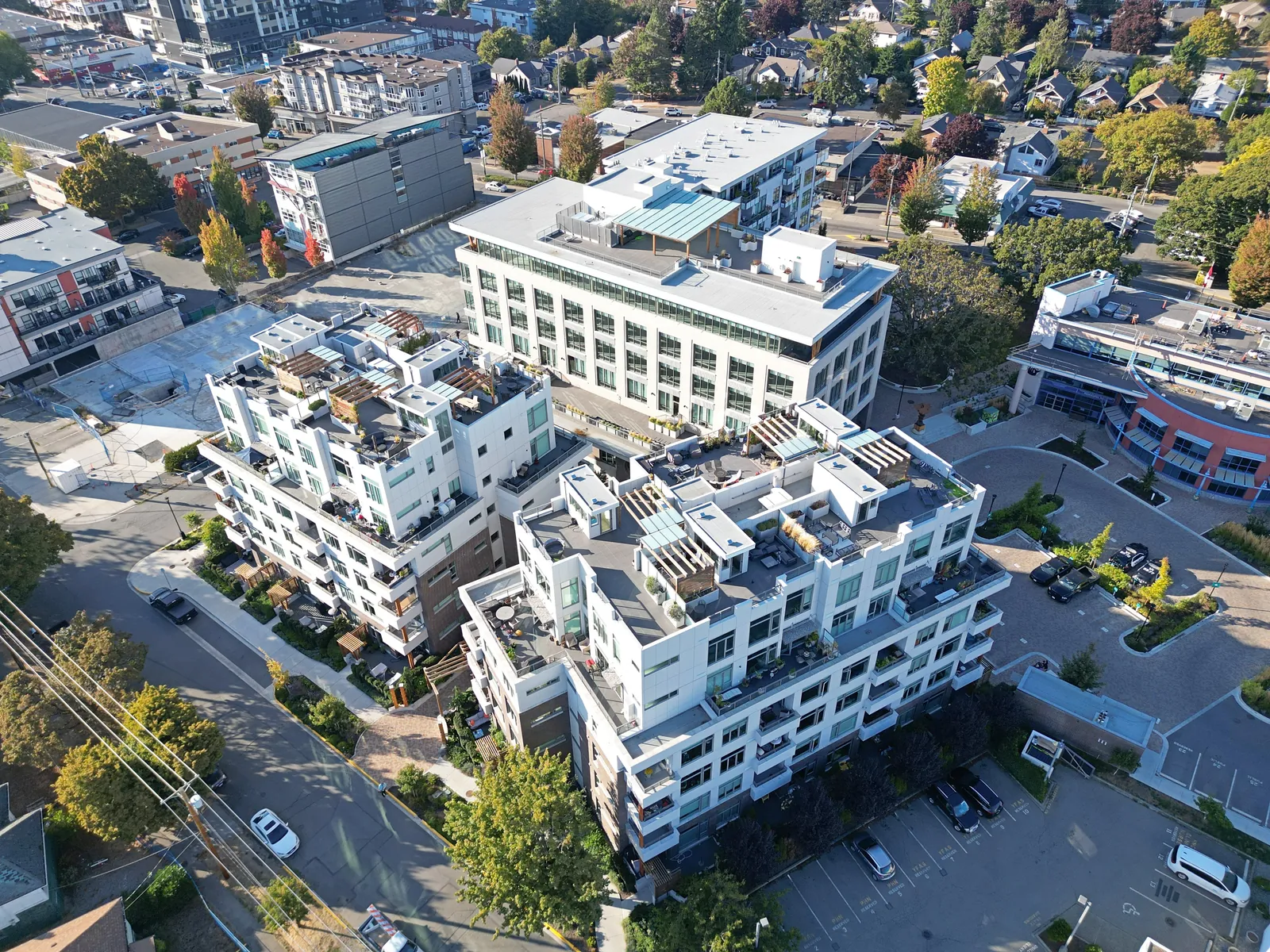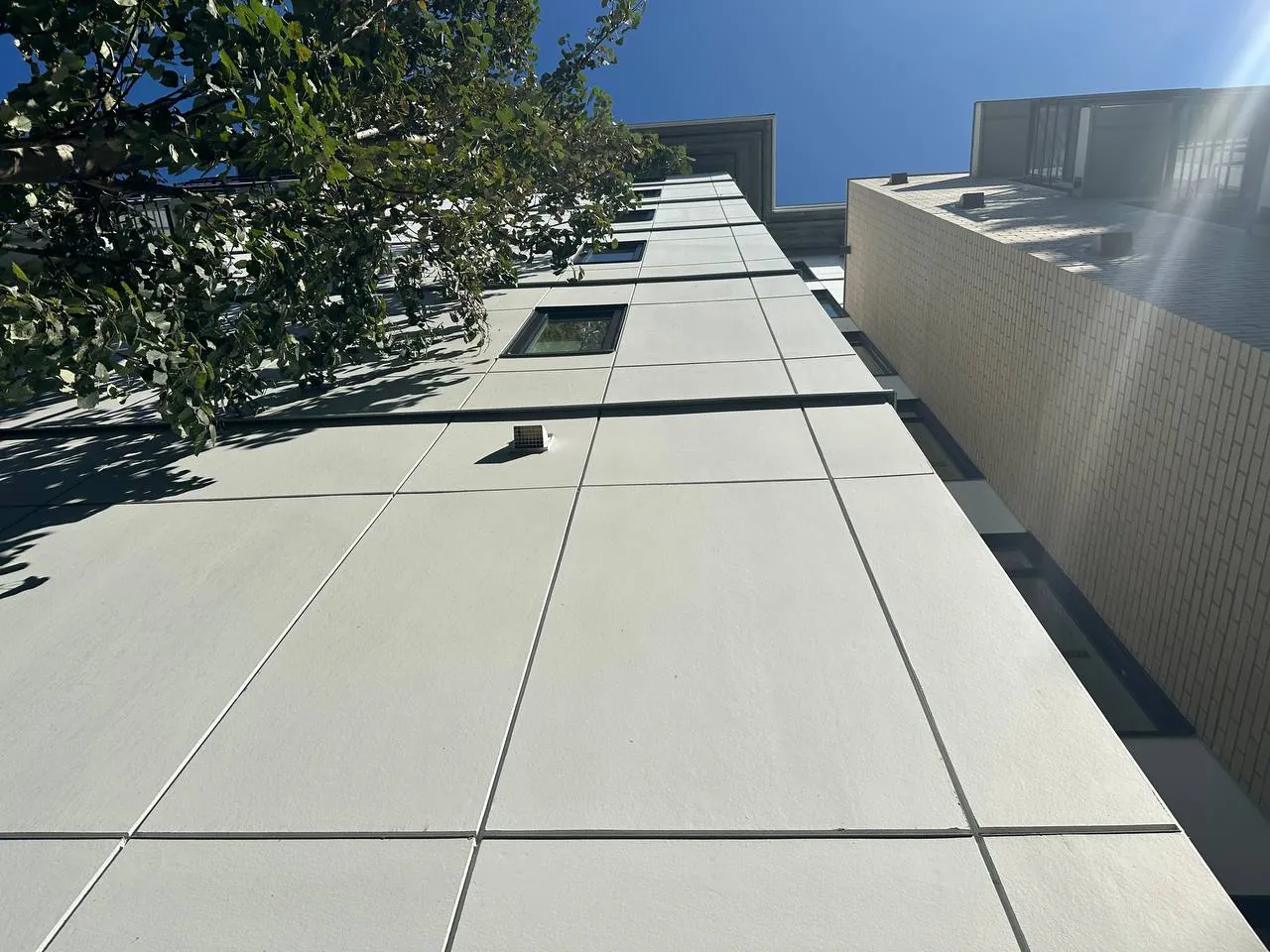
Langford's population grew by about a third between the 2016 and 2021 censuses, and you can see where those people went from almost any stretch of Goldstream Avenue: six-storey wood-frame condos, rows of townhomes, whole hillsides of new houses at Westhills and Bear Mountain. That growth decides what an exterior renovation in Langford, BC looks like. When we scope one there, or next door in Colwood and View Royal, the walls almost always fall into one of two groups. The first is 1970s to 1990s stock with no drainage cavity behind the cladding. The second is boom-era construction from the last 20 years, where the wall design suits the climate and the trouble, when it comes, is in how a busy crew put it together.
We take exterior renovation work on the Westshore from our base in Delta when the scope justifies a full crew on the Island: a re-clad, a stucco remediation, envelope repair across several walls, or a strata project. For a single cracked panel or a day of caulking, a local trade is better value, and we say so on the first call.
How much does an exterior renovation in Langford, BC cost?
For a Westshore house with 2,000 to 2,400 square feet of wall, a full re-clad in fibre cement or acrylic stucco over a new rainscreen cavity runs about $38 to $62 per square foot in 2026, or roughly $76,000 to $149,000 including mobilization. Rotted sheathing and framing add $12 to $20 per square foot where test openings find them. Townhome strata re-clads that include new windows run higher, about $90 to $160 per square foot of wall.
The travel line is smaller here than on an up-Island job. Trucks come off the ferry at Swartz Bay and drive about 40 km to Langford, and freight comes through the same terminal. On a nine-week re-clad, crew accommodation costs more than the sailings do. Any off-Island estimate should show both on their own line, and our page on the Vancouver Island service area explains how we break them out.
Two building booms, two kinds of wall
The older stock in View Royal, Colwood and the Langford core
Most of the Westshore's pre-2000 houses sit in View Royal, in older Colwood neighbourhoods such as Wishart and Triangle Mountain, and on the blocks around Langford's original downtown. The 1970s and early 1980s houses are split-levels and ranchers with T1-11 or hardboard siding, painted stucco on the lower floor, and a wood deck bolted through the siding at the back.
The bigger concern is what came next. Colwood and Langford added a lot of townhome strata in the late 1980s and 1990s, and many of those buildings went up with face-sealed stucco over building paper and sheathing, the same detail behind the Lower Mainland's leaky-condo years. The complexes that have not been remediated are now 30 to 35 years old. The signs are familiar to any council that has walked the site: staining below window corners, cracks running out from the sills, soft drywall beside balcony doors. A probe reading tells you more than the stain does, and our article on stucco moisture testing explains what the numbers mean.
Boom-era buildings at Bear Mountain, Westhills, Royal Bay and Goldstream Avenue
Since the early 2000s, most Westshore houses and condos have been built with a drained rainscreen cavity behind fibre cement, vinyl, stucco or cultured stone. The assembly is right for the climate.
What we find on these walls are execution faults from years when every crew on the Island was booked solid. The most common is a window set without a sloped sill pan. Next come sheathing membrane lapped the wrong way under a head flashing, which sends water behind it, panel joints caulked where they needed a flashing, and balcony connections that rely on one bead of sealant. On a six-storey wood-frame building on Goldstream Avenue, one bad window detail repeated across 120 openings becomes a building-wide repair.
Check the warranty before you pay for a repair
On a Westshore home built in the last ten years, the first call may belong to the warranty provider. BC's 2-5-10 home warranty covers defects in the building envelope, including water penetration, for five years from the date coverage starts, which is usually first occupancy. Owner-built houses are the exception. A Langford townhouse completed in 2022 has until some point in 2027 to find envelope defects and claim them.
The mistake owners make is waiting for a stain. Water that gets past a bad sill pan can wet the sheathing for years before anything shows on the drywall, and by then the five-year term has often run out. In year four, have the walls looked at: probe readings at window corners and the base of each wall, a check of the flashings, and a test opening if the readings call for one. If defects turn up, the report goes to the warranty provider with the claim.
For a strata, the council arranges that review for common property and usually funds it from the operating budget. Our Greater Victoria strata renovation guide covers how councils plan for it. Sometimes the right outcome of our visit is a warranty claim, and we would rather tell you that than price work the warranty should pay for.
Weather off the Juan de Fuca Strait
Victoria's reputation for dry winters comes from the rain shadow of the Olympic Mountains, and it holds best in Oak Bay and James Bay. Langford sits about 15 km west, among hills, and it is noticeably wetter. The Highlands and the upper streets of Bear Mountain are wetter again, and they see snow far more often than the valley floor, so frost and meltwater at the base of the wall matter there in a way they rarely do in Fairfield.
Colwood and Metchosin face south across the Juan de Fuca Strait. Houses along Esquimalt Lagoon, at Royal Bay and on the Metchosin waterfront take wind-driven rain and salt from storms coming in off open water. Salt shortens the life of nails, siding clips, flashings and window fasteners. On any house within sight of the strait, we price stainless or hot-dipped fasteners for the exposed walls.
The south and southwest walls usually take the worst of it. A two-wall repair on a Colwood waterfront house tends to start there, but we pick the walls by probe readings, because a north wall shaded by Douglas fir can stay wet just as long.
One habit costs Westshore owners more than any storm: painting over a stain below a window. Fresh paint hides it for a season or two, and the sheathing behind it keeps getting wet the whole time.
A typical Westshore townhome scope
This is a composite of the complexes we get asked to price on the Westshore, with no single strata behind it.
Thirty townhomes in six blocks, built in Langford in 1994. Face-sealed stucco, vinyl windows with no sill pans, a wood deck off the back of every unit. The depreciation report put the envelope near the end of its service life, and an owner in an end unit found the drywall under a bedroom window soft to the touch.
Test openings at eight windows found wet sheathing at six, worst on the south and west elevations, and rot at two deck ledgers. The scope we would write is a full rainscreen re-clad on all six blocks: new sheathing membrane, new windows set in sloped sill pans, 19 mm strapping, fibre cement or acrylic stucco over the drained cavity, and rebuilt deck ledgers with metal flashing above them. The contract would carry a unit rate for sheathing replacement, agreed before any wall is opened, so the council knows the price of the rot before anyone finds it.
We would phase the work one block at a time, about four to five weeks per block, so only five households have scaffolding at their windows at any point. That comes to six to eight months on site and roughly $80,000 to $140,000 per unit, depending on the cladding and how much sheathing comes out. It is the same building envelope remediation we run on Lower Mainland strata, with a travel line added.
Who issues permits on the Westshore
Five municipalities make up the Westshore: the City of Langford, the City of Colwood, the Town of View Royal, the District of Metchosin and the District of Highlands. Each one sets its own permit requirements. Sooke has its own district office, and the Juan de Fuca electoral area west of it gets building inspection from the Capital Regional District.
In our experience, like-for-like siding repair on a house often needs no building permit, while a re-clad that adds a rainscreen cavity, replaces structural sheathing or rebuilds a deck usually does. Confirm with the office for your address before the scope is final.
Strata buildings have one more step. Langford and Colwood, like most BC cities, use development permit areas for the form and character of multi-family buildings and for land near lakes, streams and the shoreline. If a council wants a new cladding material or colour scheme, ask planning staff whether that needs a development permit amendment before the owners vote on the levy. Work near Langford Lake, Glen Lake, Florence Lake or the Colwood shoreline can also fall inside an environmental permit area, which matters when the scope touches decks, grading or drainage at the foundation.
What an exterior renovation does for a Westshore sale
Resale on the Westshore has one feature most of Greater Victoria lacks: a steady supply of new construction. A 1988 split-level in Colwood or View Royal competes for the same buyers as new townhouses at Royal Bay and Westhills, and those come with full 2-5-10 coverage. Buyers comparing the two read the older home's inspection report line by line. In our experience, a high moisture reading at a window corner costs the seller more in that negotiation than the repair would have cost.
A finished exterior renovation in Langford, BC, or anywhere on the Westshore, changes that comparison. A closed permit, photos of the opened walls and a written workmanship warranty give the older house paperwork a buyer can set beside a new-home warranty. If you plan to sell within two or three years, have the walls assessed first, so the repair price is yours to set.
Hiring for a Langford or Colwood job
Whoever you hire, Island-based or from the mainland, ask for four documents before you sign: a current WorkSafeBC clearance letter, liability insurance, a business licence valid where the property sits, and a written warranty on workmanship and materials. MV Construction is licensed, WCB-insured and warranty-backed, with 17+ years on exterior and envelope work, and the warranty terms go into the written estimate. As a stucco and EIFS contractor, we install both only as drained systems over a cavity on Island walls.
Our crew lodges on the Westshore for the length of the job, so a 7 a.m. start does not depend on Highway 1 traffic. Siding and flashing work continues under tarped scaffold through most of the winter. Stucco and acrylic finishes need 5°C and rising for several days, which on the Westshore usually means April or May. If you are reading this in late November, the realistic sequence is an assessment and test openings over the winter, a written scope and permit by early spring, and a spring start.
Most Westshore estimates start with photos: each elevation, the year the house or complex was built, and anywhere you have seen water inside. From those we can usually tell whether the job suits a full mobilization before we book a site visit. Call (778) 375-5672 or request a fixed-scope written estimate for your Langford, Colwood or View Royal property.