Most of Kitsilano went up between about 1905 and 1930, and a surprising share of it is still standing: cedar shingles, deep front porches on tapered columns, wood double-hung windows with glass that ripples as you walk past. A character home renovation on Vancouver's West Side starts with that inheritance. The City wants those houses kept, and the zoning pays you to keep them. What owners tend to underestimate is how much of the first three months goes to rules and drawings before a single shingle comes off.
That order of work surprises people who have renovated elsewhere in the Lower Mainland. In Burnaby or Surrey, a re-clad is mostly a construction schedule. On a Kitsilano character home it is a permit schedule first.
What does a character home renovation on Vancouver's West Side involve?
On a typical Kitsilano, Point Grey or Dunbar character house, the exterior renovation covers new cedar cladding over a drained rainscreen, restored or replicated wood windows, a rebuilt front porch and new flashings, all checked against the City's character criteria. Budget roughly $150,000 to $350,000 for the exterior in 2026, and allow three to five months of permitting before work starts on site.
Interior work adds to both numbers. The heritage rules bite hardest on the outside of the house, though, so that is where the planning has to start.
Character house, Heritage Register, designation: three different things
Owners on the West Side use these words interchangeably. The City does not, and the difference decides how your permit is handled.
A character house, in City of Vancouver terms, is a house built before 1940 that still has enough of its original features: the roof form and massing, the front porch, original cladding, the size and pattern of the windows, and details like gable brackets and exposed rafter tails. Most character houses carry no formal heritage protection at all. What they carry is eligibility. Keep the house and its features, and the zoning allows more floor area or more units than a new house on the same lot would get.
A listing on the Vancouver Heritage Register (categories A, B and C) is recognition. On its own it does not stop you from changing the house, but it flags the file for heritage staff and can slow a demolition permit.
Designation is the binding one. A designated house, or a pre-1940 house inside the First Shaughnessy Heritage Conservation Area, needs a heritage alteration permit for exterior changes, and staff will expect repairs in kind: cedar for cedar, wood windows for wood windows.
Before anyone draws anything, look the property up on VanMap, the City's online map, which shows zoning and Register status. It takes ten minutes. It also tells you which of the three conversations you are about to have.
Kitsilano, Point Grey and Shaughnessy follow different rules
Kitsilano is mostly two-family RT zoning, written around character retention. A retained character house can take extra floor area, a conversion into suites, or an infill house at the back of the lot, and a new building on the same lot gets less. That gap is the City's incentive. At Kitsilano land values, it is worth more than anything else in the renovation budget.
Point Grey, Dunbar and Kerrisdale moved to the City's multiplex zoning in 2023. Character retention still matters there, but the incentives and the numbers differ from Kitsilano's, so check the current district schedule for your lot before you assume either way.
First Shaughnessy is the strict one. It has been a heritage conservation area since 2015, and pre-1940 houses there are protected from demolition in most cases. Exterior changes go through a heritage alteration permit, with close attention to windows, porches and cladding.
The mistakes that cost West Side owners the most
The expensive mistake is modernizing the street face before checking what it costs in zoning. Swap the original wood windows for vinyl, enclose the porch or cover the shingles, and the house may stop qualifying as a character house. When that happens, the suite conversion or the extra floor area you planned for the next phase can go with it. Owners rarely do this in one move. It happens one reasonable-looking change at a time, over twenty years and two or three owners.
Plenty of Kitsilano houses had it done to them in the 1950s and 60s, when owners covered the cedar with stucco or asbestos-cement shingles. Taking that layer off is a common restoration step. It needs a hazardous materials survey first, since WorkSafeBC requires one before anyone disturbs materials in a building of that age, and asbestos-cement abatement on a full house can run $15,000 to $40,000.
Here is the counterintuitive part. The house that looks worst from the sidewalk often has the soundest walls.
Peeling paint on 100-year-old cedar is mostly cosmetic. Old-growth cedar has tight grain and natural oils, and it dries out quickly when water gets behind it. The house to worry about is the one with a fresh paint job where every lap joint has been caulked shut. Caulking the laps blocks the path water uses to drain and dry, and rot behind a neat paint job is a common find when those walls are opened.
What sits behind the cedar on a 1912 house
The original wall is simple. Cedar shingles or bevelled siding are nailed to shiplap boards, sometimes with tar paper between, with no cavity and usually no insulation. Some houses from before about 1920 are balloon-framed, with studs running from foundation to roof and no fire blocking between floors, which gets corrected while the walls are open. Lead paint should be presumed on any coat older than 1978, so stripping and sanding happen under containment.
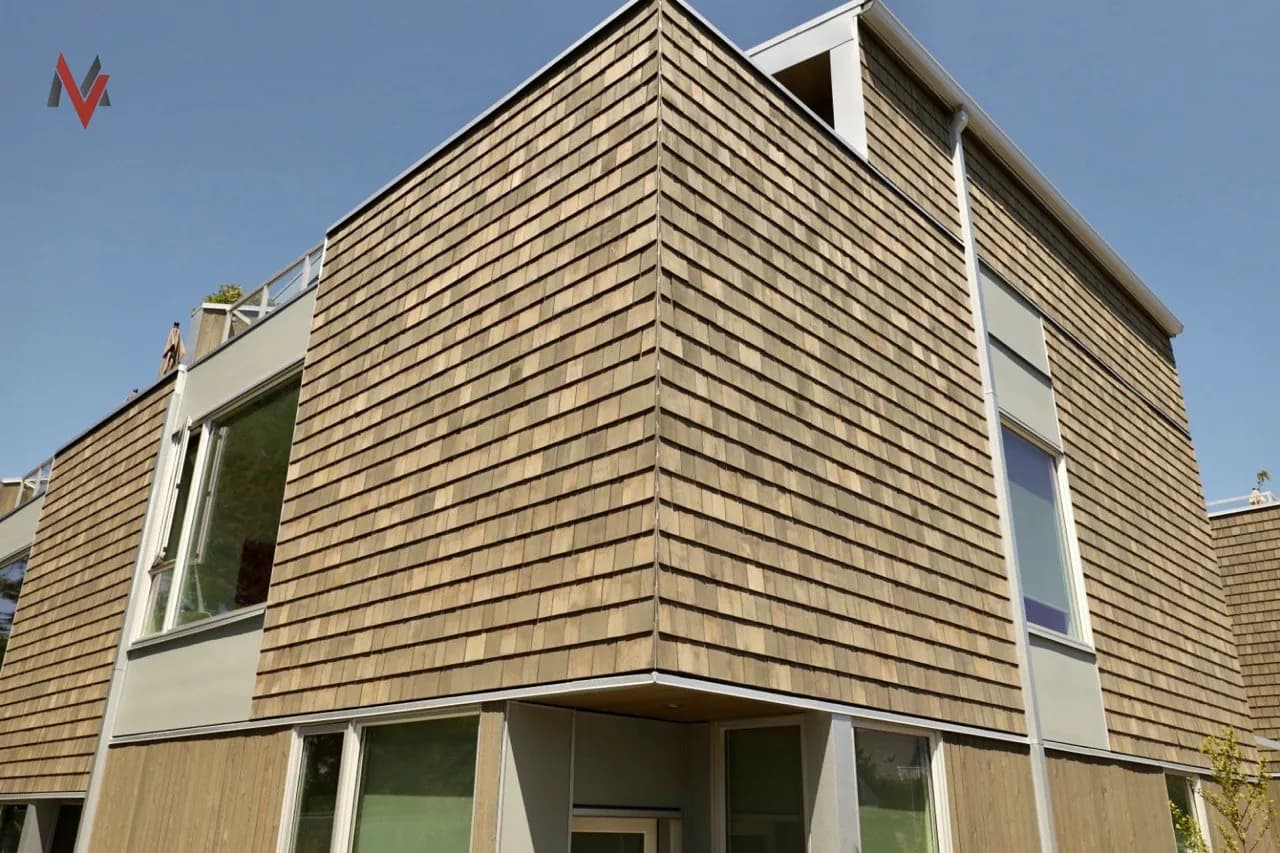
When the cladding comes off, we install a drained rainscreen cavity behind the new cedar. On a West Side house, that one change does more for long-term water control than anything else in the scope.
It also creates a problem most first quotes miss. The 19 mm strapping pushes the new siding outward, so window casings, corner boards, belly bands and sills all have to be built out by the same amount. Skip that and the trim ends up recessed behind the cladding. The house looks wrong from the street, and heritage staff and neighbours both notice. Building out the trim adds carpentry hours, and it belongs in the written estimate from day one; our cedar siding and cladding work on older houses prices it as its own line. If you are deciding whether a cavity is worth adding at all, our article on rainscreen retrofits in BC covers that question in detail.
Windows: restore before you replace
Original windows are where owners and heritage reviewers disagree most often, and the restored option usually wins on cost as well as looks. A full restoration of an old-growth wood double-hung (new putty, weatherstripping, rebuilt sash cords and weights, paint) runs roughly $1,200 to $2,500 per window in 2026. A new wood window built to match the original profile runs $3,500 to $7,000 per opening, installed. Add storm sashes to the restored windows and you close much of the thermal gap with double glazing, while keeping the glass and the profile reviewers want to see.
Porches and chimneys
The front porch takes the most weather and usually shows it first: rot at the column bases, a sagging beam, decking replaced twice in the wrong material. Rebuilding a porch in kind, with matching tapered columns and the original railing pattern, typically runs $30,000 to $70,000. Enclosing it for interior space is one of the changes most likely to draw objections at review.
Most of these houses also have a brick chimney. Repoint it with lime mortar. Cement mortar on soft early Vancouver brick makes the brick faces spall within a few winters, which our piece on heritage masonry and lime mortar explains with costs.
A typical West Side exterior scope, start to finish
A common Kitsilano case looks like this: a two-and-a-half storey house from around 1912, a few blocks off West 4th Avenue, original cedar shingles upstairs with 1960s stucco over the main floor, nine original windows, and a front porch with rot at two column bases.
The first four to six weeks go to the hazardous materials survey, measured drawings, and a zoning and Register check. Development and building permits follow. Vancouver building permits commonly take 8 to 14 weeks from a complete application, and files in RT zones or with heritage review can run past four months once a development permit stacks on top. Our breakdown of renovation permit costs and timelines in BC has the fee math.
On site, the full exterior takes 14 to 20 weeks with scaffolding: abatement and stucco removal first, then sheathing repairs, membrane, rainscreen cavity, cedar, trim build-outs, window restoration, the porch rebuild and paint. Plan to have the walls open between April and September. Bare sheathing during a November atmospheric river means tarps, wet framing and lost days.
A scope like that usually lands between $220,000 and $300,000 for the exterior, before any interior work.
The value case on the West Side is straightforward. Land is most of the assessed value, and buyers looking at character homes pay for the house being intact: original windows, a proper porch, cedar that still looks like 1912. A careful character home renovation protects that. It also keeps the retention incentives available for the suite or infill you may want to add later. A house stripped of its character tends to sell as a lot.
Who should work on a West Side character home
Heritage files move faster when the contractor's paperwork is clean. MV Construction is fully licensed, carries WCB coverage and liability insurance on every crew, and has more than 10 years of exterior work across Greater Vancouver. Every project comes with a written scope and a written warranty. The estimate lists the items that tend to surface late on old houses, such as trim build-outs, a sheathing replacement allowance and abatement, so you see them before you sign.
If you own a character house in Kitsilano, Point Grey, Dunbar or Shaughnessy and are planning exterior renovation work, call us at (778) 375-5672 or request a written estimate. We will walk the house with you and put the scope, the permit path and the costs in writing.