In November, the cedar on a 1970s West Coast house in Lynn Valley or Port Moody tells a different story on each side. The south wall is silver, dry and covered in fine checks. The north wall, under the firs, has a green film and black freckles. The bottom two courses by the deck take a thumbnail, and long black streaks run down from every nail head. One contractor says stain it. Another wants to replace a few boards. A third prices a full tear-off. Any of the three can be right about cedar siding in BC, and the answer sits behind the boards.
Western red cedar is the most forgiving cladding you can hang on a wet coast. Its heartwood carries natural compounds that slow decay fungi, it moves very little once dry, and it holds stain better than any other softwood. It still rots when it stays wet. How long it stays wet depends on the flashing, the clearance to grade, the roof overhang and whether there is a drainage gap behind the boards. The stain on the face of the wood controls colour and surface wear, and has little say over water that gets in behind.
Should you maintain, restore or replace cedar siding in BC?
Maintain when the boards are firm and read under 19 percent moisture: wash and re-stain every 3 to 5 years, at $4 to $7 per square foot of wall. Restore when damage is local and the sheathing behind is dry: replace the failed boards, fix the flashing and refinish, at $10 to $18 per square foot. Full replacement makes sense once rot reaches the sheathing or a third of the boards are failing, at $26 to $40 per square foot.
Those are 2026 figures for Greater Vancouver, supplied and installed, with scaffold for a typical two-storey house. Vancouver Island pricing runs close to the same. Small jobs cost more per foot, because setup, scaffold and refinishing a whole elevation do not shrink with the size of the repair.
What the coast does to cedar
Sunlight, water and the wood itself each leave their own marks on a cedar wall, and it helps to separate them before deciding anything.
Sunlight breaks down the lignin at the surface of the wood. Rain washes the loosened fibres away, and the wall turns silver-grey within a year or two of losing its finish. That grey layer looks alarming and does little harm by itself: weathering wears away roughly a millimetre of cedar per decade. Its real cost shows up later, because paint and stain do not hold on to it.
Water is the force that matters. Decay fungi need wood that stays above about 20 percent moisture content for weeks at a time, and active rot usually reads near 28 percent or higher. Annual rainfall in the Lower Mainland ranges from about 1,200 mm at the airport in Richmond to well over 2,000 mm on the North Shore, and most of it falls between October and April, when nothing dries. A north wall under big trees in Deep Cove or Lynn Valley can sit wet for six months of the year.
Then there is the cedar itself. Old-growth heartwood, the tight-grained material on most houses built before the 1980s, carries far more of the decay-resisting extractives than the second-growth cedar sold today. Sapwood, the pale outer band of the log, has almost none. A wall built in 2005 from knotty second-growth boards with sapwood edges can rot sooner than its 1975 neighbour, and we see that pattern on newer houses across the North Shore and the Tri-Cities.
Near the water there is one more factor. In White Rock, Crescent Beach, Tsawwassen and on the Gulf Islands, plain steel nails corrode within a few years, and the iron reacts with cedar's tannins to leave the blue-black streaks that run down from each fastener.
Reading the wall before anyone prices it
An estimate for cedar work should start with a probe and a moisture meter. Without them the contractor is guessing, and the guess tends to favour whatever that contractor sells.
Start where water collects:
- the bottom course, especially where the siding is within 150 mm (6 inches) of soil, a patio or a deck
- below window sills and at the lower corners of window trim
- where a roof edge meets a wall
- butt joints, where two boards meet end to end
- inside corners and behind downspouts
Push an awl into the board at an angle. Sound cedar is soft enough to dent, but the awl stops after a few millimetres and lifts a long splinter. Rotten wood lets the awl sink in and breaks away in short, brown, cubic pieces. A pin-type moisture meter adds numbers: under 15 percent is dry and ready to finish, 15 to 19 is acceptable, 20 to 27 means the wall is staying wet somewhere, and 28 or above at a sill or a bottom course usually means decay has started.
Readings on the boards say nothing about the sheathing. Where several boards read high or feel soft, we remove one or two and look at the building paper and sheathing behind them, because that single opening moves the final price more than anything else on the site visit. Dark, soft or delaminating plywood behind the boards means the job has left maintenance territory. Our article on mould versus rot inside a BC wall explains why that difference changes the repair.
Stains are a second clue. Three common ones look alike from the driveway:
| What you see | Usual cause | What to do |
|---|---|---|
| Black spots, worse on shaded walls | Mildew on the surface | A drop of diluted bleach lightens it within a minute; wash and treat |
| Blue-black streaks below nail heads | Iron fasteners reacting with cedar's tannins | Oxalic acid removes it; stainless fasteners prevent it |
| Red-brown runs below boards or joints | Extractives washed out of the wood | Fades with time, but shows water is getting behind the board |
Cupping, splitting and boards pulling off their nails point to how the siding was installed: wide boards nailed through two courses at once, or boards never sealed on the back. Those defects repeat on every board of the wall, which matters when you weigh restoration against replacement.
Maintaining cedar: the 3 to 5 year cycle
Maintenance on a sound cedar wall means a wash, light sanding where the surface has gone grey, and fresh stain. It is the least expensive way to keep the wood. Most of the failures we see on cedar under 25 years old trace back to skipping that cycle twice in a row.
Washing cedar takes low pressure: a soft brush, a wood cleaner and a rinse under about 1,000 psi. A 3,000 psi washer held close to the wall cuts the soft earlywood out of each growth ring, raises fibres and leaves a fuzzy face that soaks up stain unevenly. An oxalic acid brightener after cleaning removes iron stain and brings back the colour. Then the wall needs two or three dry days, and the meter should read under 15 percent before any finish goes on.
Timing matters more than the product. The staining season in coastal BC runs from roughly late May to mid-September. Stain applied in October over wood that reads 18 percent will look fine at Christmas and start failing in spring.
The finish you pick sets how often you come back:
| Finish | Typical life on a BC wall | How it fails |
|---|---|---|
| Penetrating semi-transparent oil stain | 3 to 5 years; 2 to 3 on a south or west wall with no overhang | Fades and wears thin, never peels; recoat is a wash and one coat |
| Solid-colour stain | 5 to 7 years | Thin peeling if applied too heavy |
| Acrylic paint over a stain-blocking primer | 7 to 10 years | Peels; next cycle needs scraping and spot priming |
| Clear sealer or water repellent | 1 to 2 years in full sun | Greys out fast, needs frequent recoats |
Rough-sawn cedar holds roughly twice as much stain as smooth-planed boards, and the finish lasts longer on it. If your boards are being replaced anyway, ask for the rough face out.
More film does not mean more protection on cedar. A thick paint layer on a wall that gets wet from behind holds that water against the wood, then blisters and peels. On a sound wall in this climate, penetrating stain recoated every four years usually costs less over 20 years than paint every eight, because each stain cycle starts from a washed wall and each paint cycle starts with scraping.
The most expensive maintenance mistake we see is paint or solid stain rolled over grey, weathered cedar without sanding it back to fresh wood. The grey layer is loose, degraded fibre. The coating grips it and comes off with it, often within two years. Research at the US Forest Products Laboratory found that even a few weeks of bare exposure to sunlight weakens the bond of the first coat.
A second mistake shows up on lap siding. Bevel siding drains at each overlap, and a bead of caulk along the bottom edge of every course traps water behind the board. Caulk belongs at trim joints and penetrations. The laps stay open.
For a two-storey house with about 2,400 square feet of cedar wall, a full maintenance cycle (washing, brightener, sanding the grey areas, fastener touch-up and two coats of penetrating stain) runs about $9,500 to $17,000 in Greater Vancouver in 2026, scaffold included. On a townhouse complex the cedar finish is usually common property under the Strata Property Act, and the cycle belongs in the depreciation report as a recurring item. A complex that restains on schedule spends far less than one that waits until boards need replacing.
Restoring cedar: replacing boards and fixing the cause
Restoration is the middle option, and it is the one we price most often on cedar houses older than 30 years. The wall is mostly sound. Some boards have rotted, and the rot sits where water gets in: under sills, at the bottom course, beside a roof edge with no kickout flashing.
Replacing the rotten boards without fixing the cause buys two or three winters. A proper restoration of cedar siding also covers:
- kickout flashings at every roof-to-wall edge, so roof water lands in the gutter instead of running down the siding
- sill flashings with end dams under windows, which most 1970s and 1980s cedar houses never had
- clearance of at least 150 mm (6 inches) between the bottom course and soil, and about 50 mm (2 inches) above decks and roofs; a raised planter against a cedar wall rots the bottom course within a decade
- stainless steel fasteners, type 304 inland and type 316 within a kilometre or two of salt water, with ring shanks that hold as the boards swell and shrink
- back-priming and end-grain sealing on every new board, including the cut ends at butt joints and trim
- nailing that lets each board move: one nail per stud, placed just above the course below so it passes through one board only
Matching takes more work than owners expect. Older houses often carry profiles that are no longer stocked, such as 1/2 by 8 bevel or a custom channel pattern, and replacement boards may need milling. New cedar also looks different from old cedar under the same stain, so restoration usually includes refinishing every elevation where boards were replaced.
For restoration with up to about 20 percent of the boards replaced, flashing corrections and a full refinish, expect $10 to $18 per square foot of wall. A single area under one window, with the refinish of that wall, might run $2,500 to $5,000.
Restoration is also the default where the rules call for wood. In Kitsilano, Mount Pleasant and Grandview-Woodland, a house on the Vancouver Heritage Register or in a heritage conservation area may need like-for-like wood siding. In a strata, an owner cannot change the cladding without approval, and restoring keeps every unit matching.
Replacing cedar: when the boards have to come off
Replacement is the right call in four situations:
- Rot in the sheathing over a wide area, found once boards came off.
- A face-sealed wall, with cedar nailed straight onto building paper and no gap, that has leaked at several locations.
- More than about a third of the boards failing: split, cupped, rotted or pulled away.
- A wall that needs new windows, insulation or a new weather barrier anyway.
Most cedar houses in BC built before the mid-2000s have no drainage gap behind the siding. Cedar tolerates that better than stucco does, because wood takes on and releases water without cracking, and lap siding leaves small air spaces behind each course. Once the building paper has aged out and the flashings are failing, though, a re-clad is the time to add the gap. A cedar siding replacement built to today's practice includes a new weather-resistive barrier, 19 mm pressure-treated strapping to form the drainage cavity, insect screen at the top and bottom of the cavity, and new flashings at every window, door and floor line. Our guide to rainscreen retrofits covers why that cavity matters on the coast, and the trade-offs between a full tear-off and an overclad are in our siding replacement guide.
A re-clad that replaces the weather barrier or sheathing can trigger a building permit in most Metro Vancouver municipalities, while restaining and board repairs usually do not. Confirm it with your city before the work is scheduled.
Cedar again, or a different cladding?
Full replacement with new cedar costs $26 to $40 per square foot of wall in Greater Vancouver in 2026, with knotty grades toward the low end and clear vertical-grain bevel or channel at the top. Cedar shingles land at $24 to $36. Fiber cement lap siding runs $17 to $24 for a full tear-off. On 2,400 square feet of wall, cedar costs roughly $21,000 to $38,000 more up front, and it needs a finish cycle every 3 to 7 years where factory-finished fiber cement goes 10 to 15.
Cedar still earns that price where strata covenants or heritage rules require wood, and on West Coast modern houses where the cedar is the architecture. It is also the easiest cladding to repair one board at a time, with hand tools, decades later. A cedar wall on a rainscreen, with stainless fasteners and back-primed boards, can reasonably be expected to last 40 years with maintenance.
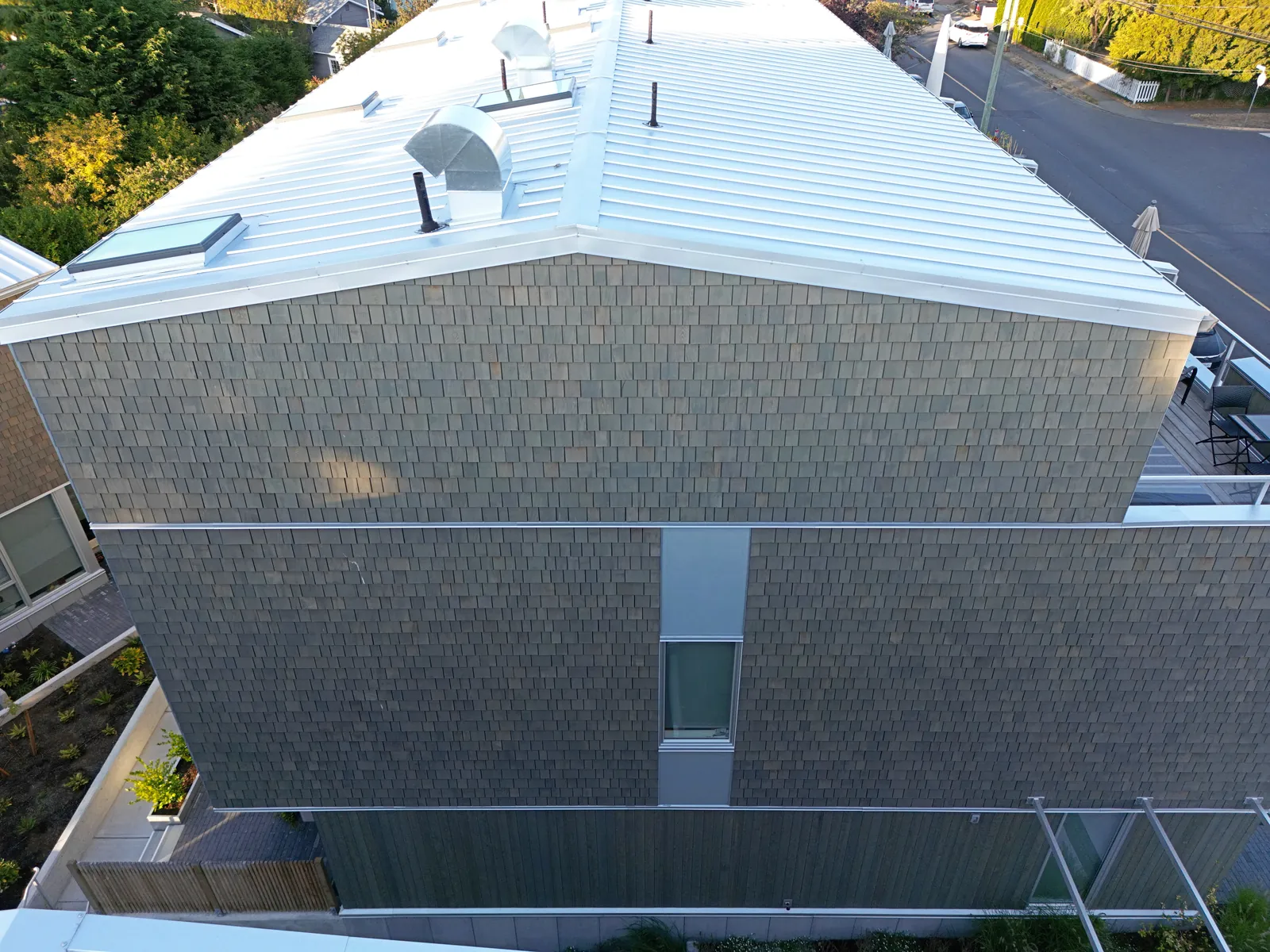
Cedar shingle walls
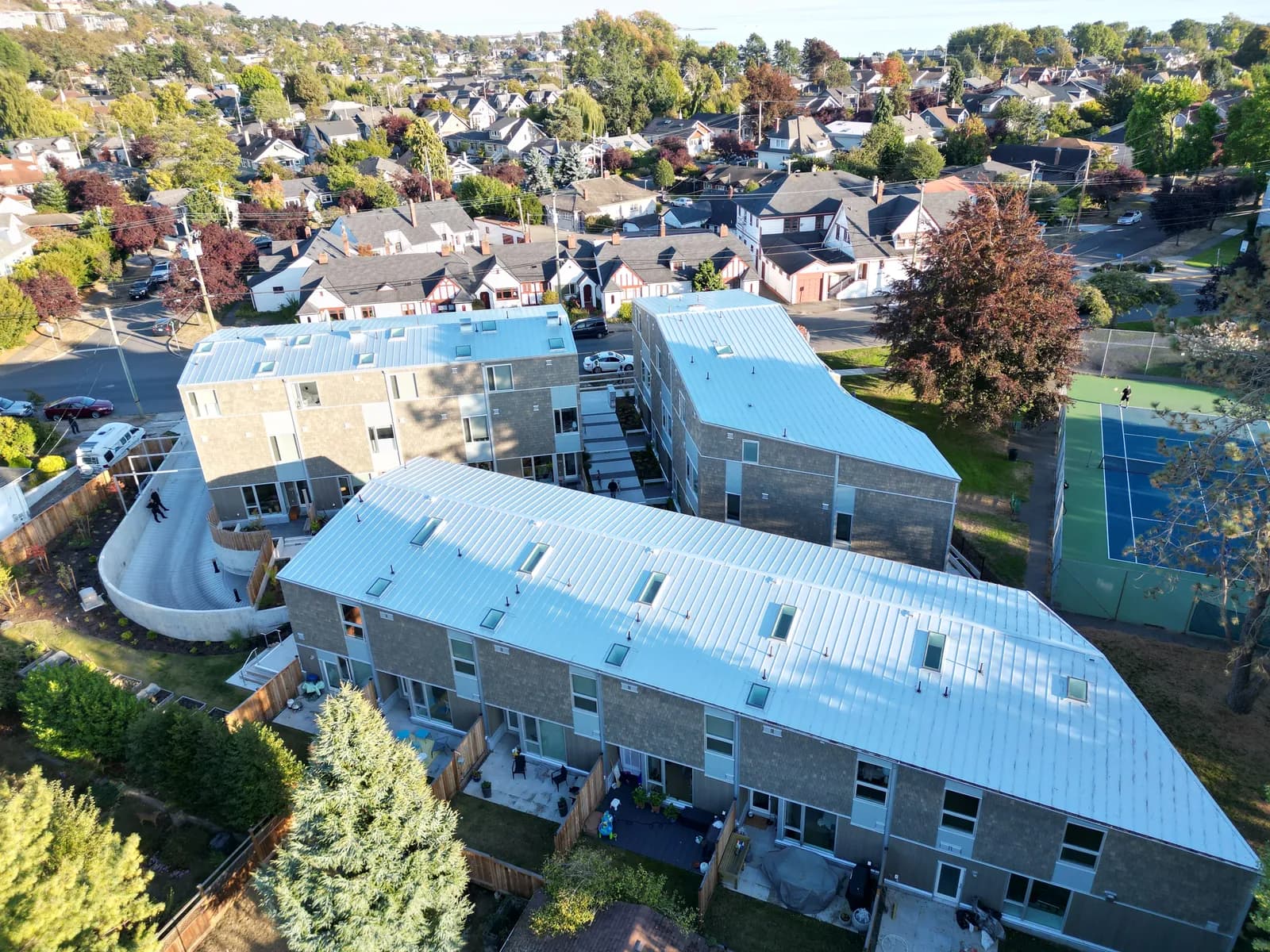
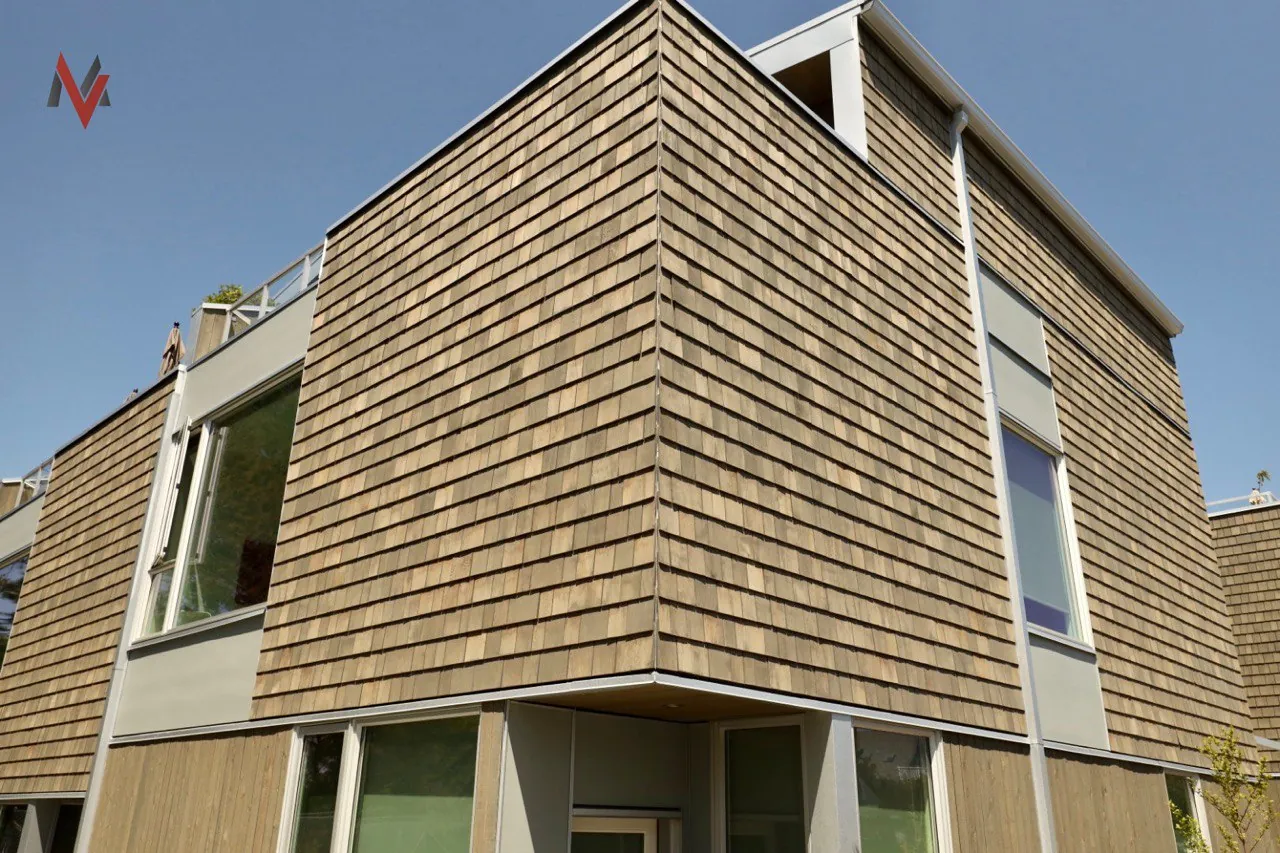
Shingles behave differently from boards. Each course covers most of the one below, so the wall carries two or three layers of wood at any point, and it dries through the gaps between pieces. A damaged shingle can be slipped out and replaced in a few minutes with a shingle ripper. The weak points match those of board siding: a bottom course too close to grade, missing kickouts, and poorly woven corners. Shingle walls on Bowen Island, the Gulf Islands and the Sunshine Coast can last 30 years or more unfinished, as long as trees and neighbouring buildings do not keep them in shade and wet.
Maintain, restore or replace: the numbers side by side
| Option | When it fits | 2026 cost, Greater Vancouver | Next spend |
|---|---|---|---|
| Maintain (wash and stain) | Boards firm, readings under 19 percent | $4 to $7 per sq ft of wall | Recoat in 3 to 7 years |
| Restore | Damage local, sheathing dry | $10 to $18 per sq ft | Normal maintenance cycle |
| Replace with cedar | Sheathing rot, no cavity, a third of boards failing | $26 to $40 per sq ft | Finish every 3 to 7 years |
| Replace with fiber cement | Same triggers, less upkeep wanted | $17 to $24 per sq ft | Repaint at 10 to 15 years |
Prices include scaffold on a two-storey house. A third storey, a steep lot or a waterfront site with limited access adds to all four. Permits and window replacement are extra.
Who does the work
MV Construction has worked on BC exteriors for 17+ years. We are licensed, insured and WCB-covered, which matters on any cedar job done from scaffold. Our siding repair and replacement work is backed by a written warranty on workmanship, and the estimate is written and itemized, including how rot found behind the boards would be handled once a wall is open. Cedar work is often one part of a larger exterior renovation that also takes in windows, flashings and decks, and we price it that way when the house needs it.
Our recommendation
For most cedar houses in BC: keep the cedar and stain it. Choose a penetrating semi-transparent or solid stain over paint, plan on a 4-year cycle for south and west walls and 5 to 6 years for the rest, and fix kickouts, sills and clearance the first time you restore. Replace only when an opened wall shows rot in the sheathing, or when the house needs a rainscreen, windows and insulation anyway.
If you are replacing and nothing requires cedar (no strata covenant, heritage rule or architecture that depends on it), fiber cement is the better choice for a three-storey wall you can only reach from scaffold. Where the cedar is the house, put it back on a rainscreen with stainless fasteners and plan the stain cycle from the first year.
If your cedar has soft spots or streaks and you want it probed and metered before you decide, call (778) 375-5672 or request a fixed-scope estimate. We work across Greater Vancouver and Vancouver Island.
FAQ
How long does cedar siding last in BC? On a wall with a drainage gap, proper flashing, stainless fasteners and a finish renewed every 3 to 7 years, cedar siding lasts 40 years or more in coastal BC. On a face-sealed wall with plain steel nails and skipped maintenance, the bottom courses and the boards under windows can rot within 15 to 20 years while the rest of the wall stays sound.
How often should cedar siding be stained in Vancouver? Every 3 to 5 years with a penetrating semi-transparent stain, and every 5 to 7 years with a solid-colour stain. South and west walls without an overhang need it sooner, often at 2 to 3 years. Stain between late May and mid-September, when the wood reads under 15 percent moisture.
Can you paint cedar siding? Yes, over an oil-based or stain-blocking primer, because cedar's tannins bleed through latex paint as brown stains. Weathered grey wood has to be sanded back to fresh fibre before priming. Paint lasts 7 to 10 years on cedar but fails by peeling, so the following cycle costs more than a stain recoat.
Is cedar siding worth it compared to fiber cement? Cedar costs $26 to $40 per square foot installed in Greater Vancouver in 2026, against $17 to $24 for fiber cement, and needs refinishing two to three times as often. It is worth it where the look of the house depends on it, where strata or heritage rules require wood, or where you want boards that can be repaired one at a time decades later. For a tall wall that is hard to reach, fiber cement costs less over its life.