Here is a call we get most autumns. A homeowner has two estimates for the same cracked stucco corner under a second-floor window, with a faint stain on the drywall inside. One estimate says $1,400. The other says $16,800. Both contractors stood on the same driveway and looked at the same crack.
Neither of them got the arithmetic wrong. They priced two different jobs. One priced the crack. The other priced what the crack probably means. That gap is the reason stucco siding repair cost is so hard to pin down online, and why the number you get on site depends more on what sits behind the finish than on the damage you can see from the lawn.
This guide splits the range into the five repair types we price most often in Greater Vancouver and on Vancouver Island, then walks through the seven factors that move a job up or down within it. The figures are 2026 BC numbers from our own estimates.
How much does stucco siding repair cost in BC?
In 2026, most BC stucco repairs fall into four bands: crack sealing runs $1,200 to $3,000 per visit, a small patch $600 to $2,000, a section repair with new membrane and flashing $3,500 to $12,000, and an elevation repair with rotted sheathing $14,000 to $45,000. Access, finish matching and what the wall hides behind the stucco decide where you land.
A full recoat ($5 to $10 per square foot of wall) and a full tear-off and re-clad (often $60,000 to $110,000 on a two-storey house) are different decisions. We cover where repair stops making sense in our guide to stucco repair vs replacement.
The five repair types, priced
| Repair type | What it involves | Typical 2026 BC cost | Rough cost per sq ft repaired |
|---|---|---|---|
| Crack routing and sealing | Route and fill cracks wider than about 1 mm, renew sealant at windows, doors, vents and penetrations | $1,200 to $3,000 per house visit | Not priced by area |
| Small patch | Impact damage, old fixture holes, a cracked corner bead; under about 10 sq ft | $600 to $2,000 per patch | $80 to $200 |
| Section repair | Open 20 to 80 sq ft, replace building paper and lath, correct the flashing, three coats, finish to a break line | $3,500 to $12,000 | $60 to $150 |
| Elevation repair with hidden damage | Remove stucco across most of a wall, replace wet or rotted sheathing, rebuild with membrane, flashings and finish | $14,000 to $45,000 | $35 to $70 |
| Recoat | Wash, fix cracks, prime and apply a new acrylic or elastomeric finish over sound stucco | $5 to $10 per sq ft of wall | $5 to $10 |
Read the last column from top to bottom. The cost per square foot falls as the job gets bigger, which runs against how most people expect repair pricing to behave. We come back to why further down, because it changes how you should scope a repair.
Crack sealing
Every stucco wall cracks. Hairline shrinkage cracks are normal, and most of them never let in enough water to matter. A sealing visit routes out the cracks that are wide enough to take water, fills them with a flexible stucco-compatible product, renews the sealant around windows, doors, hose bibs, dryer vents and light fixtures, and checks that the weep screed at the base of the wall is still open. Half a day to two days on a typical house.
What it does not do is fix a crack that has already been leaking for a few winters. If you are unsure which kind you have, our breakdown of cosmetic vs structural stucco cracking covers the signs.
Small patches
A hole where a satellite dish used to be, a corner knocked by a trailer, a 30 cm crack at a corner bead. The material is a few dollars. The cost is in the process: traditional cement stucco goes on in three coats, and each coat needs time to cure before the next one. A 4 square foot patch can mean three or four separate trips, plus colour matching on the last one.
Section repairs
This is the most common real repair we do. Typical locations are window corners, deck-to-wall junctions and the spot below a roof-to-wall intersection where a kickout flashing was never installed. We open the stucco wider than the visible damage until we reach dry sheathing, replace the building paper and lath, fix the flashing that let the water in, rebuild in three coats, and carry the finish to a natural break line so the repair does not read as a square on the wall.
Elevation repairs with hidden damage
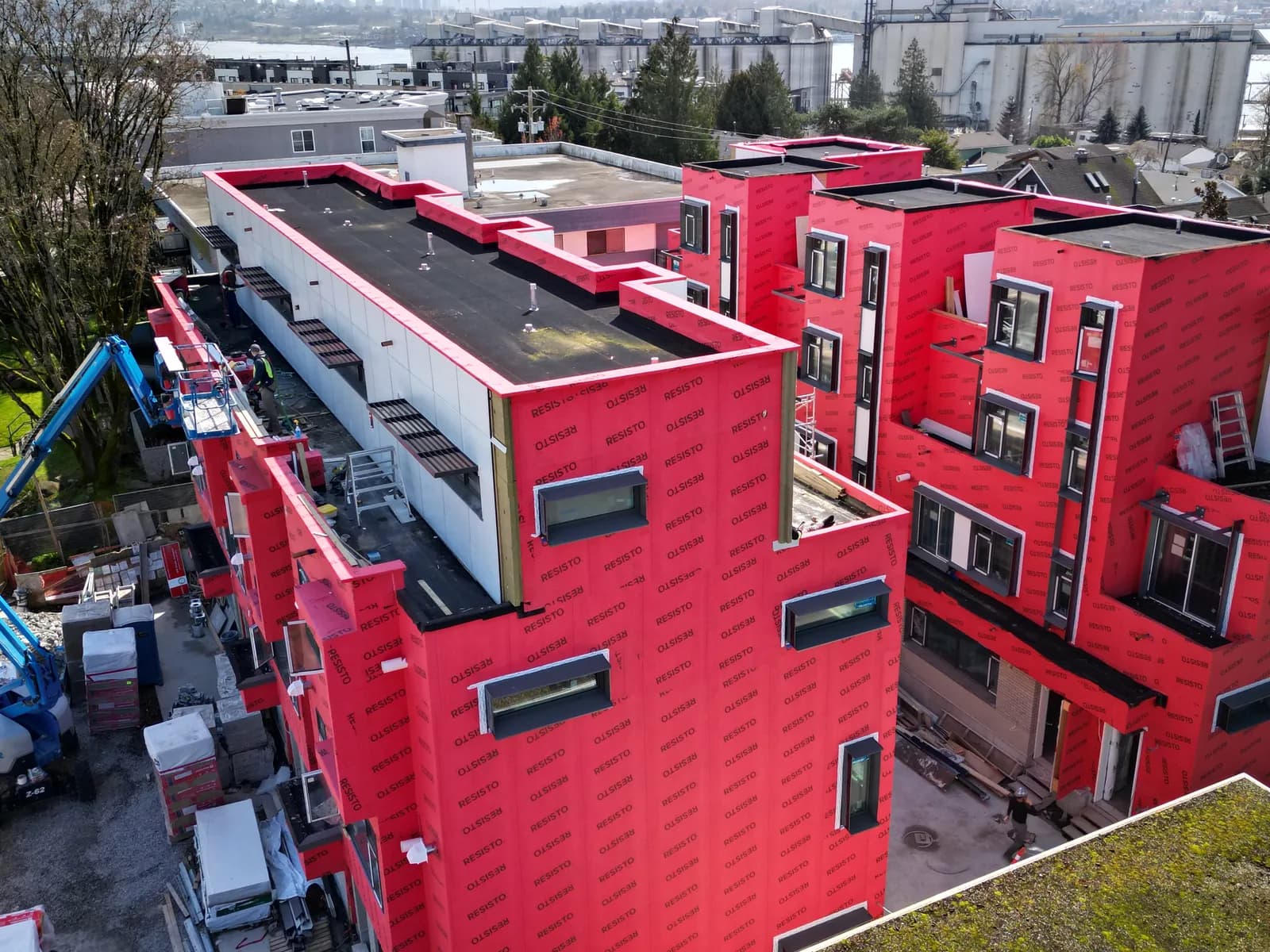
This is where the expensive end of the stucco siding repair cost range lives. The first opening shows wet sheathing, the moisture readings stay high as the opening grows, and at some point it makes more sense to take the stucco off the whole wall than to chase the damage in pieces. Sheathing replacement, any soft studs, new membrane, new flashings and a new finish across the elevation. If mould has started, it adds remediation. We wrote about what that looks like in mould behind stucco.
Recoats
A recoat refreshes colour and bridges fine cracks. It is not a repair for water. Over sound, dry stucco it works well; over a wall that is already wet, it seals the moisture in. Our comparison of elastomeric vs acrylic stucco recoating covers which coating suits which wall.
Seven things that move the price
Two walls with the same visible crack can produce very different invoices. These are the factors that drive stucco siding repair cost up or down the range, roughly in order of how much money they move.
1. What is behind the stucco
This is the biggest one, by a wide margin. A moisture probe survey on a house costs roughly $500 to $1,200 and takes a few hours: small holes drilled at window corners, under sills and along the base of the wall, with readings taken from the sheathing behind. Readings that stay above about 20 percent tell you the repair is bigger than the crack.
If an estimate for a crack that has stained the inside of the house does not mention a probe reading or opening the wall, that estimate is pricing the finish, not the problem.
2. Height and access
A ground-floor repair is done from a ladder or a short platform. A second-storey repair on a typical house needs scaffold for the duration of the work, usually $1,500 to $4,000 on one elevation once you count setup, rental and teardown. Steep lots in West Vancouver, North Vancouver and on Burnaby Mountain push that higher. On a four-storey strata building, a swing stage or mast climber for one elevation often runs $8,000 to $18,000 before any stucco work starts.
3. Matching the finish
Stucco finishes vary: sand float, dash, knockdown, smooth acrylic. A finisher who can match an existing texture by hand is worth paying for. Colour is harder. Integral colour fades over 15 years, so a patch in the original colour almost never matches the faded wall around it.
There are two honest ways to deal with that. Carry the repair to the nearest corner, control joint or trim line so the edge is hidden, or recoat the whole elevation once the repair is done. On a typical house elevation, the recoat option adds $2,000 to $6,000. Ask in writing which approach the estimate assumes. "Patch and match" without a plan for the edge usually means a visible square.
4. The stucco system you have
Most coastal BC stucco built before the late 1990s is face-sealed: the stucco sits directly on building paper and sheathing, with no drainage gap. Since the leaky-condo years, the BC Building Code has required a drained cavity behind cladding on most coastal walls, and rainscreen stucco is now standard.
Repairs on face-sealed stucco have to tie the new paper into old paper that may be brittle, which takes more care and more opening. Acrylic stucco and EIFS are repaired differently again, with foam board, mesh and a different base coat. The system matters as much as the size of the hole.
5. Age and hazardous materials
Stucco, textured coatings and paint on older houses can contain asbestos or lead. WorkSafeBC requires hazardous materials to be identified before they are disturbed, which on pre-1990 buildings means sampling before any opening. Testing runs about $400 to $1,200. If it comes back positive, abatement adds roughly $3,000 to $12,000 depending on the area. This is a legal requirement, not an upsell, and an estimate for an older house should list it.
6. Flashings, windows and penetrations
A large share of stucco repairs are really flashing repairs. Missing head flashings over windows, sill flashings without end dams, no kickout where a roof edge meets a wall, deck railings bolted straight through the stucco. Adding a missing kickout flashing usually means opening both the stucco and the roof edge, and costs about $800 to $2,500 per location.
If the window itself is leaking through its frame or corners, no amount of stucco work will stop it. In that case window replacement belongs in the scope, and the repair has to be sequenced around it.
7. Permits, engineering and sign-off
Most patch and section repairs on a house do not need a building permit. Re-cladding a whole wall can, depending on the municipality and how much of the assembly is replaced, and Vancouver, Burnaby and Surrey do not all draw that line in the same place. Your contractor should confirm with the city before work starts.
On strata buildings, a building envelope consultant usually specifies the repair and reviews it in the field. That fee sits on top of the construction cost, often several thousand dollars even for a single elevation, and it is money well spent.
Why the smallest repair can cost the most per square foot
This is the part that surprises people. A 6 square foot patch at $1,200 works out to $200 per square foot. A 60 square foot section repair at $6,000 works out to $100. The smaller job carries the same trips, the same curing time, the same colour-matching visit and the same minimum charge, spread over a tiny area.
The bigger repair usually looks better too, because it ends at a corner or control joint instead of in the middle of the wall.
So if you have three small damaged spots on one elevation, do not ask for three patch prices. Ask for one price to repair them together, carried to the nearest break lines. In our experience the combined job often costs less than three separate visits, and you end up with a wall that does not look patched.
How BC weather shows up on the invoice
Where your house stands changes which repairs you need and how often.
Atmospheric river season, October to February. Wind-driven rain hits west and south elevations hardest, and that is where we open the most walls. Window corners on those faces are the first place to look.
North Shore and anywhere under big trees. Walls in North Vancouver, West Vancouver, Port Moody and parts of Coquitlam stay damp longer. Algae and moss need cleaning off before any repair will bond, which adds a soft wash to the scope.
Fraser Valley: Langley, Abbotsford, Chilliwack. More freeze-thaw cycles than the coast. Water sitting in a crack freezes, expands and widens it. A crack that would stay stable for years in Kitsilano can turn into a patch job within two winters in Abbotsford.
Richmond, Steveston, White Rock and the waterfront. Salt air corrodes galvanized lath, corner beads and weep screeds. Rust bleeding through the finish means the metal underneath needs replacing, not painting over, which turns a crack repair into a section repair.
Vancouver Island. Victoria and Saanich have a lot of original face-sealed stucco on older houses, so probe surveys there find more hidden moisture per call than they do on newer Lower Mainland stock.
Timing matters as well. Cement stucco should not go on below about 5°C without protection. Winter repairs are possible with tenting and heat, which can add several hundred to a few thousand dollars depending on the size of the enclosure. Our guide to exterior renovation in a BC winter covers what can and cannot be done.
Three typical repair scopes
These are representative of the jobs we price most often. Details vary, but the shape of each is common.
A 1990s two-storey in Coquitlam. Hairline cracking on three elevations, a weep screed clogged with soil, dry probe readings throughout. Crack sealing, sealant renewal at all windows and penetrations, clearing the screed and a soft wash. About $2,400, done in two days.
A 2000s rainscreen house in Burnaby. A stain under a bedroom window on the west wall. We opened about 40 square feet, found damp but sound sheathing and a sill flashing with no end dams. New flashing, new paper and lath, three coats, finish carried to the corner. About $7,800 including scaffold.
A North Vancouver strata townhouse. Staining at a deck-to-wall junction. The opening found soft sheathing across about 180 square feet and two rotted studs. Elevation repair with consultant review and notices to the owners on either side. About $38,000.
The first and third jobs started with roughly the same phone call.
The mistake that turns a $2,000 repair into a $30,000 one
Painting or patching over a crack that has already been leaking. Elastomeric paint over wet stucco looks clean for a couple of winters while the sheathing behind it keeps rotting, now with no way for the water to dry out through the finish. We regularly open walls where a fresh coat of paint was the last thing anyone did before the damage got expensive.
The other version is caulking the weep screed or the gap above a flashing because it "looks unfinished." Both are drainage paths. Sealing them traps water inside the wall.
If you see staining inside, a soft spot when you press on the stucco, or a bulge in the finish, the repair is not a patch. Get the wall opened or probed before anyone paints it.
Before you pay: warranty and insurance
Home warranty. Under BC's Homeowner Protection Act, new homes and strata buildings carry a 2-5-10 warranty, and the building envelope, including water getting in, is covered for five years. If your house or building is less than five years old, call the warranty provider before you pay a contractor for envelope repair.
Home insurance. Most policies cover sudden damage, such as a fallen branch or a vehicle hitting the wall. Gradual leaks and rot are usually excluded. Check your policy before assuming a claim, and expect an adjuster to ask how long the damage has been there.
Strata buildings: what the range looks like at scale
On a strata building, exterior walls are usually common property, so the repair is the strata corporation's responsibility rather than the individual owner's. That changes three things.
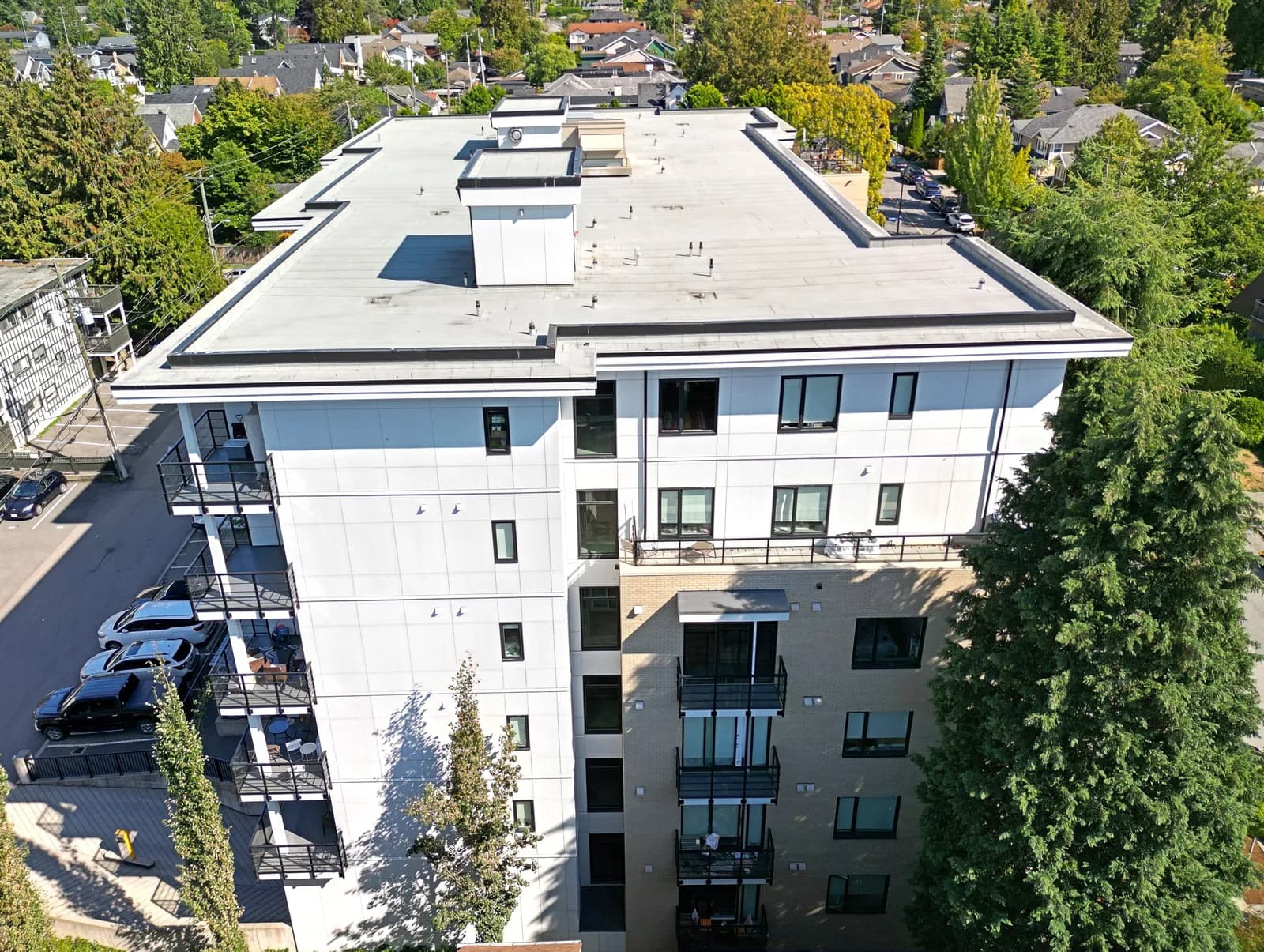
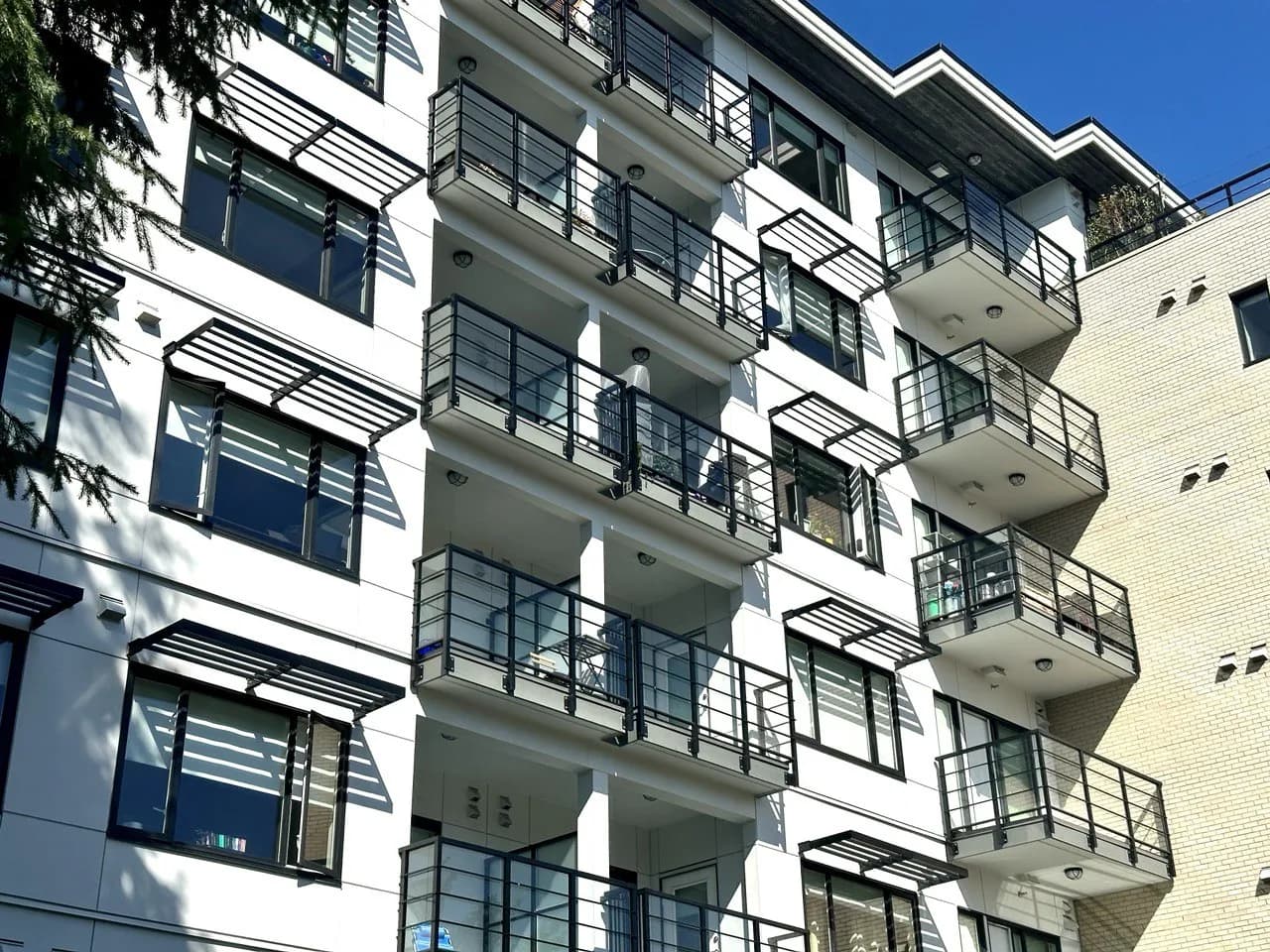
First, access dominates. Patching on a single elevation of a four-storey building can run $8,000 to $18,000 mostly because of the swing stage and traffic protection. Section and elevation repairs scale up from there.
Second, the findings on one wall predict the others. Same builder, same window details, same flashings. If the west elevation is wet at the window corners, the south one probably is too. Survey every elevation before approving a repair on one, or the building ends up paying for scaffold three times.
Third, the money has to be approved. Repairs that were not planned in the depreciation report or the operating fund may need an owner vote at a general meeting. Our guide to getting strata owner approval for exterior work walks through how that usually goes. When the scope is bigger than a repair, the building envelope assessment is the right starting point.
How to read a stucco repair estimate
Back to the $1,400 and $16,800 estimates from the start. The first one priced sealing the crack and touching up the finish. The second priced opening the wall, replacing what was wet, adding the missing flashing and rebuilding. Neither was dishonest, but only one of them answered the question the stain on the drywall was asking.
A good stucco siding repair estimate states:
- The area to be opened, in square feet, and the unit price for every additional square foot of sheathing if the damage goes further.
- The membrane, lath and flashing details being installed.
- The number of coats and the cure time between them.
- How the finish will be matched and where the repair will end on the wall.
- Whether scaffold or a swing stage is included.
- Hazardous materials testing on any building from before 1990.
- Disposal, site protection and cleanup.
- The workmanship warranty, in writing.
The single most useful question to ask a low bidder: "What happens to the price if the sheathing behind this is wet?" A clear unit price is a good answer. A shrug is not.
Our recommendation
Before you pay for any stucco repair over about $1,500, pay for a moisture reading at the damaged area. It is the smallest line on the whole job, and it decides which part of the stucco siding repair cost range you are actually in.
If the wall is dry, seal and patch, and carry patches to break lines rather than leaving squares in the middle of the wall. If it is wet, do the section repair properly, fix the flashing that caused it, and do not let anyone recoat over it. If more than about a third of an elevation is wet, or the stucco is face-sealed and leaking at several windows, stop pricing repairs and get a re-clad estimate. At that point, each patch is money spent on a wall you will replace anyway.
FAQ
How much does it cost to repair a crack in stucco in BC? Sealing hairline and small cracks across a typical house runs about $1,200 to $3,000 per visit in 2026, including sealant renewal at windows and penetrations. A single cracked area that needs to be cut out and rebuilt is a patch or section repair instead, at $600 to $12,000 depending on size and what is found behind it.
Can you patch stucco so it doesn't show? Texture can be matched closely by a skilled finisher. Colour is harder, because the original finish has faded. The two reliable approaches are ending the repair at a corner, control joint or trim line, or recoating the whole elevation after the repair, which adds roughly $2,000 to $6,000 on a typical house wall.
Is it worth repairing stucco or should I replace it? Repair is usually the right call when the damage is local and the sheathing around it is dry. When more than about a third of an elevation is wet, or face-sealed stucco is leaking at several windows, a re-clad on a rainscreen is usually the better use of the money.
Does home insurance cover stucco repair in BC? Usually only for sudden damage, such as impact from a vehicle or a falling tree. Gradual leaks, rot and mould behind stucco are typically excluded. Homes and strata buildings under five years old may be covered for water penetration under the BC 2-5-10 home warranty instead.
Getting a written number for your wall
MV Construction has repaired and rebuilt stucco across Greater Vancouver and Vancouver Island for more than 10 years. We are fully licensed and WCB-insured, carry liability coverage on every project, and back our workmanship with a written warranty. When we assess a wall, the estimate separates what we know from what we will only know once the wall is open, with a unit price for the second part, so the number does not move without a reason you can see.
If you have cracking, staining or a soft spot you want looked at, talk to our stucco and EIFS contractor team. You can request a fixed-scope estimate online or call (778) 375-5672 to book a site visit.